Bill · H.R. 3541· House(119-HR-3541)
See the Board Act
- Introduced
- 5/21/2025
- Last activity
- 5/21/2025 — Referred to the Committee on Energy and Commerce, and in addition to the Committee on Education and Workforce, for a period to be subsequently determined by the Speaker, in each case for consideration of such provisions as fall within the jurisdiction of the committee concerned.
- Sponsored by
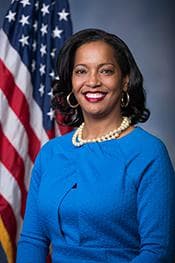
- Jahana Hayes
- Cosponsors
- - 6 - 0
- Introduced
- In Committee
What this bill would do
This bill, known as the "See the Board Act," aims to establish a grant program to provide free eye care services to students in public elementary and secondary schools. The Secretary of Health and Human Services would award these grants to nonprofit organizations. These funds would cover the purchase of mobile eye care equipment and various operational costs. The program focuses on bringing screenings, exams, and even glasses directly to students through mobile clinics. This initiative is intended to run through the fiscal years s 2026 through 2031.
Yes· 3 of 9
Would students be better off under this?+9
The bill is designed specifically to provide health benefits and eye care directly to students in school.
Would children be better off under this?+8
The bill directly provides free eye care services to elementary and secondary school students.
Would households on low incomes be better off under this?+7
Free eye care services provide significant value to families who may struggle with medical costs.
The opposite
No question was scored the opposite.
Who it would affect, and how
Potential Positive Impacts for People
-
Increased Access to Eye Care Services: The bill establishes a grant program to provide free eye care services to students attending public elementary and secondary schools (Section 2(a)). This allows students to receive essential vision services that they might not otherwise access.
-
Mobile Health Delivery: By funding mobile eye clinics and portable equipment, the program brings screenings, exams, and an optical shop directly to students at their schools (Section 2(c)). This makes it easier for students to receive care without needing to travel to a separate medical facility.
-
Comprehensive Care Options: The program allows for a full range of services, including screenings by qualified health care providers or ophthalmic technicians, follow-up exams by optometrists or ophthalmologists, and the provision of glasses through an optician and dispensary (Section 2(c)).
-
Education on Vision Health: The bill expresses a sense of Congress that entities should inform students and parents about the importance of following medically recommended schedules for vision screenings and eye exams (Section 2(d)).
Potential Negative Impacts for People
- No specific negative impacts or burdens are explicitly stated within the provided text of the bill.
Groups and Interests Ranking
Every group the model scored this bill for, from -10 to +10. Hover a score for the reason it gave.
- Demographic And Interest Groups
- Good For Students+9Good For Children+8Good For Low Income Households+7Good For Young Adults+4Good For Middle Class Households+3Good For People With Disabilities+3
- Healthcare
- Improves Healthcare Access+7
- Education And Technology
- Increases Public School Funding+6
- Governance And Ideology
- Increases Federal Power+2
- 7/17/2025
- 1 Cosponsor added.
- 5/21/2025
- Referred to the Committee on Energy and Commerce, and in addition to the Committee on Education and Workforce, for a period to be subsequently determined by the Speaker, in each case for consideration of such provisions as fall within the jurisdiction of the committee concerned.
- 5 Cosponsors added.
- Introduced in House
 Steve Cohen
Democrat · Tennessee
 Summer Lee
Democrat · Pennsylvania
 Eleanor Norton
Democrat · District of Columbia
 Lateefah Simon
Democrat · California
 Mark Takano
Democrat · California
 Jill Tokuda
Democrat · Hawaii