
A Republican bill with 8 Republican cosponsors · See all 8 cosponsors
Last activity — Referred to the House Committee on Ways and Means.
In committee
Introduced and handed to a committee in the chamber it started in.
The committee holds it, and most bills are never heard from again. A hearing or a committee vote would be news; silence is the usual outcome, and it kills the bill without anyone voting against it.
Its path through Congress
- Introduced
- In Committee
What this bill would do
This bill, known as the "Small Business Growth Act," aims to amend the Internal Revenue Code of 1986. It proposes to increase the limitations on expensing depreciable business assets. Specifically, it seeks to raise the dollar amounts set in Section 179(b). The changes involve adjusting various dollar thresholds and updating inflation adjustment years. These amendments would apply to property placed in service in taxable years beginning after December 31, 2025.
Yes· 3 of 5
- Scored +6
Does this cut taxes for small businesses?
The bill increases the dollar limits for expensing depreciable business assets, providing a larger tax deduction for small businesses.
- Scored +6
Does this make it easier to run a small business?
The bill directly supports small businesses by raising the thresholds for Section 179 asset expensing.
- Scored +6
Would business owners be better off under this?
The bill provides significant tax advantages to those who own and operate businesses by raising expensing limits.
The opposite
No question was scored the opposite.
Who it would affect, and how
Potential Positive Impacts for People
-
Increased Expensing Limits: The bill increases the amount allowed for expensing depreciable business assets by raising the figure in paragraph (1) from $1,000,000 to $2,000,000 and the figure in paragraph (2) from $2,500,000 to $3,500,000 (Section 2(a)). This could benefit businesses by allowing them to expense larger amounts of assets.
-
Updated Inflation Adjustments: The bill updates the years used for inflation adjustments to 2026 and calendar year 2025 (Section 2(b)). This adjustment to the Internal Revenue Code could ensure that the limits remain current with more recent years.
Potential Negative Impacts for People
- Delayed Implementation: The amendments established in this bill only apply to property placed in service in taxable years beginning after December 31, 2025 (Section 2(c)). This means the benefits of the increased limits would not be available for the 2025 tax year or earlier.
Groups and Interests Ranking
Every group the model scored this bill for, from -10 to +10. Tap or hover a score for the reason it gave.
- Economy And Finance
- Does this make it easier to run a small business? — The bill directly supports small businesses by raising the thresholds for Section 179 asset expensing. Does this cut taxes for small businesses? — The bill increases the dollar limits for expensing depreciable business assets, providing a larger tax deduction for small businesses. Is this likely to grow the economy? — The increase in asset expensing limits is intended to stimulate business investment and economic activity. Is this likely to create jobs? — By allowing businesses to expense more assets upfront, the bill may encourage capital investment that leads to job creation.
- Demographic And Interest Groups
- Would business owners be better off under this? — The bill provides significant tax advantages to those who own and operate businesses by raising expensing limits.
- 1/14/2025
- 2 Cosponsors added.
- 1/13/2025
- Referred to the House Committee on Ways and Means.
- 6 Cosponsors added.
- Introduced in House
 Vern Buchanan
Republican · Florida
 Brian Fitzpatrick
Republican · Pennsylvania
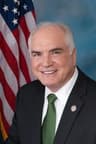 Mike Kelly
Republican · Pennsylvania
 Darin LaHood
Republican · Illinois
 Carol Miller
Republican · West Virginia
 Adrian Smith
Republican · Nebraska
 Lloyd Smucker
Republican · Pennsylvania
 Claudia Tenney
Republican · New York