Bill · H.R. 3518· House(119-HR-3518)
To amend the Higher Education Act of 1965 to prohibit graduate medical schools from receiving Federal financial assistance if such schools adopt certain policies and requirements relating to diversity, equity, and inclusion.
- Introduced
- 5/20/2025
- Last activity
- 5/20/2025 — Referred to the House Committee on Education and Workforce.
- Sponsored by
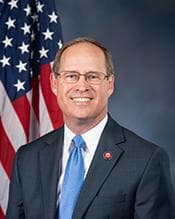
- Gregory Murphy
- Cosponsors
- - 16 - 0
- Introduced
- In Committee
What this bill would do
This bill seeks to amend the Higher Education Act of 1965 regarding graduate medical schools. It would prohibit these schools from receiving Federal financial assistance or participating in student loan programs unless they submit specific certifications to the Secretary. These certifications require the school to avoid certain diversity, equity, and inclusion policies, such as compelling individuals to state specific tenets regarding race or sex. The bill also prohibits actions that distinguish or classify students based on race, ethnicity, color, or national origin. Additionally, it bans the establishment of diversity, equity, and inclusion offices and the requirement of diversity statements.
Yes· 3 of 5
Does this give the federal government more power?+5
The bill increases federal oversight of graduate medical school policies via funding conditions.
Does this protect the individual right to speak freely?+5
The bill protects against compelled speech regarding diversity tenets.
Does this protect the freedom to practise a religion?+5
The bill includes provisions that protect institutions with a religious mission from being compelled to act against their tenets.
The opposite· 3 of 6
Does this narrow racial gaps in how people are treated?-5
The bill restricts diversity initiatives and could impact programs aimed at addressing racial inequities in medical education.
Would Black Americans be better off under this?-3
The elimination of DEI offices and diversity statements may negatively impact institutions' ability to support African American students.
Would Hispanic Americans be better off under this?-3
The restrictions on diversity-related policies could impact programs benefiting Hispanic students.
Who it would affect, and how
Potential Positive Impacts for People
-
Protection of individual expression: The bill prevents institutions from compelling faculty, staff, or students to personally state, pledge, recite, or express specific tenets regarding race, sex, or national origin as a condition for benefits or employment (Section 124(a)(1)(A)).
-
Prevention of student classification: It prohibits schools from taking actions that deprive or tend to deprive medical students of opportunities based on race, ethnicity, color, or national origin, including making distinctions or classifications of students (Section 124(a)(1)(B)).
-
Ensuring compliance with civil rights laws: The bill requires institutions to certify they will comply with various civil rights laws, such as Title IX of the Education Amendments of 1972 and the Age Discrimination Act of 1975 (Section 124(a)(2)).
-
Preservation of medical instruction and data: The bill ensures that schools can still provide instruction about unique medical needs related to an individual's sex or race, and can collect demographic data for informational purposes (Section 3(1)).
-
Protection of religious and constitutional rights: It prevents the law from being used to force institutions with a religious mission to act against their tenets, and protects First Amendment rights and research operations (Section 3(2) and 3(3)).
Potential Negative Impacts for People
-
Loss of Federal funding: Graduate medical schools that adopt certain diversity, equity, and inclusion policies or offices could lose eligibility for all Federal financial assistance and student loan programs (Section 124(a)).
-
Elimination of diversity offices: Institutions would be prohibited from establishing, maintaining, or contracting with a diversity, equity, and inclusion office (Section 124(a)(1)(D)).
-
Restrictions on admissions and employment: Schools could no longer require or incentivize individuals to complete a diversity statement as a condition of admission or employment (Section 124(a)(1)(E)).
Groups and Interests Ranking
Every group the model scored this bill for, from -10 to +10. Hover a score for the reason it gave.
- Governance And Ideology
- Improves Freedom Of Speech+5Increases Federal Power+5
- Demographic And Interest Groups
- Good For White Americans+2Good For African Americans-3Good For Hispanic Americans-3Good For Native Americans-3Good For Students-2
- Social Issues And Justice
- Improves Freedom Of Speech+5Improves Religious Freedom+5Improves Racial Equity-5
- Education And Technology
- Improves College Affordability-2
- 6/23/2025
- 1 Cosponsor added.
- 5/23/2025
- 1 Cosponsor added.
- 5/20/2025
- Referred to the House Committee on Education and Workforce.
- 14 Cosponsors added.
- Introduced in House
One bill Congress.gov lists as related to this one — companions in the other chamber, earlier versions, and bills this one absorbed or was folded into.
 Nicholas Begich
Republican · Alaska
 Dan Crenshaw
Republican · Texas
 Paul Gosar
Republican · Arizona
 Pat Harrigan
Republican · North Carolina
 Ronny Jackson
Republican · Texas
 Mike Kelly
Republican · Pennsylvania
 Mike Kennedy
Republican · Utah
 Carol Miller
Republican · West Virginia
 Tim Moore
Republican · North Carolina
 Troy Nehls
Republican · Texas
 Burgess Owens
Republican · Utah
 Robert Onder
Republican · Missouri
 David Rouzer
Republican · North Carolina
 Elise Stefanik
Republican · New York
 Claudia Tenney
Republican · New York
 Beth Van Duyne
Republican · Texas