
A Democratic bill with 5 Republican cosponsors · See all 8 cosponsors
Last activity — Referred to the House Committee on the Judiciary.
In committee
Introduced and handed to a committee in the chamber it started in.
The committee holds it, and most bills are never heard from again. A hearing or a committee vote would be news; silence is the usual outcome, and it kills the bill without anyone voting against it.
Its path through Congress
- Introduced
- In Committee
What this bill would do
This bill is known as the Pathways to Policing Act and was introduced to help encourage the recruitment of law enforcement officers. It allows the COPS Director to award competitive grants to States, local governments, and law enforcement agencies. These grant funds can be used for marketing campaigns and Pathways to Policing programs that help candidates enter law enforcement. The bill gives priority to applicants that recruit candidates from underrepresented communities or those who live in the communities they will serve. Additionally, the Attorney General is required to develop a nationwide marketing and recruitment campaign for law enforcement careers. The bill authorizes appropriations of $50,000,000 for each of fiscal years 2026 to 2030 for the grant program, and another $50,000,000 for each of those same fiscal years for the nationwide campaign.
Yes· 3 of 12
- Scored +4
Does this narrow racial gaps in how people are treated?
The bill prioritizes recruitment of candidates from traditionally underrepresented communities in law enforcement.
- Scored +3
Would people in their twenties and thirties be better off under this?
The bill creates career pathways and financial assistance that may benefit young adults entering the workforce.
- Scored +3
Would students be better off under this?
The bill offers financial assistance for students attending law enforcement training programs.
The opposite
No question was scored the opposite.
Who it would affect, and how
Potential Positive Impacts for People
-
Section 3061(c)(2) allows grant recipients to use funds for Pathways to Policing programs. This is positive because it provides financial support, tuition, compensation, or benefits to candidates who face barriers in obtaining the necessary education and training to become full-time officers.
-
Section 3062(a) gives priority to applicants that seek to recruit candidates from traditionally underrepresented communities or those with nontraditional backgrounds. This is a positive step to help bring diverse perspectives into law enforcement.
-
Section 3062(b) prioritizes applicants that recruit candidates who live in, are willing to relocate to, or live close to the communities they will serve. This is a good outcome because it encourages community policing and officers who have a personal connection to the neighborhoods they protect.
Potential Negative Impacts for People
- The provided text does not contain any specific sections or provisions that outline negative consequences or burdens for individuals or groups of people in the United States.
Groups and Interests Ranking
Every group the model scored this bill for, from -10 to +10. Tap or hover a score for the reason it gave.
- Demographic And Interest Groups
- Would students be better off under this? — The bill offers financial assistance for students attending law enforcement training programs. Would people in their twenties and thirties be better off under this? — The bill creates career pathways and financial assistance that may benefit young adults entering the workforce. Would Black Americans be better off under this? — The bill's focus on underrepresented communities may provide broader opportunities for African Americans in law enforcement. Would Asian Americans be better off under this? — The bill's focus on underrepresented communities may provide broader opportunities for Asian Americans in law enforcement. Would Hispanic Americans be better off under this? — The bill's focus on underrepresented communities may provide broader opportunities for Hispanic Americans in law enforcement. Would households on low incomes be better off under this? — The bill provides financial support for training that can help individuals overcome educational barriers. Would Native Americans be better off under this? — The bill's focus on underrepresented communities may provide broader opportunities for Native Americans in law enforcement.
- Social Issues And Justice
- Does this narrow racial gaps in how people are treated? — The bill prioritizes recruitment of candidates from traditionally underrepresented communities in law enforcement. Does this change how police departments operate? — The bill aims to diversify and strengthen law enforcement through recruitment and community-focused hiring.
- Economy And Finance
- Is this likely to create jobs? — The bill facilitates job creation in law enforcement through recruitment grants and financial support for training.
- Education And Technology
- Does this make college cost less? — The bill provides financial support for candidates attending law enforcement education and training programs.
- Governance And Ideology
- Does this give the federal government more power? — The bill increases federal involvement in law enforcement recruitment through DOJ-led campaigns and grants.
- 5/14/2025
- Referred to the House Committee on the Judiciary.
- 8 Cosponsors added.
- Introduced in House
2 bills Congress.gov lists as related to this one — companions in the other chamber, earlier versions, and bills this one absorbed or was folded into.
 Don Bacon
Republican · Nebraska
 Angie Craig
Democrat · Minnesota
 Brian Fitzpatrick
Republican · Pennsylvania
 Brad Finstad
Republican · Minnesota
 Betty McCollum
Democrat · Minnesota
 Zachary Nunn
Republican · Iowa
 Jimmy Panetta
Democrat · California
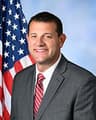 David Valadao
Republican · California