Bill · H.R. 3313· House(119-HR-3313)
Protecting American Farmland Act
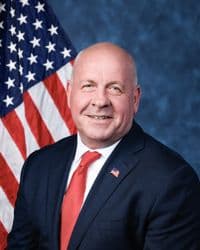
- Introduced
- 5/8/2025
- Last activity
- 5/8/2025 — Referred to the Committee on Ways and Means, and in addition to the Committee on Energy and Commerce, for a period to be subsequently determined by the Speaker, in each case for consideration of such provisions as fall within the jurisdiction of the committee concerned.
- Sponsored by
- David Taylor
- Cosponsors
- - 3 - 0
- Introduced
- In Committee
What this bill would do
The Protecting American Farmland Act aims to prevent the conversion of prime farmland into solar energy sites. It prohibits federal agencies from using funds, loans, or loan guarantees for ground-mounted solar projects intended primarily for electricity sale that would result in the conversion of prime farmland. Additionally, the bill amends the Internal Revenue Code to exclude solar property and facilities located on prime farmland from several clean energy tax credits. These exclusions apply to the residential clean energy credit, the renewable electricity production credit, the clean electricity production credit, the energy credit, and the clean electricity investment credit. The various exclusions take effect once the property or facilities are placed in service after the act is enacted.
Yes· 3 of 4
Would farmers be better off under this?+6
The bill protects prime farmland from being converted into solar energy sites.
Would people in rural areas be better off under this?+4
The bill preserves the agricultural character of prime farmland in rural areas.
Does this invest in rural communities?+3
The bill protects prime farmland from being converted to solar sites, preserving its agricultural use.
The opposite
Does this put more money into wind, solar and other renewable power?-5
The bill reduces investment incentives for solar energy by excluding facilities on prime farmland from various clean energy tax credits.
Does this cut taxes for middle-income families?-3
The bill excludes solar property on prime farmland from the residential clean energy credit.
Would households on low incomes be better off under this?-2
The bill removes residential clean energy tax credits for property located on prime farmland.
Who it would affect, and how
Potential Positive Impacts for People
- Protection of Agricultural Land: The bill prohibits federal agencies from using funds, loans, or loan guarantees for covered solar energy projects that would result in the conversion of prime farmland (Section 2). This could help ensure that prime farmland maintains its ability to meet requirements for agricultural production, activity, or use (Section 2(b)(1)).
Potential Negative Impacts for People
-
Reduction in Tax Credits for Solar Projects on Prime Farmland: The bill removes several financial incentives for solar energy projects located on specific types of land. Solar property placed in service on prime farmland would no longer be eligible for the residential clean energy credit (Section 3).
-
Exclusion from Production Credits: Solar energy facilities located on prime farmland would no longer be considered "qualified facilities" for the renewable electricity production credit (Section 4) or the clean electricity production credit (Section 5).
-
Limitation of Investment Credits: Expenditures for solar energy property placed in service on prime farmland would be excluded from the energy credit (Section 6) and the clean electricity investment credit (Section 7).
Groups and Interests Ranking
Every group the model scored this bill for, from -10 to +10. Hover a score for the reason it gave.
- Demographic And Interest Groups
- Good For Farmers+6Good For Rural Residents+4Good For Low Income Households-2
- Environment Energy And Infrastructure
- Improves Rural Development+3Increases Renewable Energy Investment-5
- Economy And Finance
- Reduces Government Spending+2Reduces Middle Class Taxes-3
- 5/13/2025
- 1 Cosponsor added.
- 5/8/2025
- Referred to the Committee on Ways and Means, and in addition to the Committee on Energy and Commerce, for a period to be subsequently determined by the Speaker, in each case for consideration of such provisions as fall within the jurisdiction of the committee concerned.
- 2 Cosponsors added.
- Introduced in House
One bill Congress.gov lists as related to this one — companions in the other chamber, earlier versions, and bills this one absorbed or was folded into.
 Eric Crawford
Republican · Arkansas
 Warren Davidson
Republican · Ohio
 Harriet Hageman
Republican · Wyoming