Bill · H.R. 3272· House(119-HR-3272)
COMPOST Act
- Introduced
- 5/8/2025
- Last activity
- 5/8/2025 — Referred to the House Committee on Agriculture.
- Sponsored by
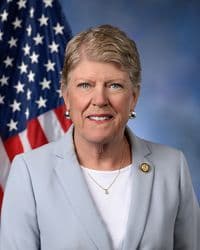
- Julia Brownley
- Cosponsors
- - 3 - 0
- Introduced
- In Committee
What this bill would do
The COMPOST Act seeks to designate composting as an official conservation practice and activity. This bill amends the Food Security Act of 1985 to include composting within various agricultural programs. It defines composting as the production of compost from farm-generated or nearby community organic waste, as well as its active management on farms to improve soil health and water retention. The Secretary is tasked with creating regulations for these practices and establishing specific standards. Additionally, the act integrates composting into the Conservation Stewardship Program and the Environmental Quality Incentives Program.
Yes· 3 of 12
Would farmers be better off under this?+7
Directly supports farmers by integrating composting into conservation programs and providing financial assistance.
Does this better protect air, water and wildlife?+6
By integrating composting into conservation programs, the bill promotes better soil health and water retention.
Would business owners be better off under this?+5
Provides new opportunities and financial support through grants and loan guarantees for those in the composting industry.
The opposite
No question was scored the opposite.
Who it would affect, and how
Potential Positive Impacts for People
-
Improved Soil and Water Management: The bill defines composting as an activity used to improve water retention and soil health (Section 2(a)(1)(B)(i)(II)).
-
Inclusion in Conservation Programs: Composting practices would be added to the Conservation Stewardship Program and the Environmental_Quality Incentives Program (Section 2(b) and 2(c)).
-
Support for Farm-Community Partnerships: The bill allows for organic waste to be brought to a farm from a nearby community to produce compost (Section 2(a)(1)(B)(i)(I)).
-
Environmental Protection: Regulations for determining "nearby" communities will ensure that bringing waste to a farm results in a net reduction of greenhouse gas emissions (Section 2(a)(1)(B)(ii)).
Potential Negative Impacts for People
-
Regulatory Requirements: The Secretary is required to provide regulations regarding composting as a conservation practice and activity (Section 2(a)(1)(A)).
-
Regulatory Uncertainty for Communities: The Secretary must issue specific regulations to determine what qualifies as a "nearby" community for the purposes of bringing organic waste to a farm (Section 2(a)(1)(B)(ii)).
Groups and Interests Ranking
Every group the model scored this bill for, from -10 to +10. Hover a score for the reason it gave.
- Demographic And Interest Groups
- Good For Farmers+7Good For Business Owners+5Good For Rural Residents+5Good For Urban Residents+3
- Environment Energy And Infrastructure
- Improves Environmental Protections+6Reduces Carbon Emissions+5Improves Rural Development+4Increases Renewable Energy Investment+3
- Economy And Finance
- Improves Small Business Support+4Increases Job Creation+3Improves Economic Growth+2
- Governance And Ideology
- Increases Federal Power+2
- 2/20/2026
- 1 Cosponsor added.
- 8/29/2025
- 1 Cosponsor added.
- 5/8/2025
- Referred to the House Committee on Agriculture.
- 1 Cosponsor added.
- Introduced in House
 Eleanor Norton
Democrat · District of Columbia
 Chellie Pingree
Democrat · Maine
 Andrea Salinas
Democrat · Oregon