Bill · H.R. 3257· House(119-HR-3257)
Bridge to Medicaid Act of 2025
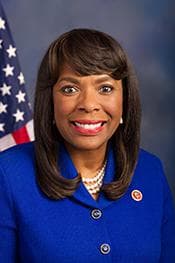
- Introduced
- 5/7/2025
- Last activity
- 5/7/2025 — Referred to the Committee on Energy and Commerce, and in addition to the Committee on Ways and Means, for a period to be subsequently determined by the Speaker, in each case for consideration of such provisions as fall within the jurisdiction of the committee concerned.
- Sponsored by
- Terri Sewell
- Cosponsors
- - 1 - 0
- Introduced
- In Committee
What this bill would do
The Bridge to Medicaid Act of 2025 aims to provide affordable health insurance for low-income people in States that have not expanded Medicaid. It reduces cost-sharing for certain low-income enrollees and provides additional medical transportation and specific health services for plan years 2026 and 2027. The bill creates special enrollment periods and increases funding for outreach and educational activities. It also expands eligibility for premium tax credits and limits the amount taxpayers must pay back if their income changes. Finally, it increases the Federal Medical Assistance Percentage (FMAP) for certain periods.
Yes· 3 of 30
Would households on low incomes be better off under this?+10
Directly targets those at or below 138% of the poverty line with 99% cost-sharing and tax credit expansions.
Does this strengthen the Affordable Care Act?+9
It expands premium tax credits and cost-sharing reductions within the ACA framework.
Does this make health care easier to get in general?+9
Provides significant cost reductions and special enrollment for the lowest-income populations.
The opposite· 3 of 4
Does this reduce what the federal government spends?-3
The bill increases federal spending via new appropriations and increased FMAP percentages.
Does this reduce what the federal government owes?-2
The bill requires new appropriations for cost-sharing payments and outreach activities.
Does this make the government pay for what it commits to?-2
The bill increases federal expenditures without specifying new revenue sources.
Who it would affect, and how
Potential Positive Impacts for People
-
Lower Out-of-Pocket Costs: For plan years 2026, 2027, and 2028, the bill increases the plan's share of total allowed costs to 99 percent for "specified enrollees" whose income is 138 percent of the poverty line or less (Section 2(a)(D)).
-
Expanded Benefit Access: Low-income individuals in silver-level plans for 2026 and 2027 can receive non-emergency medical transportation and other specified services without cost sharing (Section 2(c)(2)).
-
Easier Enrollment: The bill creates a special enrollment period for individuals with a household income not exceeding 138 percent of the poverty line who lack other minimum essential coverage (Section 2(b)(2)).
-
Increased Awareness: The Secretary will fund outreach and educational activities tailored to hard-to-reach populations, including rural residents, veterans, and racial and sexual minorities (Section 2(d)(1)(A)).
-
Greater Tax Credit Access: Between 2026 and 2029, eligibility for certain tax credits will not be limited by a minimum income requirement (Section 3(a)(1)).
-
Reduced Tax Penalties: Taxpayers with household income under 200 percent of the poverty line will have their tax credit recapture amount limited to $300, or $150 for certain taxpayers (Section 3(a)(4)(A)).
Potential Negative Impacts for People
- Temporary Nature of Benefits: Many of the cost-sharing reductions, additional benefits, and tax credit expansions are only available for a limited time, specifically through 2028 or 2029 (Section 2(a), Section 2(c), and Section 3(a)).
Groups and Interests Ranking
Every group the model scored this bill for, from -10 to +10. Hover a score for the reason it gave.
- Demographic And Interest Groups
- Good For Low Income Households+10Good For Rural Residents+7Good For African Americans+5Good For Hispanic Americans+5Good For Middle Aged+5Good For Native Americans+5Good For People With Disabilities+5Good For Young Adults+5Good For Asian Americans+4Good For Children+4Good For L G B T Q Community+4Good For Men+4Good For Students+4Good For Urban Residents+4Good For Veterans+4Good For Women+4Good For Farmers+3Good For White Americans+3Good For Middle Class Households+2
- Healthcare
- Improves Healthcare Access+9Increases Affordable Care Act Support+9Increases Medicaid Funding+8Reduces Private Insurance Premiums+5Improves Veterans Healthcare+3
- Social Issues And Justice
- Improves Poverty Reduction+6Improves Racial Equity+3Improves L G B T Q Rights+2
- Economy And Finance
- Reduces Government Spending-3Improves Fiscal Responsibility-2Reduces National Debt-2
- Environment Energy And Infrastructure
- Improves Rural Development+4
- National Security And Foreign Policy
- Improves Veterans Benefits+2
- Governance And Ideology
- Increases Federal Power+3Increase States Rights-2
- 5/7/2025
- Referred to the Committee on Energy and Commerce, and in addition to the Committee on Ways and Means, for a period to be subsequently determined by the Speaker, in each case for consideration of such provisions as fall within the jurisdiction of the committee concerned.
- 1 Cosponsor added.
- Introduced in House
One bill Congress.gov lists as related to this one — companions in the other chamber, earlier versions, and bills this one absorbed or was folded into.
 Shomari Figures
Democrat · Alabama