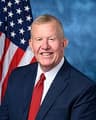
Mike Ezell (R-MS)
To require the Administrator of the Federal Emergency Management Agency to ensure that cost estimates, acquisition of proper materials, and any other activity related to certain projects under the Robert T. Stafford Disaster Relief and Emergency Assistance Act are performed by professionals licensed in the relevant State, and for other purposes.
A Republican bill with 1 Democratic cosponsor · See all 3 cosponsors
Last activity — Referred to the Subcommittee on Economic Development, Public Buildings, and Emergency Management.
In committee
Introduced and handed to a committee in the chamber it started in.
The committee holds it, and most bills are never heard from again. A hearing or a committee vote would be news; silence is the usual outcome, and it kills the bill without anyone voting against it.
Its path through Congress
- Introduced
- In Committee
What this bill would do
This bill requires the FEMA Administrator to use professionals licensed in the relevant State for specific activities on projects eligible under sections 406 or 428 of the Robert T. Stafford Disaster Relief and Emergency Assistance Act. These activities include preparing cost estimates and purchasing necessary materials and equipment. The bill limits the Administrator's ability to reject plans or materials suggested by these licensed professionals unless fraud is evident. It also mandates that FEMA employees managing these rebuilding projects must be appropriately licensed professionals. States are responsible for hiring the professionals to develop the scope of work.
Yes· 3 of 8
- Scored +7
Does this improve help for people hit by a disaster?
Reduces administrative delays in rebuilding and ensures technical accuracy by requiring licensed professionals.
- Scored +6
Does this leave more decisions to the states?
Shifts control of technical standards and professional selection toward state-level licensing and local preferences.
- Scored +5
Does this repair or build roads and bridges?
Ensures disaster rebuilding projects are managed by state-licensed experts, potentially improving quality and efficiency.
The opposite
- Scored -5
Does this give the federal government more power?
Restricts the FEMA Administrator's power to reject plans and mandates deference to state-licensed professionals.
Who it would affect, and how
Potential Positive Impacts for People
-
Expert Oversight: The bill requires that cost estimates and material acquisitions be performed by professionals licensed in the State where the project is located, ensuring the work is done by qualified engineers, architects, builders, or tradespeople (Section 1(a) and 1(d)).
-
Reduced Delays: The Administrator cannot reject, rescind, or stall plans, projects, or materials requested by a licensed professional unless fraud is evident and traceable (Section 1(b)(3)).
-
Guaranteed Material Approval: Any purchase suggested by an appropriately licensed professional for these projects must be approved by the Administrator (Section 1(b)(2)).
-
Support for Local Governance: The Administrator is prohibited from rejecting or hindering the process of contracting with a licensed professional if a State or local government suggests it (Section 1(b)(4)).
Potential Negative Impacts for People
- State Burden: The responsibility for hiring the appropriately licensed professional to develop the scope of work is placed on the State (Section 1(b)(5)).
Groups and Interests Ranking
Every group the model scored this bill for, from -10 to +10. Tap or hover a score for the reason it gave.
- Environment Energy And Infrastructure
- Does this improve help for people hit by a disaster? — Reduces administrative delays in rebuilding and ensures technical accuracy by requiring licensed professionals. Does this repair or build roads and bridges? — Ensures disaster rebuilding projects are managed by state-licensed experts, potentially improving quality and efficiency.
- Demographic And Interest Groups
- Would business owners be better off under this? — Directly benefits licensed professionals, contractors, and architects in the construction and engineering sectors. Would union members be better off under this? — Increases demand for licensed tradespeople who are often unionized. Would households on low incomes be better off under this? — Potentially speeds up rebuilding processes in disaster-affected areas.
- Economy And Finance
- Does this make it easier to run a small business? — Favors local licensed professionals and tradespeople over federal generalists. Is this likely to create jobs? — Increases demand for state-licensed professionals such as engineers, architects, and builders in disaster areas.
- Governance And Ideology
- Does this leave more decisions to the states? — Shifts control of technical standards and professional selection toward state-level licensing and local preferences. Does this give the federal government more power? — Restricts the FEMA Administrator's power to reject plans and mandates deference to state-licensed professionals.
- 5/6/2025
- 1 Cosponsor added.
- 5/5/2025
- Referred to the House Committee on Transportation and Infrastructure.
- Referred to the Subcommittee on Economic Development, Public Buildings, and Emergency Management.
- 2 Cosponsors added.
- Introduced in House
 Vern Buchanan
Republican · Florida
 Salud Carbajal
Democrat · California
 W. Steube
Republican · Florida