
A Republican bill with 6 Republican cosponsors · See all 6 cosponsors
Last activity — Referred to the House Committee on Financial Services.
In committee
Introduced and handed to a committee in the chamber it started in.
The committee holds it, and most bills are never heard from again. A hearing or a committee vote would be news; silence is the usual outcome, and it kills the bill without anyone voting against it.
Its path through Congress
- Introduced
- In Committee
What this bill would do
This bill, known as the ``CFPB Budget Integrity Act'', seeks to place restrictions on the Bureau of Consumer Financial Protection. It aims to limit the amount of unobligated balances the Bureau can hold during a fiscal year. Specifically, it mandates that these balances cannot exceed 5 percent of a specific dollar amount. If the Bureau exceeds this limit, the excess must be transferred to the general fund of the Treasury. Additionally, the bill requires a description of how any unobligated balances are used in certain reports.
Yes
- Scored +5
Does this make what the government does easier for the public to see?
The bill mandates that reports include a description of how any unobligated balances are used.
- Scored +4
Does this make the government pay for what it commits to?
The bill increases fiscal accountability by limiting unspent funds and requiring more detailed reporting on their use.
- Scored +3
Does this reduce what the federal government spends?
The bill limits the amount of money the CFPB can hold in unobligated balances by transferring excess funds to the Treasury.
The opposite
- Scored -3
Does this give people more protection from unfair business practices?
By limiting the available unspent funds of the CFPB, the bill may reduce the agency's capacity to fund future consumer protection initiatives.
- Scored -2
Would households on low incomes be better off under this?
The restriction of unspent funds could potentially limit the agency's ability to enforce consumer protections that benefit low-income households.
- Scored -1
Would people in cities be better off under this?
Reduced agency funding may impact the scale of consumer protection enforcement across various populations.
Who it would affect, and how
Potential Positive Impacts for People
-
Financial Oversight: By limiting unobligated balances to 5 percent of the specified amount, the bill aims to restrict how much money the Bureau holds without spending it (Section 2(a)).
-
Increased Transparency: The bill requires a description of the use of any unobligated balances to be included in reports, which provides more information regarding the Bureau's funds (Section 2(b)).
-
Treasury Contributions: Any excess funds held by the Bureau must be transferred to the general fund of the Treasury rather than being held by the agency (Section 2(a)).
Potential Negative Impacts for People
- No specific negative impacts are detailed in the text provided.
Groups and Interests Ranking
Every group the model scored this bill for, from -10 to +10. Tap or hover a score for the reason it gave.
- Governance And Ideology
- Does this make what the government does easier for the public to see? — The bill mandates that reports include a description of how any unobligated balances are used.
- Economy And Finance
- Does this make the government pay for what it commits to? — The bill increases fiscal accountability by limiting unspent funds and requiring more detailed reporting on their use. Does this reduce what the federal government spends? — The bill limits the amount of money the CFPB can hold in unobligated balances by transferring excess funds to the Treasury. Does this give people more protection from unfair business practices? — By limiting the available unspent funds of the CFPB, the bill may reduce the agency's capacity to fund future consumer protection initiatives.
- Demographic And Interest Groups
- Would households on low incomes be better off under this? — The restriction of unspent funds could potentially limit the agency's ability to enforce consumer protections that benefit low-income households. Would people in cities be better off under this? — Reduced agency funding may impact the scale of consumer protection enforcement across various populations.
- 5/14/2025
- 1 Cosponsor added.
- 5/5/2025
- 2 Cosponsors added.
- 5/1/2025
- Referred to the House Committee on Financial Services.
- 3 Cosponsors added.
- Introduced in House
 Don Bacon
Republican · Nebraska
 Nicholas Begich
Republican · Alaska
 Brandon Gill
Republican · Texas
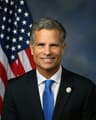 Daniel Meuser
Republican · Pennsylvania
 Andrew Ogles
Republican · Tennessee
 Pete Sessions
Republican · Texas