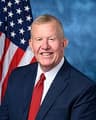
A Republican bill with 3 Republican cosponsors · See all 3 cosponsors
Last activity — Referred to the House Committee on Natural Resources.
In committee
Introduced and handed to a committee in the chamber it started in.
The committee holds it, and most bills are never heard from again. A hearing or a committee vote would be news; silence is the usual outcome, and it kills the bill without anyone voting against it.
Its path through Congress
- Introduced
- In Committee
What this bill would do
This bill, known as the "BRIDGE Production Act of 2025," requires the Secretary of the Interior to conduct at least 26 offshore lease sales over a 10-year period. These sales are specifically directed toward 20 sales in the Gulf of America and 6 sales in the Cook Inlet Planning Area. The legislation establishes specific timelines for these sales to ensure regular production activities. It also modifies royalty rates and creates a pilot program to incentivize faster production. Additionally, the bill includes provisions to streamline environmental and regulatory compliance for these activities.
Yes· 3 of 5
- Scored +7
Would business owners be better off under this?
The bill provides lower royalty rates and faster lease issuance timelines for energy companies.
- Scored +5
Does this cut taxes for small businesses?
The bill reduces the required royalty rate floor for offshore leaseholders from 16.67 percent to 12.5 percent.
- Scored +5
Does this give the federal government more power?
The bill grants the Secretary broad authority to waive requirements of the Outer Continental Shelf Lands Act.
The opposite· 3 of 5
- Scored -8
Does this better protect air, water and wildlife?
The bill allows the Secretary to waive certain regulatory requirements and deems existing reviews sufficient to bypass new environmental protections.
- Scored -8
Would Native Americans be better off under this?
The bill explicitly limits requirements for tribal consultation under Federal law.
- Scored -7
Does this reduce how much oil, gas and coal is produced?
The bill is designed to increase rather than reduce fossil fuel production through mandatory lease sales.
Who it would affect, and how
Potential Positive Impacts for People
-
Increased Energy Production Schedule: The bill mandates a specific schedule of lease sales to ensure a continuous schedule of offshore oil and gas production (Section 3(c), Section 6).
-
Reduced Royalty Rates for Leaseholders: The bill adjusts the royalty rate floor from 16 2/3 percent to 12.5 percent (Section 3(g)).
-
Production Incentive Pilot Program: A pilot program is established that allows the Secretary to reduce the royalty rate to 10 percent for the first 7 years of production if the leaseholder achieves first production within 3 years of lease issuance (Section 3(h)).
-
Faster Lease Issuance: The bill requires that if an acceptable bid is received, the lease must be issued within 90 days of the sale (Section 3(a)).
-
Streamlined Regulatory Processes: The act provides for certain environmental and regulatory requirements to be deemed sufficient, which may speed up the approval process (Section 4, Section 6).
Potential Negative Impacts for People
-
Regulatory and Environmental Exceptions: The bill mandates that compliance with certain biological opinions and environmental impact statements be deemed sufficient to comply with the Endangered Species Act of 1973 and the National Environmental Policy Act of 1969 (Section 4(a)).
-
Limitation on Mitigation Measures: Under the bill, reasonable and prudent alternatives or mitigation measures for Balaenoptera ricei shall not have force or effect for certain oil and gas operations in the Gulf of America (Section 4(b)).
-
Waiver of Environmental Requirements: The Secretary is granted authority to waive requirements of the Outer Continental Shelf Lands Act that would delay the final approval of offshore lease sales (Section 3(b)).
-
Potential Lack of Tribal Consultation: Certain replacement schedules established by this act would not require compliance with requirements for tribal consultation under Federal law (Section 7(k)).
Groups and Interests Ranking
Every group the model scored this bill for, from -10 to +10. Tap or hover a score for the reason it gave.
- Environment Energy And Infrastructure
- Does this better protect air, water and wildlife? — The bill allows the Secretary to waive certain regulatory requirements and deems existing reviews sufficient to bypass new environmental protections. Does this reduce how much oil, gas and coal is produced? — The bill is designed to increase rather than reduce fossil fuel production through mandatory lease sales. Does this cut the pollution that drives climate change? — The bill mandates increased offshore oil and gas production and streamlines environmental reviews, which may increase carbon emissions.
- Economy And Finance
- Does this cut taxes for small businesses? — The bill reduces the required royalty rate floor for offshore leaseholders from 16.67 percent to 12.5 percent. Is this likely to create jobs? — The mandate for 26 offshore lease sales is intended to stimulate domestic energy production and related industrial activity. Is this likely to grow the economy? — By streamlining offshore leasing and reducing royalty costs, the bill aims to boost domestic energy production.
- Governance And Ideology
- Does this give the federal government more power? — The bill grants the Secretary broad authority to waive requirements of the Outer Continental Shelf Lands Act.
- Social Issues And Justice
- Does this expand the rights of people with disabilities? — The bill limits environmental mitigation requirements that may impact ecosystems, which can indirectly affect community wellbeing.
- Demographic And Interest Groups
- Would business owners be better off under this? — The bill provides lower royalty rates and faster lease issuance timelines for energy companies. Would Native Americans be better off under this? — The bill explicitly limits requirements for tribal consultation under Federal law.
- 4/29/2025
- Referred to the House Committee on Natural Resources.
- 3 Cosponsors added.
- Introduced in House
 Dan Crenshaw
Republican · Texas
 Clay Higgins
Republican · Louisiana
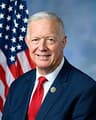 Randy Weber
Republican · Texas