
A Democratic bill with 1 Democratic cosponsor · See the cosponsor
Last activity — Referred to the Committee on Education and Workforce, and in addition to the Committee on Ways and Means, for a period to be subsequently determined by the Speaker, in each case for consideration of such provisions as fall within the jurisdiction of the committee concerned.
In committee
Introduced and handed to a committee in the chamber it started in.
The committee holds it, and most bills are never heard from again. A hearing or a committee vote would be news; silence is the usual outcome, and it kills the bill without anyone voting against it.
Its path through Congress
- Introduced
- In Committee
What this bill would do
This bill, known as the PROSPECT Act, establishes competitive Federal grants to support community colleges and minority-serving institutions. The goal is to turn these institutions into hubs for infant and toddler child care training, talent, and access. It creates several grant types: planning, access, impact, and pipeline grants. These funds aim to expand on-campus child care for student parents and strengthen the professional workforce. Additionally, the bill updates the Child Care and Development Block Grant and increases Federal matching payments. It also includes provisions for outreach regarding dependent care allowances for Federal student aid.
Yes· 3 of 15
- Scored +9
Does this make child care cost less?
The bill provides massive funding and grants to provide free or highly subsidized infant and toddler childcare.
- Scored +8
Would children be better off under this?
The bill aims to improve the quality and access of care for infants and toddlers.
- Scored +8
Would households on low incomes be better off under this?
The bill targets low-income student parents and communities of color for childcare support.
The opposite
No question was scored the opposite.
Who it would affect, and how
Potential Positive Impacts for People
-
Access to Free Child Care for Students: Access grants will provide free high-quality infant and toddler child care for up to 500,000 children of student parents (Section 111(a)(1); Section 121). This helps reduce barriers to graduation and reduces postgraduation debt (Section 111(a)(1); Section 121).
-
Support for High-Quality Workforce: Impact grants provide training, mentorship, and technical support to expand the supply and quality of child care in communities (Section 111(a)(3); Section 121).
-
Workforce Development: Pipeline grants fund the expansion of early childhood educator preparation programs and strategic partnerships to strengthen the workforce (Section 111(a)(4); Section 121).
-
Living Wages for Caregivers: The bill requires that on-campus child care staff be paid a wage that is comparable to elementary educators and provides at least a living wage (Section 112(a)(2)(F); Section 123(b)(8)).
-
Increased Financial Assistance: The bill increases Federal matching payments for state expenditures on child care assistance (Section 203).
-
Better Financial Aid Information: The bill updates how information regarding the dependent care allowance is shared with students, explaining how they may include it in the cost of attendance and how to apply (Section s 301).
Potential Negative Impacts for People
- Requirement for Planning Before Implementation: An eligible entity must successfully complete a planning grant before it can receive access, impact, or pipeline grants (Section 112(c)).
Groups and Interests Ranking
Every group the model scored this bill for, from -10 to +10. Tap or hover a score for the reason it gave.
- Demographic And Interest Groups
- Would children be better off under this? — The bill aims to improve the quality and access of care for infants and toddlers. Would households on low incomes be better off under this? — The bill targets low-income student parents and communities of color for childcare support. Would students be better off under this? — The bill provides direct financial and service-based support to student parents. Would Black Americans be better off under this? — The bill prioritizes minority-serving institutions and communities of color. Would Hispanic Americans be better off under this? — The bill prioritizes minority-serving institutions and communities of color. Would women be better off under this? — The bill helps student parents, a demographic that disproportionately includes women. Would people with disabilities be better off under this? — The bill includes provisions to support childcare for infants and toddlers with disabilities.
- Social Issues And Justice
- Does this make child care cost less? — The bill provides massive funding and grants to provide free or highly subsidized infant and toddler childcare. Does this narrow racial gaps in how people are treated? — The bill specifically targets minority-serving institutions and communities of color for childcare access and workforce development. Does this narrow the gap between how men and women are treated? — The bill supports student parents, a group that includes many single mothers, by providing childcare access. Does this expand the rights of people with disabilities? — The bill includes provisions for supporting infants and toddlers with disabilities in childcare settings. Is this likely to lift people out of poverty? — By providing childcare access to student parents, the bill helps mitigate financial barriers to degree completion.
- Economy And Finance
- Is this likely to create jobs? — The bill funds workforce pipelines and training to expand the childcare provider workforce. Does this make it easier to run a small business? — The bill includes microenterprise grants to support childcare startup and expansion.
- Education And Technology
- Does this make college cost less? — The bill reduces the financial burden on student parents by providing free childcare and increased aid outreach.
- 4/10/2025
- Referred to the Committee on Education and Workforce, and in addition to the Committee on Ways and Means, for a period to be subsequently determined by the Speaker, in each case for consideration of such provisions as fall within the jurisdiction of the committee concerned.
- 1 Cosponsor added.
- Introduced in House
One bill Congress.gov lists as related to this one — companions in the other chamber, earlier versions, and bills this one absorbed or was folded into.
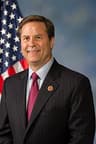 Donald Norcross
Democrat · New Jersey