Bill · H.R. 2798· House(119-HR-2798)
High-Quality Charter Schools Act
- Introduced
- 4/9/2025
- Last activity
- 4/9/2025 — Referred to the House Committee on Ways and Means.
- Sponsored by
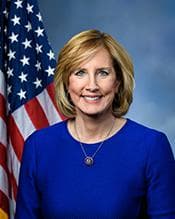
- Claudia Tenney
- Cosponsors
- - 7 - 0
- Introduced
- In Committee
What this bill would do
This bill, known as the "High-Quality Charter Schools Act," proposes to amend the Internal Revenue Code of 1986. It would allow U.S. citizens or residents to claim a tax credit for charitable contributions made to specific charter school organizations. These credits are intended for the creation or expansion of charter schools. The credit is set at 75 percent of the qualified contribution, subject to specific limits. The bill also establishes rules for how these organizations must manage and expend the funds they receive.
Yes· 3 of 11
Does this make it easier to use public money at a school other than the local one?+7
By incentivizing contributions to charter schools, the bill promotes increased options and school choice.
Would people with substantial wealth be better off under this?+5
The tax credit allows high-net-worth individuals to subsidize their philanthropy via tax reductions.
Would the very wealthiest people be better off under this?+5
The bill provides significant tax-advantaged opportunities for large-scale charitable giving.
The opposite
Does this give the federal government more power?-2
The bill utilizes federal tax code amendments to influence the operation of state-level charter schools.
Who it would affect, and how
Potential Positive Impacts for People
-
Tax Relief for Donors: U.S. citizens or residents can receive a tax credit equal to 75 percent of their qualified contributions to eligible charter school organizations (Section 2, subsection a).
-
Increased Support for Charter Schools: The bill provides a mechanism to fund the creation or expansion of charter schools through qualified contributions of cash or marketable securities (Section 2, subsection c).
-
Support for High-Performing Schools: The definition of an eligible organization includes charter schools or management organizations that have been selected by a State for being in the highest 10 percent for student performance (Section 2, subsection c).
-
Organizational Autonomy: The act aims to allow eligible charter school organizations maximum freedom to meet student needs without governmental control (Section 5, subsection a).
Potential Negative Impacts for People
-
Restrictions on Charitable Deductions: Individuals cannot take a double benefit; any contribution used for this tax credit cannot also be claimed as a charitable contribution under section 170 (Section 2, subsection d).
-
Contribution Limitations: The credit is capped at the greater of 10 percent of the taxpayer's adjusted gross income or $5,000 (Section 2, subsection b).
-
Expenditure Requirements for Organizations: Eligible charter school organizations must meet specific requirements to expend their qualified contributions, or they risk losing the ability to receive future qualified contributions (Section 3, subsection a).
Groups and Interests Ranking
Every group the model scored this bill for, from -10 to +10. Hover a score for the reason it gave.
- Demographic And Interest Groups
- Good For Billionaires+5Good For High Net Worth Individuals+5Good For Students+5Good For Ultra High Net Worth Individuals+5Good For Children+4Good For High Income Households+4Good For Middle Class Households+3Good For Low Income Households+2
- Education And Technology
- Improves School Choice+7Increases Public School Funding+5
- Governance And Ideology
- Improves Government Transparency+3Increases Federal Power-2
- 6/10/2026
- 1 Cosponsor added.
- 4/9/2026
- 1 Cosponsor added.
- 5/19/2025
- 2 Cosponsors added.
- 4/28/2025
- 1 Cosponsor added.
- 4/9/2025
- Referred to the House Committee on Ways and Means.
- 3 Cosponsors added.
- Introduced in House
One bill Congress.gov lists as related to this one — companions in the other chamber, earlier versions, and bills this one absorbed or was folded into.
 Byron Donalds
Republican · Florida
 Randy Fine
Republican · Florida
 Kevin Kiley
Independent · California
 Laurel Lee
Republican · Florida
 Nicole Malliotakis
Republican · New York
 James Moylan
Republican · Guam
 Burgess Owens
Republican · Utah
 Elise Stefanik
Republican · New York