Steve Cohen (D-TN)
HAPPY BIRTHDAY Budget Act
A Democratic bill with 14 Democratic cosponsors · See all 14 cosponsors
Last activity — Referred to the Committee on Armed Services, and in addition to the Committee on Oversight and Government Reform, for a period to be subsequently determined by the Speaker, in each case for consideration of such provisions as fall within the jurisdiction of the committee concerned.
In committee
Introduced and handed to a committee in the chamber it started in.
The committee holds it, and most bills are never heard from again. A hearing or a committee vote would be news; silence is the usual outcome, and it kills the bill without anyone voting against it.
Its path through Congress
- Introduced
- In Committee
What this bill would do
This bill, titled the "HAPPY BIRTHDAY Budget Act," aims to stop the use of Federal money for a military parade in Washington, D.C., that is meant for President Donald J. Trump's personal celebration. It specifically prohibits funds from being used for the planning, security, or infrastructure of parades intended for personal milestones or private interests. The bill notes that previous considerations for such parades caused significant costs to the military and public safety. Additionally, it addresses concerns regarding damage to local roads caused by heavy military vehicles. Finally, the act suggests alternative ways to celebrate birthdays without using public funds for military displays.
Yes· 3 of 8
- Scored +5
Does this reduce what the federal government spends?
The bill reduces government spending by prohibiting the use of federal funds for large-scale personal military parades.
- Scored +5
Does this make the government pay for what it commits to?
The bill promotes fiscal responsibility by preventing taxpayer money from being used for personal milestones rather than national purposes.
- Scored +5
Would people in cities be better off under this?
The bill benefits urban residents in D.C. by reducing financial burdens and potential road damage.
The opposite
No question was scored the opposite.
Who it would affect, and how
Potential Positive Impacts for People
-
Protection of Taxpayer Funds: By prohibiting the obligation or expenditure of Federal funds for parades intended for personal celebrations, the bill seeks to ensure money is not used for personal glorification (Section 4).
-
Reduction of Financial Burden on Local Agencies: The bill notes that the District of Columbia is often not fully reimbursed for Federal event expenses, and this prohibition could prevent an undue financial burden on local agencies and taxpayers (Section 2, Finding 5).
-
Prevention of Infrastructure Damage: The bill highlights that heavy military vehicles risk damaging District of Columbia roads, which are not designed for such weight; preventing these parades could avoid the need for taxpayer-funded repairs (Section 2, Finding 3).
-
Public Safety and Cost Savings: Previous considerations for such parades involved high costs for public safety in the District of Columbia, which this bill aims to avoid (Section 2, Finding 2).
Potential Negative Impacts for People
- No negative impacts are explicitly stated in the provided text.
Groups and Interests Ranking
Every group the model scored this bill for, from -10 to +10. Tap or hover a score for the reason it gave.
- Economy And Finance
- Does this make the government pay for what it commits to? — The bill promotes fiscal responsibility by preventing taxpayer money from being used for personal milestones rather than national purposes. Does this reduce what the federal government spends? — The bill reduces government spending by prohibiting the use of federal funds for large-scale personal military parades.
- Demographic And Interest Groups
- Would people in cities be better off under this? — The bill benefits urban residents in D.C. by reducing financial burdens and potential road damage. Would households on low incomes be better off under this? — The bill protects taxpayer funds, which benefits low-income households by ensuring efficient public spending. Would middle-income households be better off under this? — The bill protects taxpayer funds, which benefits middle-class households by ensuring efficient public spending.
- Environment Energy And Infrastructure
- Does this repair or build roads and bridges? — The bill prevents potential damage to District of Columbia roads caused by heavy military vehicles.
- National Security And Foreign Policy
- Does this reduce what is spent on the military? — The bill restricts spending on military parades intended for personal use.
- Governance And Ideology
- Does this make what the government does easier for the public to see? — The bill prevents the use of government funds for personal glorification, increasing transparency in spending.
- 7/2/2025
- 1 Cosponsor added.
- 6/20/2025
- 3 Cosponsors added.
- 6/11/2025
- 4 Cosponsors added.
- 6/10/2025
- 2 Cosponsors added.
- 6/9/2025
- 1 Cosponsor added.
- 6/4/2025
- 2 Cosponsors added.
- 5/6/2025
- 1 Cosponsor added.
- 4/9/2025
- Referred to the Committee on Armed Services, and in addition to the Committee on Oversight and Government Reform, for a period to be subsequently determined by the Speaker, in each case for consideration of such provisions as fall within the jurisdiction of the committee concerned.
- Introduced in House
 Judy Chu
Democrat · California
 Diana DeGette
Democrat · Colorado
 Madeleine Dean
Democrat · Pennsylvania
 Robert Garcia
Democrat · California
 Daniel Goldman
Democrat · New York
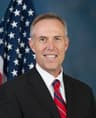 Jared Huffman
Democrat · California
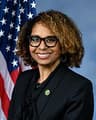 Sydney Kamlager-Dove
Democrat · California
 Janice Schakowsky
Democrat · Illinois
 Melanie Stansbury
Democrat · New Mexico
 Andrea Salinas
Democrat · Oregon
 Lateefah Simon
Democrat · California
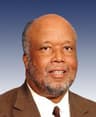 Bennie Thompson
Democrat · Mississippi
 Rashida Tlaib
Democrat · Michigan
 Bonnie Watson Coleman
Democrat · New Jersey