Bill · H.R. 2754· House(119-HR-2754)
Protecting Military Installations and Ranges Act of 2025
- Introduced
- 4/9/2025
- Last activity
- 4/9/2025 — Referred to the Committee on Financial Services, and in addition to the Committees on Foreign Affairs, Energy and Commerce, Armed Services, and Transportation and Infrastructure, for a period to be subsequently determined by the Speaker, in each case for consideration of such provisions as fall within the jurisdiction of the committee concerned.
- Sponsored by
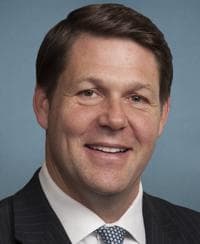
- Jodey Arrington
- Cosponsors
- - 2 - 0
- Introduced
- In Committee
What this bill would do
The Protecting Military Installations and Ranges Act of 2025 requires the Committee on Foreign Investment in the United States to review specific real estate transactions. These reviews target purchases or leases of real estate near military installations or specific military airspace. The requirements apply to foreign persons connected to or subsidized by the Russian Federation, the People's Republic of China, the Islamic Republic of Iran, or the Democratic People's Republic of Korea. The bill mandates that the Committee initiate these reviews unilaterally. Additionally, it establishes rules regarding the review of energy projects when real property transactions are under investigation.
Yes
Does this give the federal government more power?+5
The bill expands the mandatory review authority of CFIUS over specific real estate transactions.
Does this make what the government does easier for the public to see?+3
The bill requires mandatory reporting and certification of certain transactions to Congress.
The opposite· 3 of 5
Would business owners be better off under this?-2
The new regulatory requirements may create administrative burdens for developers and property owners.
Does this put more money into wind, solar and other renewable power?-2
The bill imposes new review processes that may delay energy projects, including renewable ones.
Would students be better off under this?-1
Potential delays in energy and infrastructure projects could have indirect impacts on economic opportunities for students.
Who it would affect, and how
Potential Positive Impacts for People
-
Increased Oversight of Sensitive Areas: The bill requires the Committee on Foreign Investment in the United States to review real estate transactions located within 100 miles of a military installation or within 50 miles of military training routes, special use airspace, controlled firing areas, or military operations areas (Section 2).
-
Targeted Review of Foreign Entities: Reviews are specifically directed at foreign persons who are owned, controlled, acting for, or receiving subsidies from the governments of the Russian Federation, the People's Republic of China, the Islamic Republic of Iran, or the Democratic People's Republic of Korea (Section 2).
-
Enhanced Congressional Communication: The bill requires certifications regarding these transactions to be sent to specific Members of the Senate and House of Representatives representing the locations of the military installations, routes, or airspace involved (Section 2).
-
National Security Coordination for Energy Projects: The bill creates a process where the Secretary of Defense can find that an energy project results in an unacceptable risk to national security if the underlying real property is found to threaten national security during a review (Section 3).
Potential Negative Impacts for People
-
Project Delays: The Secretary of Defense may not complete a review of an energy project until the Committee on Foreign Investment in the United States concludes its action, which may delay the project (Section 3).
-
Restrictions on Transportation Determinations: The Secretary of Transportation is prohibited from issuing a determination regarding a proposed structure on certain real property until the Committee concludes its action and the Secretary of Defense issues a finding or advice (Section 3).
Groups and Interests Ranking
Every group the model scored this bill for, from -10 to +10. Hover a score for the reason it gave.
- Governance And Ideology
- Increases Federal Power+5Improves Government Transparency+3
- Demographic And Interest Groups
- Good For Business Owners-2Good For Students-1
- Environment Energy And Infrastructure
- Increases Renewable Energy Investment-2
- Economy And Finance
- Improves Economic Growth-1
- National Security And Foreign Policy
- Improves International Trade-1
- 3/26/2026
- 1 Cosponsor added.
- 4/9/2025
- Referred to the Committee on Financial Services, and in addition to the Committees on Foreign Affairs, Energy and Commerce, Armed Services, and Transportation and Infrastructure, for a period to be subsequently determined by the Speaker, in each case for consideration of such provisions as fall within the jurisdiction of the committee concerned.
- 1 Cosponsor added.
- Introduced in House
One bill Congress.gov lists as related to this one — companions in the other chamber, earlier versions, and bills this one absorbed or was folded into.
 Tim Burchett
Republican · Tennessee
 Josh Brecheen
Republican · Oklahoma