Bill · H.R. 2739· House(119-HR-2739)
Counseling Not Criminalization in Schools Act
- Introduced
- 4/8/2025
- Last activity
- 4/8/2025 — Referred to the Committee on Education and Workforce, and in addition to the Committee on the Judiciary, for a period to be subsequently determined by the Speaker, in each case for consideration of such provisions as fall within the jurisdiction of the committee concerned.
- Sponsored by
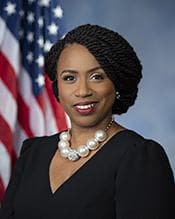
- Ayanna Pressley
- Cosponsors
- - 12 - 0
- Introduced
- In Committee
What this bill would do
The Counseling Not Criminalization in Schools Act aims to redirect Federal funding away from the presence of police in schools and toward evidence-based, trauma-informed services. It prohibits the use of Federal funds for hiring, maintaining, or training law enforcement officers within school programs. To achieve this, the bill establishes a competitive grant program for local educational agencies to replace police with mental health and support personnel. These agencies must demonstrate they have terminated existing law enforcement contracts or disbanded school police departments before receiving funds. The ultimate goal is to improve academic outcomes and create safe, inclusive environments for all students, particularly marginalized groups.
Yes· 3 of 21
Would children be better off under this?+8
The bill focuses on creating safer, more supportive school environments for children.
Would Black Americans be better off under this?+8
The bill aims to reduce the disproportionate arrest rates of Black students in schools.
Would Native Americans be better off under this?+8
The bill targets the higher likelihood of Native American students being arrested in schools.
The opposite
Does this give the government more power to monitor people inside the country?-5
The bill seeks to reduce the use of surveillance equipment like cameras and facial recognition in schools.
Does this reduce what the federal government spends?-2
The bill reallocates existing funding away from law enforcement toward educational services, which may change how federal funds are distributed.
Who it would affect, and how
Potential Positive Impacts for People
-
Improved Student Support Services: The bill provides funds to hire and train personnel such as school counselors, psychologists, nurses, social workers, and "credible messengers" to address student needs (Section 6, subsection d).
-
Addressing Racial and Disability Disparities: The legislation targets the disproportionate arrest and discipline rates faced by Black, Native American, Latino, LGBTQI+, and students with disabilities by focusing on trauma-informed care rather than punitive measures (Section 2, findings; Section 6, subsection d, paragraph 2, subparagraph v).
-
Enhanced School Climate: By prioritizing evidence-based, positive behavioral interventions and restorative justice, the bill seeks to create safer and more inclusive learning environments (Section 3, purpose; Section 6, subsection d, paragraph 2, subparagraph a).
-
Mental Health and Safety Focus: The bill emphasizes the importance of physical, psychological, and emotional safety through the implementation of trauma-informed services (Section 4, definition of trauma-informed services).
Potential Negative Impacts for People
-
Strict Requirements for Funding: To qualify for grants, local educational agencies must first terminate existing law enforcement contracts or dissolve district-based police departments, which could disrupt current school security arrangements (Section 6, subsection b).
-
Prohibition on Certain Security Measures: The bill prohibits the use of grant funds for the purchase or maintenance of surveillance equipment like metal detectors, surveillance cameras, or facial recognition technology (Section 6, subsection e, paragraph 2).
-
Restriction on Staffing Choices: The act explicitly prohibits using the allocated grant funds for arming teachers, principals, or other school personnel (Section 6, subsection e, paragraph 3).
Groups and Interests Ranking
Every group the model scored this bill for, from -10 to +10. Hover a score for the reason it gave.
- Demographic And Interest Groups
- Good For African Americans+8Good For Children+8Good For Native Americans+8Good For People With Disabilities+8Good For Students+8Good For Hispanic Americans+7Good For L G B T Q Community+7Good For Immigrants+6Good For Low Income Households+6Good For Young Adults+5
- Social Issues And Justice
- Improves Racial Equity+8Improves Disability Rights+7Improves L G B T Q Rights+7Improves Policing Reform+7
- Governance And Ideology
- Improves Government Transparency+5Improves Privacy Rights+5Increases Federal Power+3
- Education And Technology
- Increases Public School Funding+7Improves Data Privacy+5
- Healthcare
- Improves Mental Health Access+8
- National Security And Foreign Policy
- Increases Domestic Surveillance-5
- Economy And Finance
- Increases Job Creation+5Reduces Government Spending-2
- 10/5/2026
- 1 Cosponsor added.
- 7/30/2026
- 1 Cosponsor added.
- 4/8/2025
- Referred to the Committee on Education and Workforce, and in addition to the Committee on the Judiciary, for a period to be subsequently determined by the Speaker, in each case for consideration of such provisions as fall within the jurisdiction of the committee concerned.
- 10 Cosponsors added.
- Introduced in House
3 bills Congress.gov lists as related to this one — companions in the other chamber, earlier versions, and bills this one absorbed or was folded into.
 Suzanne Bonamici
Democrat · Oregon
 Troy Carter
Democrat · Louisiana
 Greg Casar
Democrat · Texas
 Summer Lee
Democrat · Pennsylvania
 Eleanor Norton
Democrat · District of Columbia
 Alexandria Ocasio-Cortez
Democrat · New York
 Ilhan Omar
Democrat · Minnesota
 Mark Pocan
Democrat · Wisconsin
 Delia Ramirez
Democrat · Illinois
 Rashida Tlaib
Democrat · Michigan
 Shri Thanedar
Democrat · Michigan
 Bonnie Watson Coleman
Democrat · New Jersey