Bill · H.R. 2722· House(119-HR-2722)
VA Funding and Workforce Protection Act
- Introduced
- 4/8/2025
- Last activity
- 5/20/2026 — Committee Hearings Held
- Sponsored by
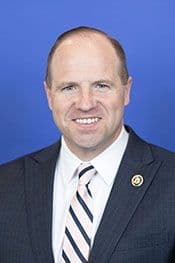
- Timothy Kennedy
- Cosponsors
- - 26 - 0
- Introduced
- In Committee
What this bill would do
The VA Funding and Workforce Protection Act aims to control how the Department of Veterans Affairs handles its money and staff. It restricts the Department from impounding, transferring, or reprogramming discretionary appropriations without new specific laws. The bill also requires the Secretary to notify Congress if a funding shortfall is approaching. Additionally, it creates exemptions from hiring freezes and mandates the reinstatement of certain removed veteran employees. Finally, it sets new rules and notification requirements regarding layoffs and the removal of probationary employees.
Yes· 3 of 6
Would veterans be better off under this, taking everything together?+8
The bill provides significant job security, reinstatement rights, and funding protections specifically for veterans.
Does this help veterans get medical care?+6
The bill protects VA funding from being diverted and ensures staffing stability through hiring freeze exemptions.
Does this make what the government does easier for the public to see?+5
The bill mandates increased Congressional oversight and reporting on personnel actions.
The opposite
Does this reduce what the federal government spends?-2
The bill limits the Department's flexibility to transfer or reprogram funds, which may hinder efficient spending adjustments.
Who it would affect, and how
Potential Positive Impacts for People
-
Protection of Funding: Discretionary appropriations for the Department, including the Veterans Health Administration, cannot be impounded, transferred, or reprogrammed without new statutory authority (Section 2(a)). This ensures money intended for veterans is used as intended.
-
Early Warning on Shortfalls: The Secretary must notify the Committees on Veterans' Affairs if the Department is within 30 days of a funding shortfall (Section 2(b)). This provides transparency regarding the Department's financial status.
-
Job Security during Hiring Freezes: The Department is exempt from any hiring freezes issued by the President, the Secretary, or the Director of the Office of Personnel Management between January 20, 2025, and January 20, 2029 (Section 3(a)).
-
Reinstatement for Veterans: Veterans who were career employees of the Department and were removed between January 20, 2025, and the date of this Act's enactment must be reinstated to their previous or equivalent position (Section 3(b)(1)).
-
Protection from Reductions in Force: Removed veteran employees are exempt from any reduction in force that occurs before January 20, 2029 (Section 3(b)(2)).
-
Increased Oversight on Employee Removals: The Secretary must provide written notice to Congress 15 days before removing any officer or employee due to a reduction in force or agency reorganization (Section 3(c)(1)).
-
Protection for Probationary Employees: Employees in probationary status cannot be removed without a new law specifically permitting such a removal (Section 3(c)(2)(A)).
-
Transparency for Probationary Removals: When a probationary employee is removed for poor performance, the Secretary must submit a report to Congress including the reasons, the most recent appraisal, and the removal notice (Section 3(c)(2)(B)(i)).
Potential Negative Impacts for People
-
Requirement for New Legislation for Fund Changes: The Department cannot impound, transfer, or reprogram funds without specific new laws being enacted (Section 2(a)). This may limit the Department's flexibility in managing its budget.
-
Mandatory Reinstatements: The Secretary is required to reinstate certain removed veteran employees to their former or equivalent positions (Section 3(b)(1)).
-
Mandatory Reporting Burdens: The Secretary must submit various reports to Congress regarding probationary employees and must certify compliance with this Act annually (Section 3(c)(2)(B) and Section 4).
Groups and Interests Ranking
Every group the model scored this bill for, from -10 to +10. Hover a score for the reason it gave.
- Governance And Ideology
- Improves Government Transparency+5Improves Due Process+4
- Demographic And Interest Groups
- Good For Veterans+8
- Healthcare
- Improves Veterans Healthcare+6
- National Security And Foreign Policy
- Improves Veterans Benefits+5
- Economy And Finance
- Improves Fiscal Responsibility+3Reduces Government Spending-2
- 5/20/2026
- Committee Hearings Held
- 3/18/2026
- Committee Hearings Held
- 7/14/2025
- 1 Cosponsor added.
- 6/17/2025
- 1 Cosponsor added.
- 4/28/2025
- 2 Cosponsors added.
- 4/24/2025
- 2 Cosponsors added.
- 4/14/2025
- 1 Cosponsor added.
- 4/10/2025
- 1 Cosponsor added.
- 4/9/2025
- 1 Cosponsor added.
- 4/8/2025
- Referred to the House Committee on Veterans' Affairs.
- 17 Cosponsors added.
- Introduced in House
 Nikki Budzinski
Democrat · Illinois
 André Carson
Democrat · Indiana
 Judy Chu
Democrat · California
 Angie Craig
Democrat · Minnesota
 Jasmine Crockett
Democrat · Texas
 Danny Davis
Democrat · Illinois
 Debbie Dingell
Democrat · Michigan
 Henry Johnson
Democrat · Georgia
 Mike Levin
Democrat · California
 Greg Landsman
Democrat · Ohio
 LaMonica McIver
Democrat · New Jersey
 John Mannion
Democrat · New York
 Kelly Morrison
Democrat · Minnesota
 Eleanor Norton
Democrat · District of Columbia
 Joe Neguse
Democrat · Colorado
 Alexandria Ocasio-Cortez
Democrat · New York
 Jimmy Panetta
Democrat · California
 Raul Ruiz
Democrat · California
 Delia Ramirez
Democrat · Illinois
 Terri Sewell
Democrat · Alabama
 Emilia Sykes
Democrat · Ohio
 Dina Titus
Democrat · Nevada
 Rashida Tlaib
Democrat · Michigan
 Shri Thanedar
Democrat · Michigan
 Nydia Velázquez
Democrat · New York
 Nikema Williams
Democrat · Georgia