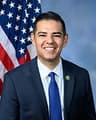
Robert Garcia (D-CA)
People Over Parking Act of 2025
A Democratic bill with 11 Democratic cosponsors · See all 11 cosponsors
Last activity — Referred to the House Committee on Financial Services.
In committee
Introduced and handed to a committee in the chamber it started in.
The committee holds it, and most bills are never heard from again. A hearing or a committee vote would be news; silence is the usual outcome, and it kills the bill without anyone voting against it.
Its path through Congress
- Introduced
- In Committee
What this bill would do
The "People Over Parking Act of 2025" aims to give property owners more control over their development decisions. It focuses on how many automobile parking spots are provided for new or substantially reconstructed residential, retail, commercial, or industrial structures. This specific authority applies to projects located within 0.5 miles of a covered public transit point. Under this bill, the property owner would have sole discretion to decide the number of parking spots to provide. Consequently, this act preempts state or local laws that conflict with these discretionary powers.
Yes· 3 of 8
- Scored +7
Would business owners be better off under this?
Property and business owners gain significant discretionary power and reduced regulatory oversight.
- Scored +6
Does this give the federal government more power?
The bill increases federal authority by preempting state and local regulations regarding parking.
- Scored +5
Does this make it easier to run a small business?
By granting discretion over parking requirements, the bill reduces regulatory burdens on developers and commercial owners.
The opposite
- Scored -7
Does this leave more decisions to the states?
The bill reduces state and local authority by preempting their ability to regulate parking requirements.
Who it would affect, and how
Potential Positive Impacts for People
-
Increased Discretion for Property Owners: Under Section 2(a), owners of new or substantially reconstructed residential, retail, commercial, or industrial structures located near certain transit points can decide how many parking spots to provide. This gives the owner sole discretion over the number of spots in connection with their project.
-
Preemption of Inconsistent Local Laws: Section 2(b) states that any state or local law or regulation that is inconsistent with this section is preempted. This allows the discretion granted to the property owner to override existing local requirements.
Potential Negative Impacts for People
- Removal of Local Regulatory Control: Section 2(b) establishes that state or local laws, regulations, or requirements that are inconsistent with the owner's discretion are preempted. This limits the ability of political subdivisions or states to enforce their own parking requirements for these specific developments.
Groups and Interests Ranking
Every group the model scored this bill for, from -10 to +10. Tap or hover a score for the reason it gave.
- Demographic And Interest Groups
- Would business owners be better off under this? — Property and business owners gain significant discretionary power and reduced regulatory oversight. Would people in cities be better off under this? — Increases transit-oriented development potential in urban areas. Would households on low incomes be better off under this? — Potential for more affordable housing through reduced development costs near transit.
- Environment Energy And Infrastructure
- Does this improve buses, trains and other public transport? — By allowing less parking near transit, the bill supports transit-oriented development which increases transit utility. Does this cut the pollution that drives climate change? — Encouraging development near public transit can reduce automobile reliance and associated emissions.
- Economy And Finance
- Does this make it easier to run a small business? — By granting discretion over parking requirements, the bill reduces regulatory burdens on developers and commercial owners.
- Social Issues And Justice
- Does this make housing cost less? — Reducing parking minimums can potentially lower development costs and encourage denser, more affordable housing near transit.
- Governance And Ideology
- Does this give the federal government more power? — The bill increases federal authority by preempting state and local regulations regarding parking. Does this leave more decisions to the states? — The bill reduces state and local authority by preempting their ability to regulate parking requirements.
- 10/6/2026
- 1 Cosponsor added.
- 4/8/2025
- Referred to the House Committee on Financial Services.
- 10 Cosponsors added.
- Introduced in House
 Yassamin Ansari
Democrat · Arizona
 Greg Casar
Democrat · Texas
 Maxwell Frost
Democrat · Florida
 Laura Friedman
Democrat · California
 Seth Moulton
Democrat · Massachusetts
 Kevin Mullin
Democrat · California
 Jerrold Nadler
Democrat · New York
 Ilhan Omar
Democrat · Minnesota
 Scott Peters
Democrat · California
 Emilia Sykes
Democrat · Ohio
 Jill Tokuda
Democrat · Hawaii