Bill · H.R. 2666· House(119-HR-2666)
CBO Scoring Accountability Act
- Introduced
- 4/7/2025
- Last activity
- 4/7/2025 — Referred to the House Committee on the Budget.
- Sponsored by
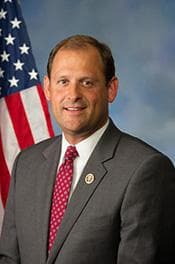
- Andy Barr
- Cosponsors
- - 22 - 0
- Introduced
- In Committee
What this bill would do
This bill, titled the "CBO Scoring Accountability Act," aims to amend the Congressional Budget and Impoundment Control Act of 1974. It requires the Congressional Budget Office to provide supplemental analyses of major legislation after it has been enacted into law. These analyses must occur annually for the first 10 years following the enactment of such legislation. The goal is to track the actual costs and changes in Federal revenue resulting from that legislation. The Director must also report to Congress if there are significant discrepancies between previous estimates and actual results.
Yes· 3 of 5
Does this make what the government does easier for the public to see?+7
Provides new mechanisms for public access to actual legislative costs and revenue impacts.
Does this make the government pay for what it commits to?+5
Strengthens fiscal accountability by requiring actual cost tracking against original estimates.
Does this give the federal government more power?+1
Increases the oversight role and data collection requirements of the CBO.
The opposite
No question was scored the opposite.
Who it would affect, and how
Potential Positive Impacts for People
-
Increased Financial Transparency: The Director of the Congressional Budget Office will prepare and make publicly available an analysis of the results of carrying out major legislation, including estimates of costs and changes in Federal revenues (Sec. 2(a)(1)).
-
Accountability for Budget Estimates: The Director must submit a report to Congress explaining the cause of any discrepancy if there is a difference of 10 percent or more between previous estimates and actual costs or changes in Federal revenue (Sec. 2(b)).
-
Tracking Long-Term Legislative Impact: The analysis is required annually for the first 10 years after a piece of major legislation is enacted, allowing for a comparison of costs against previous estimates over time (Sec. 2(a)).
Potential Negative Impacts for People
- Increased Requirements for Government Agencies: Each department, agency, establishment, or regulatory agency or commission is required to provide information and assistance to the Director of the Congressional Budget Office as requested (Sec. 2(c)).
Groups and Interests Ranking
Every group the model scored this bill for, from -10 to +10. Hover a score for the reason it gave.
- Governance And Ideology
- Improves Government Transparency+7Increases Federal Power+1
- Economy And Finance
- Improves Fiscal Responsibility+5Reduces Government Spending+1Reduces National Debt+1
- 6/17/2025
- 1 Cosponsor added.
- 6/3/2025
- 1 Cosponsor added.
- 4/10/2025
- 2 Cosponsors added.
- 4/7/2025
- Referred to the House Committee on the Budget.
- 18 Cosponsors added.
- Introduced in House
 Ben Cline
Republican · Virginia
 Mike Collins
Republican · Georgia
 Chuck Edwards
Republican · North Carolina
 Gabe Evans
Republican · Colorado
 Brad Finstad
Republican · Minnesota
 Jeff Hurd
Republican · Colorado
 Darrell Issa
Republican · California
 Brad Knott
Republican · North Carolina
 Robert Latta
Republican · Ohio
 Mary Miller
Republican · Illinois
 Cory Mills
Republican · Florida
 Richard McCormick
Republican · Georgia
 John McGuire
Republican · Virginia
 Troy Nehls
Republican · Texas
 Andrew Ogles
Republican · Tennessee
 John Rutherford
Republican · Florida
 John Rose
Republican · Tennessee
 Derek Schmidt
Republican · Kansas
 Claudia Tenney
Republican · New York
 Derrick Van Orden
Republican · Wisconsin
 Ann Wagner
Republican · Missouri
 Bruce Westerman
Republican · Arkansas