Bill · H.R. 2646· House(119-HR-2646)
Radar Gap Elimination Act
- Introduced
- 4/3/2025
- Last activity
- 4/3/2025 — Referred to the House Committee on Science, Space, and Technology.
- Sponsored by
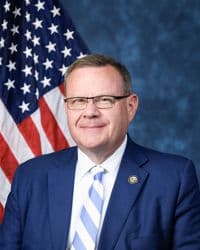
- Tim Moore
- Cosponsors
- - 2 - 2
- Introduced
- In Committee
What this bill would do
The Radar Gap Elimination Act establishes the "Radar Next Program" to evaluate and update the United States' weather radar network. The Under Secretary of Commerce for Oceans and Atmosphere is tasked with creating a plan to replace the existing NEXRAD system. This plan must aim to improve weather radar coverage, performance, and accuracy across the country and its territories. The program includes developing a proof-of-concept phased array radar and establishing a weather surveillance radar testbed. Additionally, the Under Secretary may partner with outside entities to fill data gaps in weather coverage. The entire plan must be fully implemented and executed by September 30, 2040.
Yes· 3 of 9
Would farmers be better off under this?+5
Improved weather and water-related forecasts are highly beneficial for agricultural operations.
Would people in rural areas be better off under this?+5
The bill specifically addresses filling data gaps in regions where large systems are not commercially viable.
Does this improve help for people hit by a disaster?+5
Improved weather radar coverage enhances disaster preparedness and early warning capabilities.
The opposite
No question was scored the opposite.
Who it would affect, and how
Potential Positive Impacts for People
-
Improved Weather Forecasting: The plan seeks to continue and improve weather radar coverage and provides for expected improvements to data available for weather and water-related forecasts and warnings (Section 2(c)(2)).
-
Enhanced Severe Weather Detection: The Under Secretary may partner with outside entities to better detect significant precipitation and severe weather over a greater area across a population (Section 2(d)(1)(C)).
-
Filling Coverage Gaps: The program allows for the use of small, gap-filling radars through private and local partners in regions where geography prevents the use of large systems or where large systems are not commercially viable (Section 2(c)(2)(D)(ii)).
-
Closing Data Gaps: The Under Secretary may contract with entities outside of NOAA to supplement data gaps in weather radar coverage at low levels and wide areas (Section 2(d)(1)(A)).
Potential Negative Impacts for People
- No specific negative impacts or burdens are explicitly stated in the provided text.
Groups and Interests Ranking
Every group the model scored this bill for, from -10 to +10. Hover a score for the reason it gave.
- Demographic And Interest Groups
- Good For Farmers+5Good For Rural Residents+5Good For Low Income Households+3Good For Business Owners+2Good For Middle Class Households+2Good For People With Disabilities+2Good For Urban Residents+2
- Environment Energy And Infrastructure
- Improves Disaster Relief And F E M A+5
- Education And Technology
- Increases Scientific Research Funding+4
- 10/17/2025
- 1 Cosponsor added.
- 4/9/2025
- 1 Cosponsor added.
- 4/3/2025
- Referred to the House Committee on Science, Space, and Technology.
- 2 Cosponsors added.
- Introduced in House
 Janelle Bynum
Democrat · Oregon
 Randy Feenstra
Republican · Iowa
 Pat Harrigan
Republican · North Carolina
 Deborah Ross
Democrat · North Carolina