Bill · H.R. 2629· House(119-HR-2629)
Impact Aid Infrastructure Partnership Act
- Introduced
- 4/3/2025
- Last activity
- 4/3/2025 — Referred to the House Committee on Education and Workforce.
- Sponsored by
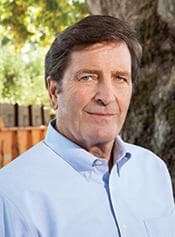
- John Garamendi
- Cosponsors
- - 13 - 3
- Introduced
- In Committee
What this bill would do
This bill creates the Impact Aid Infrastructure Partnership Act to provide construction and repair funding for local educational agencies eligible for Impact Aid. It authorizes $250,000,000 annually for four years, splitting the money between competitive grants and formula grants through the Department of Education. The competitive grants prioritize schools with severe health and safety hazards, building code violations, or inadequate teacher housing. Schools with limited ability to issue bonds or raise property taxes may receive full funding or require a local match ranging from 10 to 25 percent based on their financial need. Grant funds can be used for construction, renovation, and repairs, but cannot be used to buy real property. The Secretary of Education must submit an annual report to Congress and make it publicly available regarding the projects carried out with these funds.
Yes· 3 of 15
Would students be better off under this?+7
The bill improves learning environments, safety, and facility quality for students.
Does this put more money into public schools?+7
The bill authorizes $1 billion over four years specifically for school facility construction, renovation, and repair.
Would children be better off under this?+6
Improved school facilities directly benefit the safety and learning environment of children.
The opposite
No question was scored the opposite.
Who it would affect, and how
Potential Positive Impacts for People
-
Priority for Dangerous School Conditions: Under section 4(1), the bill prioritizes competitive emergency grants for schools facing severe health and safety hazards, building code violations, poor ventilation, and structural deficiencies. This ensures that students and staff in the most deteriorated facilities get help first to secure a safe learning environment.
-
Support for Teacher Housing: Section 4(1)(B) and section 4(2)(B) allow funds to be used for the repair, new construction, or rebuilding of teacher housing for local educational agencies serving students on Indian Treaty and Federal trust land or Alaska Native lands. This directly helps address teacher recruitment and retention challenges in remote areas where private housing does not exist.
-
Full Federal Funding for Impoverished Districts: Under section 8(a)(1) and section 8(a)(3), the Secretary of Education will make payments in full for local educational agencies that have no capacity to issue bonds or whose yearly grant payment is $5,000,000 or less. This protects financially strapped communities from having to shoulder construction costs they cannot afford.
-
Use of In-Kind Contributions: Section 9(a)(2) allows local educational agencies to use in-kind contributions to meet their required non-Federal share for project costs. This gives financially limited school districts flexibility by letting them use non-cash resources to pay their share of a construction project.
Potential Negative Impacts for People
-
Required Local Matching Funds: Under section 8(a)(2), local educational agencies that do not qualify for full funding are required to pay a non-Federal share ranging from 10 to 25 percent of the total project cost depending on their learning opportunity threshold percentage, or a flat 25 percent for certain other eligible agencies. This could burden cash-strapped school districts that struggle to scrape together local matching dollars.
-
Prohibition on Real Property Acquisition: Section 9(a)(3)(B) explicitly prohibits local educational agencies from using grant awards for the acquisition of real property. Districts that need to buy land in order to build or expand a facility cannot use these funds for that purpose.
Groups and Interests Ranking
Every group the model scored this bill for, from -10 to +10. Hover a score for the reason it gave.
- Demographic And Interest Groups
- Good For Students+7Good For Children+6Good For Native Americans+6Good For People With Disabilities+5Good For Rural Residents+4Good For Low Income Households+3
- Education And Technology
- Increases Public School Funding+7Improves Internet Access+2
- Social Issues And Justice
- Improves Disability Rights+5Improves Affordable Housing+3
- Environment Energy And Infrastructure
- Improves Rural Development+4Improves Environmental Protections+3
- Economy And Finance
- Increases Job Creation+2
- Governance And Ideology
- Improves Government Transparency+1Increases Federal Power+1
- 9/24/2026
- 1 Cosponsor added.
- 7/20/2026
- 1 Cosponsor added.
- 3/18/2026
- 1 Cosponsor added.
- 9/18/2025
- 2 Cosponsors added.
- 7/25/2025
- 1 Cosponsor added.
- 5/7/2025
- 2 Cosponsors added.
- 4/3/2025
- Referred to the House Committee on Education and Workforce.
- 8 Cosponsors added.
- Introduced in House
One bill Congress.gov lists as related to this one — companions in the other chamber, earlier versions, and bills this one absorbed or was folded into.
 Julia Brownley
Democrat · California
 Don Bacon
Republican · Nebraska
 Ed Case
Democrat · Hawaii
 Donald Davis
Democrat · North Carolina
 Bill Foster
Democrat · Illinois
 Josh Gottheimer
Democrat · New Jersey
 Teresa Leger Fernandez
Democrat · New Mexico
 Rick Larsen
Democrat · Washington
 Eleanor Norton
Democrat · District of Columbia
 Jay Obernolte
Republican · California
 Emily Randall
Democrat · Washington
 Marilyn Strickland
Democrat · Washington
 Kim Schrier
Democrat · Washington
 Melanie Stansbury
Democrat · New Mexico
 Jill Tokuda
Democrat · Hawaii
 Jefferson Van Drew
Republican · New Jersey