Bill · H.R. 2595· House(119-HR-2595)
Building Child Care for a Better Future Act
- Introduced
- 4/2/2025
- Last activity
- 4/2/2025 — Referred to the House Committee on Ways and Means.
- Sponsored by
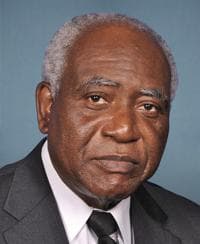
- Danny Davis
- Cosponsors
- - 26 - 0
- Introduced
- In Committee
What this bill would do
The Building Child Care for a Better Future Act aims to amend the Social Security Act to increase the supply, quality, and access to child care. It provides significant funding for child care entitlements to States, Indian tribes, and territories. Additionally, it establishes new grants specifically designed to improve the child care workforce and supply in areas of particular need. This includes support for various activities such as facility improvements, workforce training, and wage increases. The bill also includes provisions for regular evaluations and reporting to ensure the effectiveness of these programs.
Yes· 3 of 27
Would children be better off under this?+9
The bill directly funds better, more accessible, and higher-quality care for children.
Would Native Americans be better off under this?+9
The bill provides dedicated, substantial funding specifically for Indian tribes and tribal organizations.
Does this make child care cost less?+9
The bill provides massive funding to increase the supply, quality, and affordability of child care.
The opposite
Does this reduce what the federal government owes?-2
The bill involves significant new federal spending and appropriations.
Does this reduce what the federal government spends?-2
The bill increases federal outlays for child care through large appropriations.
Who it would affect, and how
Potential Positive Impacts for People
-
Increased Child Care Funding: The bill appropriates $20,000,000,000 for fiscal year 2026 to increase the supply and quality of child care, access to child care, and the workforce (Section 2(a)).
-
Support for Indian Tribes and Territories: Specific amounts are reserved for grants to Indian tribes and tribal organizations (5 percent) and territories (4 percent) to support their specific child care needs (Section 2(a); Section 3(a)(2)(B)).
-
Improved Workforce Compensation: The bill allows for the recruitment and retention of an effective workforce through increased compensation, including wage supplements, bonuses, and ensuring a living wage (Section 3(a)(4)(A)(iv)(VIII)).
-
Facility Improvements and Stability: Funding can be used for the purchase or improvement of land, major renovations, or the construction of buildings to upgrade child care facilities (Section s 3(a)(4)(A)(iv)(IX)).
-
Targeted Assistance for High-Need Areas: The bill directs grants to improve child care in areas of particular need, focusing on increasing supply, quality, and access (Section 3(a)).
-
Support for Diverse Needs: Priority is given to services that serve dual language learners, children with disabilities, children experiencing homelessness, children in foster care, infants, and toddlers (Section 3(a)(6)(B)(ii)).
Potential Negative Impacts for People
-
State Expenditure Requirements: States receiving these grants must certify that they will maintain a minimum level of their own general revenue expenditures for child care assistance, which requires them to supplement rather than replace their current spending (Section 3(a)(5)(C)).
-
Federal Interest in Facilities: For certain facility projects, the Secretary will retain a Federal interest for a period of 10 years, except in the case of privately-owned family child care homes (Section 3(a)(4)(C)(i)(ii)).
Groups and Interests Ranking
Every group the model scored this bill for, from -10 to +10. Hover a score for the reason it gave.
- Demographic And Interest Groups
- Good For Children+9Good For Native Americans+9Good For Low Income Households+8Good For People With Disabilities+7Good For Women+6Good For Business Owners+5Good For Middle Class Households+5Good For Rural Residents+5Good For Union Workers+5Good For Middle Aged+4Good For Students+4Good For Young Adults+4
- Social Issues And Justice
- Improves Childcare Affordability+9Improves Disability Rights+6Improves Poverty Reduction+5Improves Racial Equity+5Improves Gender Equality+4Reduces Homelessness+3
- Economy And Finance
- Increases Minimum Wage+6Improves Small Business Support+5Increases Job Creation+5Improves Economic Growth+4Improves Union Protections+3Reduces Government Spending-2Reduces National Debt-2
- Governance And Ideology
- Improves Government Transparency+4Increases Federal Power+3
- Environment Energy And Infrastructure
- Improves Rural Development+4
- Education And Technology
- Increases Scientific Research Funding+2
- 6/30/2026
- 1 Cosponsor added.
- 9/8/2025
- 1 Cosponsor added.
- 8/26/2025
- 1 Cosponsor added.
- 7/17/2025
- 1 Cosponsor added.
- 5/15/2025
- 1 Cosponsor added.
- 5/7/2025
- 1 Cosponsor added.
- 4/28/2025
- 1 Cosponsor added.
- 4/14/2025
- 1 Cosponsor added.
- 4/7/2025
- 2 Cosponsors added.
- 4/2/2025
- Referred to the House Committee on Ways and Means.
- 16 Cosponsors added.
- Introduced in House
One bill Congress.gov lists as related to this one — companions in the other chamber, earlier versions, and bills this one absorbed or was folded into.
 Suzanne Bonamici
Democrat · Oregon
 Brendan Boyle
Democrat · Pennsylvania
 Judy Chu
Democrat · California
 Troy Carter
Democrat · Louisiana
 Lloyd Doggett
Democrat · Texas
 Suzan DelBene
Democrat · Washington
 Dwight Evans
Democrat · Pennsylvania
 Shomari Figures
Democrat · Alabama
 Jimmy Gomez
Democrat · California
 Steven Horsford
Democrat · Nevada
 Julie Johnson
Democrat · Texas
 John Larson
Democrat · Connecticut
 Gwen Moore
Democrat · Wisconsin
 Kristen McDonald Rivet
Democrat · Michigan
 Eleanor Norton
Democrat · District of Columbia
 Chellie Pingree
Democrat · Maine
 Stacey Plaskett
Democrat · Virgin Islands
 Deborah Ross
Democrat · North Carolina
 Linda Sánchez
Democrat · California
 Emilia Sykes
Democrat · Ohio
 Andrea Salinas
Democrat · Oregon
 Rashida Tlaib
Democrat · Michigan
 Shri Thanedar
Democrat · Michigan
 Juan Vargas
Democrat · California
 Maxine Waters
Democrat · California
 Bonnie Watson Coleman
Democrat · New Jersey