Bill · H.R. 2588· House(119-HR-2588)
Improving Reporting to Prevent Hate Act of 2025
- Introduced
- 4/2/2025
- Last activity
- 4/2/2025 — Referred to the House Committee on the Judiciary.
- Sponsored by
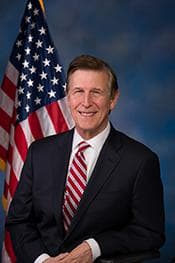
- Donald Beyer
- Cosponsors
- - 3 - 4
- Introduced
- In Committee
What this bill would do
This bill, titled the "Improving Reporting to Prevent Hate Act of 2025," seeks to amend the Omnibus Crime Control and Safe Streets Act of 1968. It requires the Attorney General to establish a method to evaluate if a covered jurisdiction is credibly reporting hate crimes. A covered jurisdiction is defined as a local government with a population of over 100,000 that has requested a grant. If a jurisdiction is found not to be credibly reporting, it may lose its eligibility for certain grant allocations. However, an exception exists if the Attorney General certifies that the jurisdiction has conducted significant community public education and awareness initiatives.
Yes· 3 of 11
Does this narrow racial gaps in how people are treated?+5
The bill promotes accountability in reporting hate crimes which can aid in addressing racial disparities in crime data.
Would LGBTQ people be better off under this?+4
The bill specifically targets hate crime reporting, which is a critical issue for the LGBTQ community.
Does this change how police departments operate?+4
By mandating better hate crime reporting and community engagement, the bill encourages more transparent policing practices.
The opposite
Does this leave more decisions to the states?-2
The bill imposes federal mandates and potential funding penalties on local government jurisdictions.
Who it would affect, and how
Potential Positive Impacts for People
-
Increased Accountability for Local Governments: The Attorney General will evaluate whether a covered jurisdiction has failed to report hate crime data or has reported zero incidents to the FBI (Section 2, subsection j). This creates a mechanism to ensure local governments are tracking and reporting these crimes.
-
Encouragement of Community Education: Jurisdictions can avoid penalties by conducting significant community public education and awareness initiatives (Section 2, subsection k-2). This includes activities such as holding regular public meetings or educational forums regarding the impact of hate crimes and services for victims (Section 2, subsection m-3-B).
-
Standardization of Crime Reporting: The bill encourages jurisdictions to develop standardized systems for collecting and reporting hate crimes to the National Incident-Based Reporting System of the FBI (Section 2, subsection m-3-A-iii).
Potential Negative Impacts for People
- Loss of Funding for Large Local Governments: A covered jurisdiction—defined as a unit of local government with a population over 100,000 that has requested a grant—will be ineligible for an allocation if it is found not to have credibly reported hate crimes (Section 2, subsections k-1 and m-1).
Groups and Interests Ranking
Every group the model scored this bill for, from -10 to +10. Hover a score for the reason it gave.
- Demographic And Interest Groups
- Good For L G B T Q Community+4Good For African Americans+3Good For Asian Americans+3Good For Hispanic Americans+3Good For Native Americans+3Good For Immigrants+2Good For Low Income Households+2
- Social Issues And Justice
- Improves Racial Equity+5Improves Policing Reform+4
- Governance And Ideology
- Improves Government Transparency+4Increases Federal Power+3Increase States Rights-2
- 9/15/2026
- 2 Cosponsors added.
- 9/23/2025
- 2 Cosponsors added.
- 4/21/2025
- 2 Cosponsors added.
- 4/2/2025
- Referred to the House Committee on the Judiciary.
- 1 Cosponsor added.
- Introduced in House
 Don Bacon
Republican · Nebraska
 Judy Chu
Democrat · California
 Brian Fitzpatrick
Republican · Pennsylvania
 Young Kim
Republican · California
 Thomas Kean
Republican · New Jersey
 Thomas Suozzi
Democrat · New York
 Debbie Wasserman Schultz
Democrat · Florida