Bill · H.R. 2572· House(119-HR-2572)
Worker Enfranchisement Act
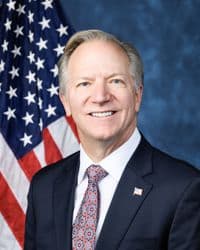
- Introduced
- 4/1/2025
- Last activity
- 4/1/2025 — Referred to the House Committee on Education and Workforce.
- Sponsored by
- Robert Onder
- Cosponsors
- - 9 - 0
- Introduced
- In Committee
What this bill would do
This bill, titled the Worker Enfranchisement Act, seeks to amend the National Labor Relations Act. It aims to change how employee representatives are elected. Specifically, it would require that a person be selected through a secret ballot election. It also introduces a requirement that not less than two-thirds of the employees vote in these elections. These changes would take effect six months after the act is enacted.
Yes· 3 of 4
Would business owners be better off under this?+5
The higher voter threshold makes it easier to prevent the formation of labor unions.
Does this make elections run better?+3
The introduction of secret ballots increases the integrity and privacy of the election process.
Does this protect people from being watched or searched?+2
The secret ballot requirement enhances the privacy of employee votes.
The opposite· 3 of 4
Would union members be better off under this?-6
The two-thirds participation requirement acts as a significant deterrent to union organization and recognition.
Does this strengthen the rights of workers to organise?-4
The high two-thirds voter participation threshold makes it significantly harder for unions to be recognized as exclusive representatives.
Does this make casting a ballot easier in practice?-3
The two-thirds participation requirement creates a significant barrier to successful election outcomes.
Who it would affect, and how
Potential Positive Impacts for People
-
Secret Ballot Requirement: The bill would require that representatives be selected via a secret ballot election, which ensures a specific method of voting (Section 2(a)(1)).
-
Increased Voter Participation: The bill changes the requirements for an exclusive representative to be selected by requiring that not less than two-thirds of the employees vote (Section 2(a)(1)).
Potential Negative Impacts for People
-
Higher Voting Threshold: Under this act, a person cannot be an exclusive representative unless at least two-thirds of the employees vote in the election (Section 2(a)(1)).
-
Modified Election Standards: The bill amends subsection (c)(3) to include the requirement that the majority must consist of at least two-thirds of the employees eligible to vote (Section 2(a)(1)).
Groups and Interests Ranking
Every group the model scored this bill for, from -10 to +10. Hover a score for the reason it gave.
- Governance And Ideology
- Improves Electoral Process+3Improves Privacy Rights+2
- Economy And Finance
- Improves Union Protections-4
- Demographic And Interest Groups
- Good For Business Owners+5Good For Union Workers-6Good For Low Income Households-2
- Social Issues And Justice
- Improves Voting Rights+2Improves Voting Access-3
- 10/10/2025
- 1 Cosponsor added.
- 9/26/2025
- 1 Cosponsor added.
- 7/15/2025
- 1 Cosponsor added.
- 6/26/2025
- 1 Cosponsor added.
- 6/23/2025
- 1 Cosponsor added.
- 6/17/2025
- 1 Cosponsor added.
- 6/12/2025
- 1 Cosponsor added.
- 6/11/2025
- 1 Cosponsor added.
- 4/1/2025
- Referred to the House Committee on Education and Workforce.
- 1 Cosponsor added.
- Introduced in House
 Rick Allen
Republican · Georgia
 Scott Fitzgerald
Republican · Wisconsin
 Glenn Grothman
Republican · Wisconsin
 Mark Harris
Republican · North Carolina
 Mike Kennedy
Republican · Utah
 Mark Messmer
Republican · Indiana
 Burgess Owens
Republican · Utah
 Scott Perry
Republican · Pennsylvania
 Joe Wilson
Republican · South Carolina