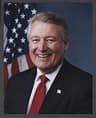
Rick Allen (R-GA)
American Science First Act
A Republican bill with 2 Republican cosponsors · See all 2 cosponsors
Last activity — Referred to the House Committee on Science, Space, and Technology.
In committee
Introduced and handed to a committee in the chamber it started in.
The committee holds it, and most bills are never heard from again. A hearing or a committee vote would be news; silence is the usual outcome, and it kills the bill without anyone voting against it.
Its path through Congress
- Introduced
- In Committee
What this bill would do
This bill, known as the "American Science First Act," aims to restrict how the National Science Foundation distributes resources. It prohibits the Director of the National Science Foundation from awarding grants or other forms of assistance to certain entities. Specifically, it targets individuals or entities that have relationships, such as research partnerships or contracts, with Chinese communist military companies and their affiliates. These prohibited entities include those listed in the Export Administration Regulations or specific lists found in previous National Defense Authorization Acts.
Yes
- Scored +3
Does this better protect the country from computer attacks?
The bill reduces potential technology transfers to foreign military entities by restricting NSF assistance.
The opposite
- Scored -2
Does this put more money into scientific research?
The bill restricts the pool of eligible research partners, which may limit the scope and collaborative capacity of NSF-funded research.
- Scored -1
Would students be better off under this?
Students engaged in research partnerships with prohibited entities may face disruptions to their funding or collaborative opportunities.
Who it would affect, and how
Potential Positive Impacts for People
- Restriction of assistance to specific entities: The bill prevents the National Science Foundation from providing grants or assistance to those affiliated with Chinese communist military companies or specific entities listed in federal regulations and defense acts (Section 2(a)). This is intended to ensure that federal funds are not used for entities identified in the specified regulatory lists.
Potential Negative Impacts for People
- Restrictions on research partnerships and contracts: The bill prohibits assistance to any individual or entity that has a relationship, including research partnerships, joint ventures, or contracts, with the listed entities (Section 2(a)). This could impact individuals or organizations that currently maintain such professional or research-based relationships.
Groups and Interests Ranking
Every group the model scored this bill for, from -10 to +10. Tap or hover a score for the reason it gave.
- National Security And Foreign Policy
- Does this better protect the country from computer attacks? — The bill reduces potential technology transfers to foreign military entities by restricting NSF assistance.
- Education And Technology
- Does this put more money into scientific research? — The bill restricts the pool of eligible research partners, which may limit the scope and collaborative capacity of NSF-funded research.
- Demographic And Interest Groups
- Would students be better off under this? — Students engaged in research partnerships with prohibited entities may face disruptions to their funding or collaborative opportunities.
- 2/4/2025
- 1 Cosponsor added.
- 1/13/2025
- 1 Cosponsor added.
- 1/9/2025
- Referred to the House Committee on Science, Space, and Technology.
- Introduced in House
 Andy Harris
Republican · Maryland
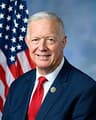 Randy Weber
Republican · Texas