Bill · H.R. 2505· House(119-HR-2505)
Block the Use of Transatlantic Technology in Iranian Made Drones Act
- Introduced
- 3/31/2025
- Last activity
- 6/9/2026 — Received in the Senate and Read twice and referred to the Committee on Banking, Housing, and Urban Affairs.
- Sponsored by
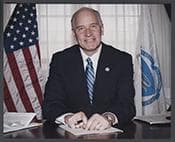
- William Keating
- Cosponsors
- - 2 - 5
- Introduced
- Passed House
- In Senate committee
What this bill would do
This Act, known as the "Block the Use of Transatlantic Technology in Iranian Made Drones Act," focuses on preventing the export of certain technologies to Iran. It requires the Secretary of Commerce to develop a strategy to stop the illegal export of technologies used in unmanned aircraft systems, specifically including various microelectronics. Additionally, the Secretary of State must create a strategy to prevent the export of such technologies from the United States and its allies. The Secretary of Defense is also tasked with developing options for the Armed Forces to deny Iran access to these technologies. These efforts aim to prevent technology from being used in Iranian drones that support the Russian Federation's war in Ukraine or attacks by Hamas against Israel.
Yes· 3 of 4
Does this better protect the country from computer attacks?+5
The bill strengthens defense by restricting the flow of dual-use technologies used for drone warfare.
Does this strengthen ties with allied countries?+5
The bill encourages working with allies to synchronize export control regimes.
Does this put more money into stopping terrorism?+3
The act targets technologies used by terrorist organizations like Hamas and Hezbollah.
The opposite
Does this make trade with other countries easier?-2
Increased export controls may create complexities for international trade in dual-use technologies.
Would business owners be better off under this?-2
Manufacturers may face increased regulatory burdens and compliance costs due to new export strategies.
Who it would affect, and how
Potential Positive Impacts for People
-
Preventing the use of technology in warfare: The bill aims to ensure technology is not used to support the Russian Federation's war against Ukraine or used by Hamas to attack Israel (Section 3).
-
Protecting critical infrastructure: By targeting the export of drone technology, the bill addresses concerns regarding attacks on civilian population centers and critical infrastructure like power plants and ports (Section 3).
-
Strengthening export controls through industry engagement: The Secretary of Commerce will develop a process to proactively engage United States manufacturers by providing them with updates on third-party distributors and resellers that attempt to circumvent export controls (Section 4(a)(2)(C)).
-
International cooperation for technology control: The Secretary of State will work with allies and partners to synchronize their export control regimes with those of the United States (Section 4(b)(2)(B)).
Potential Negative Impacts for People
- Difficulty in controlling dual-use technology: The bill acknowledges that it is difficult for manufacturers and government regulators to control the end use of certain technologies in the global market (Section 3).
Groups and Interests Ranking
Every group the model scored this bill for, from -10 to +10. Hover a score for the reason it gave.
- National Security And Foreign Policy
- Improves Cybersecurity Defense+5Improves International Alliances+5Increases Counter Terrorism Funding+3Improves International Trade-2
- Governance And Ideology
- Increases Federal Power+3
- Demographic And Interest Groups
- Good For Business Owners-2
- 6/9/2026
- Received in the Senate and Read twice and referred to the Committee on Banking, Housing, and Urban Affairs.
- 6/8/2026
- Motion to reconsider laid on the table Agreed to without objection.
- Passed/agreed to in House: On motion to suspend the rules and pass the bill Agreed to by voice vote. (text: CR H3943-3944)
- On motion to suspend the rules and pass the bill Agreed to by voice vote. (text: CR H3943-3944)
- DEBATE - The House proceeded with forty minutes of debate on H.R. 2505.
- Considered under suspension of the rules. (consideration: CR H3943-3945)
- Mr. Mast moved to suspend the rules and pass the bill.
- 9/15/2025
- 1 Cosponsor added.
- 7/22/2025
- Committee Consideration and Mark-up Session Held
- Ordered to be Reported by the Yeas and Nays: 50 - 0.
- 1 Cosponsor added.
- 6/23/2025
- 1 Cosponsor added.
- 6/5/2025
- 1 Cosponsor added.
- 5/14/2025
- 1 Cosponsor added.
- 5/13/2025
- 1 Cosponsor added.
- 3/31/2025
- Referred to the Committee on Foreign Affairs, and in addition to the Committee on Armed Services, for a period to be subsequently determined by the Speaker, in each case for consideration of such provisions as fall within the jurisdiction of the committee concerned.
- 1 Cosponsor added.
- Introduced in House
 Josh Gottheimer
Democrat · New Jersey
 Nick LaLota
Republican · New York
 Michael Lawler
Republican · New York
 Zachary Nunn
Republican · Iowa
 Brad Sherman
Democrat · California
 Claudia Tenney
Republican · New York
 Joe Wilson
Republican · South Carolina