Bill · H.R. 2504· House(119-HR-2504)
The U.S.-European Nuclear Energy Cooperation Act of 2025
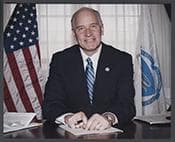
- Introduced
- 3/31/2025
- Last activity
- 3/26/2026 — Ordered to be Reported in the Nature of a Substitute by the Yeas and Nays: 43 - 3.
- Sponsored by
- William Keating
- Cosponsors
- - 2 - 2
- Introduced
What this bill would do
This bill, known as "The U.S.-European Nuclear Energy Cooperation Act of 2025," directs the Secretary of State to create a strategy to strengthen nuclear energy cooperation between the United States and Europe. The goal is to combat Russian and Chinese malign influence within the European nuclear energy sector. The strategy must include assessments of various reactor types, fuel cycles, and the current role of the United States in the market. It also requires an overview of how the U.S. can help reduce Russia's market share in nuclear infrastructure. Additionally, the bill seeks to promote the use of American and allied technologies to ensure energy security.
Yes· 3 of 13
Does this strengthen ties with allied countries?+5
The bill strengthens ties with European allies through shared energy security goals.
Does this favour talking over confrontation abroad?+4
It mandates a formal strategy for diplomatic engagement in the European nuclear sector.
Does this cut the pollution that drives climate change?+4
Promoting nuclear energy and Small Modular Reactors supports clean energy transitions.
The opposite
No question was scored the opposite.
Who it would affect, and how
Potential Positive Impacts for People
-
Increased Energy Security: The bill aims to reduce Russia's influence over the European energy supply and help achieve long-term energy security (Section 3; Section 4(b)(3)).
-
Support for Clean Energy Needs: The strategy encourages the use of Small Modular Reactor Technology to help partner countries meet clean energy needs through scalable and secure programs (Section 3).
-
Economic Opportunities for Allies: The bill encourages prioritizing products and services from the United States and its allies, such as Canada, Japan, the United Kingdom, and the Republic of Korea (Section 3).
-
Countering Disinformation: Funding is authorized to support efforts in countering Russian disinformation campaigns (Section 5).
-
Capacity Building: The strategy includes focusing on capacity building and early-stage project support to expand the nuclear industry in Europe (Section 3; Section 5).
Potential Negative Impacts for People
-
Commercial Competition Issues: The strategy must address potential commercial competitiveness issues that may arise between United States companies and companies from Europe, Canada, Japan, and the Republic of Korea (Section 4(b)(9)).
-
Deployment Challenges: The bill notes that various reactor types may face challenges regarding costs, market barriers for first-of-a-kind designs, and supply chain constraints (Section 4(b)(2)).
Groups and Interests Ranking
Every group the model scored this bill for, from -10 to +10. Hover a score for the reason it gave.
- National Security And Foreign Policy
- Improves International Alliances+5Improves Diplomatic Engagement+4Improves International Trade+3
- Environment Energy And Infrastructure
- Reduces Carbon Emissions+4Increases Renewable Energy Investment+3Improves Environmental Protections+2Reduces Fossil Fuel Production+1
- Economy And Finance
- Increases Job Creation+3Improves Economic Growth+2
- Demographic And Interest Groups
- Good For Business Owners+3
- Education And Technology
- Increases Scientific Research Funding+2
- Governance And Ideology
- Improves Government Transparency+1Increases Federal Power+1
- 3/26/2026
- Committee Consideration and Mark-up Session Held
- Ordered to be Reported in the Nature of a Substitute by the Yeas and Nays: 43 - 3.
- 3/3/2026
- 2 Cosponsors added.
- 3/31/2025
- Referred to the House Committee on Foreign Affairs.
- 2 Cosponsors added.
- Introduced in House
One bill Congress.gov lists as related to this one — companions in the other chamber, earlier versions, and bills this one absorbed or was folded into.
 Bill Foster
Democrat · Illinois
 Bill Huizenga
Republican · Michigan
 Michael Lawler
Republican · New York
 Brad Sherman
Democrat · California