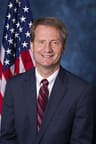
A Republican bill with 4 Republican cosponsors · See all 4 cosponsors
Last activity — Referred to the Committee on the Judiciary, and in addition to the Committee on Education and Workforce, for a period to be subsequently determined by the Speaker, in each case for consideration of such provisions as fall within the jurisdiction of the committee concerned.
In committee
Introduced and handed to a committee in the chamber it started in.
The committee holds it, and most bills are never heard from again. A hearing or a committee vote would be news; silence is the usual outcome, and it kills the bill without anyone voting against it.
Its path through Congress
- Introduced
- In Committee
What this bill would do
This bill, titled the ``No In-State Tuition for Illegal Immigrants Act'', aims to amend the Illegal Immigration Reform and Immigrant Responsibility Act of 1996. It focuses on restricting how states provide tuition rates to aliens who are not lawfully present in the United States. If a state charges these individuals tuition at a rate equal to or less than what they charge U.S. citizen residents, that state becomes ineligible for certain federal funds. Specifically, it would prohibit the state from receiving federal financial assistance under title IV of the Higher Education Act of 1965. This prohibition applies to the fiscal year following the determination of ineligibility.
Yes
- Scored +5
Does this give the federal government more power?
The bill increases federal power by creating financial penalties for states that deviate from the specified tuition policy.
The opposite· 3 of 4
- Scored -7
Would immigrants be better off under this?
The bill negatively impacts undocumented immigrants by restricting their access to lower in-state tuition rates.
- Scored -5
Does this make college cost less?
The bill could negatively impact college affordability for non-citizen residents by forcing higher tuition rates.
- Scored -5
Does this leave more decisions to the states?
The bill reduces state rights by imposing federal financial penalties on state tuition pricing decisions.
Who it would affect, and how
Potential Positive Impacts for People
- Financial Accountability for States: The bill creates a mechanism to ensure states follow specific tuition structures regarding non-citizens, which could serve as a tool for enforcing federal standards regarding federal financial assistance (Section 2, subsection (c)(1)).
Potential Negative Impacts for People
- Loss of Federal Financial Assistance for States: States that charge aliens who are not lawfully present tuition at the same rate or lower than U.S. citizen residents could lose their federal financial assistance under title IV of the Higher Education Act of 1965 (Section 2, subsection (c)(1) and (c)(2)).
Groups and Interests Ranking
Every group the model scored this bill for, from -10 to +10. Tap or hover a score for the reason it gave.
- Demographic And Interest Groups
- Would immigrants be better off under this? — The bill negatively impacts undocumented immigrants by restricting their access to lower in-state tuition rates. Would students be better off under this? — The bill could negatively affect students who are not lawfully present by increasing their potential tuition costs.
- Education And Technology
- Does this make college cost less? — The bill could negatively impact college affordability for non-citizen residents by forcing higher tuition rates.
- Governance And Ideology
- Does this give the federal government more power? — The bill increases federal power by creating financial penalties for states that deviate from the specified tuition policy. Does this leave more decisions to the states? — The bill reduces state rights by imposing federal financial penalties on state tuition pricing decisions.
- 4/28/2026
- 1 Cosponsor added.
- 12/5/2025
- 1 Cosponsor added.
- 11/19/2025
- 1 Cosponsor added.
- 6/4/2025
- 1 Cosponsor added.
- 3/31/2025
- Referred to the Committee on the Judiciary, and in addition to the Committee on Education and Workforce, for a period to be subsequently determined by the Speaker, in each case for consideration of such provisions as fall within the jurisdiction of the committee concerned.
- Introduced in House
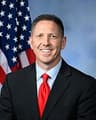 Josh Brecheen
Republican · Oklahoma
 Sheri Biggs
Republican · South Carolina
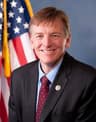 Paul Gosar
Republican · Arizona
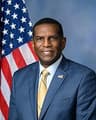 Burgess Owens
Republican · Utah