Bill · H.R. 2399· House(119-HR-2399)
Rural Broadband Protection Act of 2025
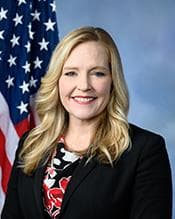
- Introduced
- 3/27/2025
- Last activity
- 4/29/2025 — Received in the Senate. Read twice. Placed on Senate Legislative Calendar under General Orders. Calendar No. 61.
- Sponsored by
- Erin Houchin
- Cosponsors
- - 0 - 1
- Introduced
- Passed House
- Awaiting Senate
- On Senate calendar
What this bill would do
The Rural Broadband Protection Act of 2025 requires the Federal Communications Commission to create a vetting process for those seeking high-cost universal service program funding. This includes any new offers of funding for deploying broadband-capable networks and providing services. The Commission must start a rulemaking process within 180 days of the Act's enactment. Under these new rules, the Commission can only award funding to applicants who meet specific qualifications. These applicants must provide documentation proving they have the technical, financial, and operational capabilities to deliver promised services. Additionally, the act mandates the establishment of penalties for pre-authorization defaults.
Yes· 3 of 5
Would people in rural areas be better off under this?+5
The bill protects rural residents by ensuring that broadband funding is awarded to entities capable of successfully deploying services in their communities.
Does this get reliable internet to more people?+5
The act seeks to protect the integrity of broadband deployment funds to ensure reliable service delivery.
Does this invest in rural communities?+4
The bill aims to ensure broadband funding reaches reliable providers in rural areas by requiring proof of operational capability.
The opposite
Does this make it easier to run a small business?-2
The bill imposes stricter technical and financial documentation requirements and potential penalties that may burden smaller applicants.
Does this make housing cost less?-1
Increased regulatory burdens on broadband deployment could indirectly impact the cost of living in connected areas.
Who it would affect, and how
Potential Positive Impacts for People
-
Ensuring Capability: The bill requires applicants to prove they have the technical, financial, and operational capabilities, as well as a reasonable business plan, to actually deploy the proposed network and deliver services (Section 2, paragraph 3, subparagraph B).
-
Standardized Evaluation: The Commission will evaluate proposals against reasonable and well-established technical, financial, and operational standards (Section 2, paragraph 3, subparagraph C).
-
Accountability through History: The Commission will evaluate applicants based on their history of complying with requirements in the Commission and other government broadband deployment funding programs (Section 2, paragraph 3, subparagraph C).
-
Financial Penalties for Defaults: The act requires the Commission to set penalties for pre-authorization defaults of at least $9,000 per violation, which may include a base forfeiture of at least 30 percent of the applicant's total support (Section 2, paragraph 3, subparagraph D).
Potential Negative Impacts for People
- No specific negative impacts are explicitly stated in the provided text.
Groups and Interests Ranking
Every group the model scored this bill for, from -10 to +10. Hover a score for the reason it gave.
- Demographic And Interest Groups
- Good For Rural Residents+5Good For Low Income Households+2
- Education And Technology
- Improves Internet Access+5
- Environment Energy And Infrastructure
- Improves Rural Development+4
- Governance And Ideology
- Improves Government Transparency+3
- Economy And Finance
- Improves Small Business Support-2
- Social Issues And Justice
- Improves Affordable Housing-1
- 4/29/2025
- Received in the Senate. Read twice. Placed on Senate Legislative Calendar under General Orders. Calendar No. 61.
- 4/28/2025
- Motion to reconsider laid on the table Agreed to without objection.
- Passed/agreed to in House: On motion to suspend the rules and pass the bill Agreed to by voice vote. (text: CR H1662-1663)
- On motion to suspend the rules and pass the bill Agreed to by voice vote. (text: CR H1662-1663)
- DEBATE - The House proceeded with forty minutes of debate on H.R. 2399.
- Considered under suspension of the rules. (consideration: CR H1662-1663)
- Mr. Bilirakis moved to suspend the rules and pass the bill.
- 4/24/2025
- Reported by the Committee on Energy and Commerce. H. Rept. 119-78.
- Placed on the Union Calendar, Calendar No. 55.
- 4/8/2025
- Committee Consideration and Mark-up Session Held
- Ordered to be Reported by the Yeas and Nays: 51 - 1.
- 3/27/2025
- Referred to the House Committee on Energy and Commerce.
- 1 Cosponsor added.
- Introduced in House
2 bills Congress.gov lists as related to this one — companions in the other chamber, earlier versions, and bills this one absorbed or was folded into.
 Robin Kelly
Democrat · Illinois