Bill · H.R. 2338· House(119-HR-2338)
WRCR Act of 2025
- Introduced
- 3/25/2025
- Last activity
- 3/25/2025 — Referred to the House Committee on Ways and Means.
- Sponsored by
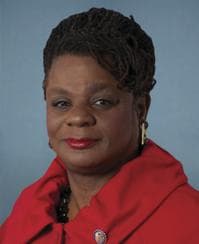
- Gwen Moore
- Cosponsors
- - 13 - 0
- Introduced
- In Committee
What this bill would do
This bill, known as the "Worker Relief and Credit Reform Act of 2025," aims to amend the Internal Revenue Code to expand and improve the earned income tax credit. It introduces new provisions for "qualifying students" and modifies age requirements for the credit. The legislation also updates definitions for qualifying dependents and adjusts various credit percentages and income amounts. Additionally, it establishes a program for monthly advance payments of the credit. Finally, it mandates outreach and education programs to inform taxpayers about these changes.
Yes· 3 of 12
Would households on low incomes be better off under this?+8
The expansion of the EITC and monthly advance payments provides direct, timely financial relief to low-income households.
Would students be better off under this?+7
The creation of the 'qualifying student' category provides students with access to the EITC.
Is this likely to lift people out of poverty?+7
The expansion of the EITC and the introduction of monthly advance payments directly target poverty reduction for low-income workers and students.
The opposite
Does this reduce what the federal government owes?-2
Expanding tax credits and providing monthly advance payments may increase the federal deficit in the short term.
Who it would affect, and how
Potential Positive Impacts for People
-
Expanded Access for Students: The bill introduces the term "qualifying student," which allows individuals who are eligible students—such as those qualifying for a Federal Pell Grant—to access the credit (Section 2(a)).
-
Lower Age Requirements: The age requirement for the credit is modified so that individuals can qualify starting at age s18 rather than age 25 (Section 2(b)).
-
Support for Caregivers: Individuals acting as qualifying students or those with a qualifying dependent will be treated as having earned income (Section 2(c)).
-
Updated Dependent Definitions: The bill expands the definition of a "qualifying dependent" to include certain relatives and individuals who are physically or mentally incapable of self-care (Section 2(d)).
-
Monthly Financial Assistance: A new program will allow taxpayers to receive direct monthly advance payments of the credit, with an option to receive funds via prepaid debit card (Section 2(g)).
-
Increased Educational Support: The Treasury will establish an outreach program to educate taxpayers through letters, workshops, and seminars regarding the credit and advance payments (Section 2(h)).
Potential Negative Impacts for People
-
Risk of Overpayment: Taxpayers who receive advance monthly payments are responsible for repaying any amounts that exceed the actual credit they are entitled to for the year (Section 2(g)(1)(f)).
-
Restrictions on Future Payments: If a taxpayer fails to pay back excess payments (including interest or penalties), they will be restricted from receiving any advance payments for a 2-year period (Section 2(g)(1)(g)).
-
Requirement to File Returns: Individuals receiving advance payments will be required to file a tax return regardless of whether they have income tax liability (Section 2(g)(1)(e)(i)(C)).
Groups and Interests Ranking
Every group the model scored this bill for, from -10 to +10. Hover a score for the reason it gave.
- Demographic And Interest Groups
- Good For Low Income Households+8Good For Students+7Good For Young Adults+6Good For People With Disabilities+4Good For Children+3Good For Seniors+3Good For Middle Class Households+2
- Social Issues And Justice
- Improves Poverty Reduction+7
- Education And Technology
- Improves College Affordability+5
- Economy And Finance
- Reduces Middle Class Taxes+3Improves Economic Growth+1Reduces National Debt-2
- Governance And Ideology
- Increases Federal Power+1
- 3/24/2026
- 1 Cosponsor added.
- 11/4/2025
- 1 Cosponsor added.
- 5/29/2025
- 1 Cosponsor added.
- 4/1/2025
- 1 Cosponsor added.
- 3/25/2025
- Referred to the House Committee on Ways and Means.
- 9 Cosponsors added.
- Introduced in House
 Judy Chu
Democrat · California
 Danny Davis
Democrat · Illinois
 Jimmy Gomez
Democrat · California
 Pramila Jayapal
Democrat · Washington
 Ro Khanna
Democrat · California
 Seth Magaziner
Democrat · Rhode Island
 Eleanor Norton
Democrat · District of Columbia
 Ilhan Omar
Democrat · Minnesota
 Chellie Pingree
Democrat · Maine
 Mark Pocan
Democrat · Wisconsin
 Mary Gay Scanlon
Democrat · Pennsylvania
 Emilia Sykes
Democrat · Ohio
 Rashida Tlaib
Democrat · Michigan