Bill · H.R. 2326· House(119-HR-2326)
Dietary Guidelines Reform Act of 2025
- Introduced
- 3/25/2025
- Last activity
- 4/18/2025 — Referred to the Subcommittee on Nutrition and Foreign Agriculture.
- Sponsored by
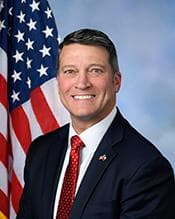
- Ronny Jackson
- Cosponsors
- - 6 - 0
- Introduced
- In Committee
What this bill would do
The Dietary Guidelines Reform Act of 2025 aims to amend the National Nutrition Monitoring and Related Research Act of 1990. This bill changes how dietary guidelines are developed, requiring them to be based on significant scientific agreement and evidence-based reviews. It establishes an Independent Advisory Board to help inform the work of the Secretaries. The bill also introduces new requirements for transparency regarding conflicts of interest. Furthermore, it changes the frequency of guideline publication and establishes specific criteria for what the reports must include.
Yes· 3 of 7
Does this make what the government does easier for the public to see?+6
The bill mandates full disclosure of conflicts of interest and public management plans for advisory board members.
Does this give people more protection from unfair business practices?+5
The bill enhances transparency and scientific rigor in dietary guidelines, which benefits consumer health and decision-making.
Does this put more money into medical research?+4
The bill allocates $5 million annually to support the updated dietary guideline process and scientific review.
The opposite
Does this narrow racial gaps in how people are treated?-2
The bill explicitly excludes race and ethnicity from the dietary guideline development process.
Who it would affect, and how
Potential Positive Impacts for People
-
Improved Health Information: The guidelines must address high-priority areas to advance health outcomes and include information relevant to individuals with common nutrition-related chronic diseases (Section 2(a)(3)(B)(D)-(F)).
-
Economic Accessibility: The bill requires that recommendations be affordable, available, and accessible for the general population (Section 2(a)(3)(B)(G)).
-
Increased Transparency: Members of advisory boards must provide full disclosure of financial and nonfinancial conflicts of interest, and a plan to manage those conflicts must be made public (Section 2(a)(10)).
-
Scientific Rigor: The Act mandates that guidelines be based on significant scientific agreement determined by evidence-based reviews that include external peer review by nongovernment experts (Section 2(a)(2) and Section 2(a)(9)(A)).
Potential Negative Impacts for People
- Exclusion of Certain Topics: The guidelines are prohibited from including or being based on topics such as taxation, social welfare policies, food and agricultural production practices, or socioeconomic status (Section 2(a)(3)(7)).
Groups and Interests Ranking
Every group the model scored this bill for, from -10 to +10. Hover a score for the reason it gave.
- Governance And Ideology
- Improves Government Transparency+6Increases Federal Power+2
- Healthcare
- Increases Research Funding+4Improves Healthcare Access+3
- Economy And Finance
- Improves Consumer Protection+5
- Demographic And Interest Groups
- Good For Low Income Households+3
- Education And Technology
- Increases Scientific Research Funding+2
- Social Issues And Justice
- Improves Racial Equity-2
- 10/21/2025
- 1 Cosponsor added.
- 4/18/2025
- Referred to the Subcommittee on Nutrition and Foreign Agriculture.
- 3/31/2025
- 1 Cosponsor added.
- 3/25/2025
- Referred to the House Committee on Agriculture.
- 4 Cosponsors added.
- Introduced in House
2 bills Congress.gov lists as related to this one — companions in the other chamber, earlier versions, and bills this one absorbed or was folded into.
 Don Bacon
Republican · Nebraska
 James Baird
Republican · Indiana
 Andy Harris
Republican · Maryland
 Mike Kennedy
Republican · Utah
 Tracey Mann
Republican · Kansas
 Daniel Webster
Republican · Florida