Bill · H.R. 2276· House(119-HR-2276)
CRT Act
- Introduced
- 3/21/2025
- Last activity
- 3/21/2025 — Referred to the House Committee on Education and Workforce.
- Sponsored by
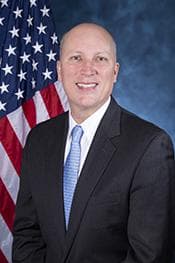
- Chip Roy
- Cosponsors
- None
- Introduced
- In Committee
What this bill would do
The Combating Racist Teaching in Schools Act'' or CRT Act'' aims to prohibit the award of Federal funds to specific educational institutions. It targets elementary, secondary, and higher education institutions that promote certain race-based theories. These theories include claims that the United States is fundamentally racist or that certain races are inherently superior or inferior. The bill also prevents schools from compelling individuals to adopt beliefs that violate Title VI of the Civil Rights Act of 1964. Additionally, it restricts the use of Federal funds if institutions hire individuals to advocate these theories or use them in ways that appear officially endorsed.
Yes
Does this give the federal government more power?+5
The bill increases federal power by setting conditions on the receipt of federal funds for educational institutions.
The opposite· 3 of 4
Would Black Americans be better off under this?-5
The bill may negatively impact institutions that promote racial equity and diversity training.
Does this put more money into public schools?-5
The bill may lead to a loss of federal funding for schools that engage in the prohibited activities.
Does this narrow racial gaps in how people are treated?-5
The bill may negatively impact racial equity efforts by restricting curriculum and diversity training in schools.
Who it would affect, and how
Potential Positive Impacts for People
-
Protection of Civil Rights: The bill prevents schools from compelling teachers or students to adhere to beliefs that would violate Title VI of the Civil Rights Act of 1964 (Section 2(a) and Section 2(b)).
-
Preservation of Free Speech Outside School: The Act ensures that the speech of students, teachers, or other individuals is not restricted when they are outside of a school setting (Section 2(d)(1)).
-
Support for Independent Research: Students and individuals can still access materials that advocate the described theories for the purpose of research or independent study (Section 2(d)(2)).
-
Flexibility for Contextual Education: Schools are still permitted to state or assign materials regarding these theories for educational purposes, provided they make it clear the school does not sponsor, approve, or endorse them (Section 2(d)(3)).
Potential Negative Impacts for People
-
Loss of Federal Funding for Schools: Elementary, secondary, and higher education institutions may lose Federal funds if they are found to promote the specific race-based theories listed in the bill (Section 2(a) and Section 2(b)).
-
Restrictions on Curriculum and Professional Development: Schools may be restricted from including certain theories in curricula, reading lists, seminars, workshops, or trainings if those materials could give the appearance of official sponsorship or endorsement (Section 2(e)(1)(A)).
-
Limitations on Hiring and Training: Institutions could be prohibited from contracting or hiring speakers, consultants, or diversity trainers for the purpose of advocating the theories described in the bill (Section 2(e)(1)(B)).
Groups and Interests Ranking
Every group the model scored this bill for, from -10 to +10. Hover a score for the reason it gave.
- Demographic And Interest Groups
- Good For African Americans-5Good For Students-2
- Education And Technology
- Increases Public School Funding-5
- Governance And Ideology
- Increases Federal Power+5
- Social Issues And Justice
- Improves Racial Equity-5
- 3/21/2025
- Referred to the House Committee on Education and Workforce.
- Introduced in House