Bill · H.R. 2230· House(119-HR-2230)
Independent Programmers Tax Incentive Act

- Introduced
- 3/18/2025
- Last activity
- 3/18/2025 — Referred to the Committee on Ways and Means, and in addition to the Committee on Energy and Commerce, for a period to be subsequently determined by the Speaker, in each case for consideration of such provisions as fall within the jurisdiction of the committee concerned.
- Sponsored by
- W. Steube
- Cosponsors
- - 10 - 9
- Introduced
- In Committee
What this bill would do
The Independent Programmers Tax Incentive Act aims to amend the Internal Revenue Code of 1986. It seeks to provide tax credits to eligible distributors that carry independent programmers. These distributors include multichannel video programming distributors and virtual multichannel video programming distributors. The credit is based on net license fees or a specific calculation tied to the number of monthly subscribers. The bill also requires the FCC to submit biennial reports to Congress regarding the distribution of these programming streams.
Yes· 3 of 8
Does this make it easier to run a small business?+5
The bill specifically targets independent programmers who are not large networks or publicly traded companies.
Would business owners be better off under this?+4
Provides financial advantages to independent content creators and media distributors.
Does this cut taxes for small businesses?+3
The bill provides tax credits that benefit independent programmers and eligible distributors which often includes smaller entities.
The opposite
No question was scored the opposite.
Who it would affect, and how
Potential Positive Impacts for People
-
Tax Credits for Eligible Distributors: Eligible distributors, such as cable operators or virtual distributors, can receive a tax credit for entering into agreements for the carriage of independent programmers (Section 2(a)).
-
Support for Independent Programmers: The bill provides an incentive for the carriage of new or expanded linear video programming streams from qualified independent programmers, which are defined as United States-s-based persons not associated with publicly traded companies or large networks (Section 2(c)(6)).
-
Increased Oversight and Recommendations: The FCC is required to submit reports every two years that include recommendations on how to increase the number of qualified independent programmers (Section 3(a)).
Potential Negative Impacts for People
-
Restrictions on Credit Eligibility: To qualify for the credit, a "qualified independent programmer" must not be a publicly traded company, a network, or a large television station company, which limits the pool of those who can benefit from the incentive (Section 2(c)(6)).
-
Specific Requirements for Agreements: For an agreement to count toward the credit, the carriage must reach at least 40 percent of the eligible distributor's subscriber base in aggregate, which may be a high threshold for some (Section 2(c)(5)).
-
Prevention of Double Benefits: The law explicitly prohibits taxpayers from taking a deduction for any amount that is being claimed as a credit under this section (Section 2(c)(7)).
Groups and Interests Ranking
Every group the model scored this bill for, from -10 to +10. Hover a score for the reason it gave.
- Economy And Finance
- Improves Small Business Support+5Reduces Small Business Taxes+3Increases Job Creation+2Improves Economic Growth+1
- Demographic And Interest Groups
- Good For Business Owners+4
- Governance And Ideology
- Improves Freedom Of Speech+1Improves Government Transparency+1Increases Federal Power+1
- 5/6/2025
- 1 Cosponsor added.
- 3/25/2025
- 1 Cosponsor added.
- 3/24/2025
- 2 Cosponsors added.
- 3/18/2025
- Referred to the Committee on Ways and Means, and in addition to the Committee on Energy and Commerce, for a period to be subsequently determined by the Speaker, in each case for consideration of such provisions as fall within the jurisdiction of the committee concerned.
- 15 Cosponsors added.
- Introduced in House
 Gus Bilirakis
Republican · Florida
 Kathy Castor
Democrat · Florida
 Yvette Clarke
Democrat · New York
 Earl Carter
Republican · Georgia
 Suzan DelBene
Democrat · Washington
 Adriano Espaillat
Democrat · New York
 Brian Fitzpatrick
Republican · Pennsylvania
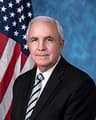 Carlos Gimenez
Republican · Florida
 Diana Harshbarger
Republican · Tennessee
 Robin Kelly
Democrat · Illinois
 Nicole Malliotakis
Republican · New York
 Carol Miller
Republican · West Virginia
 Jimmy Panetta
Democrat · California
 Maria Salazar
Republican · Florida
 Darren Soto
Democrat · Florida
 Shri Thanedar
Democrat · Michigan
 David Valadao
Republican · California
 Marc Veasey
Democrat · Texas
 Beth Van Duyne
Republican · Texas