Bill · H.R. 2007· House(119-HR-2007)
Salary Transparency Act
- Introduced
- 3/10/2025
- Last activity
- 3/10/2025 — Referred to the House Committee on Education and Workforce.
- Sponsored by
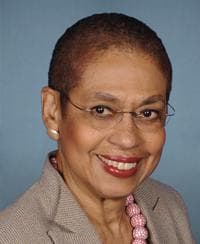
- Eleanor Norton
- Cosponsors
- - 2 - 0
- Introduced
- In Committee
What this bill would do
The Salary Transparency Act aims to amend the Fair Labor Standards Act. It would require employers to disclose wage or wage ranges for employment opportunities. This disclosure must happen in public or internal job postings. It also requires disclosure to applicants before discussing compensation or upon request. Finally, it mandates that employees be told their wage range upon hire, annually, and upon request.
Yes· 3 of 20
Would women be better off under this?+6
Directly addresses the pay gap through mandated wage range transparency.
Would households on low incomes be better off under this?+5
Increases transparency which helps low-wage workers seek better pay.
Would immigrants be better off under this?+5
Helps prevent wage exploitation through clear pay disclosures.
The opposite
Would business owners be better off under this?-5
Creates new compliance burdens and potential litigation risks.
Does this make it easier to run a small business?-3
Imposes new administrative burdens and potential legal liabilities on employers.
Does this protect people from being watched or searched?-2
Requires disclosure of internal pay structures that some employers may wish to keep private.
Who it would affect, and how
Potential Positive Impacts for People
-
Transparency in Job Postings: Employers would be prohibited from failing to disclose a wage or wage range in any public or internal posting for an employment opportunity. This ensures applicants know the pay scale upfront (Section 2(a)(1)).
-
Information for Applicants: If no posting is available, an employer must disclose the wage or wage range to an applicant before discussing compensation or whenever the applicant asks. This helps applicants understand the pay before entering negotiations (Section 2(a)(2)).
-
Ongoing Pay Information for Employees: Employers must disclose the wage or wage range to an employee at the time of hire, at least once a year, and whenever requested. This provides clarity on current compensation (Section 2(a)(3)).
-
Protection Against Retaliation: The bill makes it an unlawful practice to refuse to interview, hire, promote, or employ someone, or to retaliate against them, for exercising rights under this section. This protects workers from being punished for seeking pay information (Section 2(a)(4)).
-
Ability to Recover Damages: Employees or applicants who are victims of a violation can seek statutory damages between $1,000 and $10,000, or actual damages, plus reasonable attorneys' fees. This provides a way for people to hold employers accountable (Section 2(b)).
Potential Negative Impacts for People
-
Financial Penalties for Employers: Employers who violate these rules face civil penalties of $5,000 for a first violation, with increases for subsequent violations up to $10,000. This places a direct financial burden on the employer (Section 2(b)).
-
Liability and Legal Costs: Employers can be held liable for statutory damages between $1,000 and $10,000 or actual damages, along with reasonable attorneys' fees, for each affected employee or applicant. This could lead to significant costs through individual or group actions in Federal or State courts (Section 2(b)).
Groups and Interests Ranking
Every group the model scored this bill for, from -10 to +10. Hover a score for the reason it gave.
- Demographic And Interest Groups
- Good For Women+6Good For Immigrants+5Good For Low Income Households+5Good For Union Workers+5Good For African Americans+4Good For Asian Americans+4Good For Hispanic Americans+4Good For L G B T Q Community+4Good For Middle Class Households+4Good For Native Americans+4Good For Students+4Good For Young Adults+4Good For Middle Aged+3Good For People With Disabilities+3Good For White Americans+3Good For Business Owners-5
- Social Issues And Justice
- Improves Gender Equality+5Improves Racial Equity+4Improves Poverty Reduction+3
- Economy And Finance
- Improves Union Protections+5Improves Small Business Support-3
- Governance And Ideology
- Increases Federal Power+3Improves Privacy Rights-2
- 8/5/2025
- 1 Cosponsor added.
- 4/17/2025
- 1 Cosponsor added.
- 3/10/2025
- Sponsor introductory remarks on measure. (CR E198)
- Referred to the House Committee on Education and Workforce.
- Introduced in House
 Delia Ramirez
Democrat · Illinois
 Rashida Tlaib
Democrat · Michigan