Bill · H.R. 1923· House(119-HR-1923)
Modernizing Wildfire Safety and Prevention Act of 2025
- Introduced
- 3/6/2025
- Last activity
- 3/28/2025 — Referred to the Subcommittee on Forestry and Horticulture.
- Sponsored by
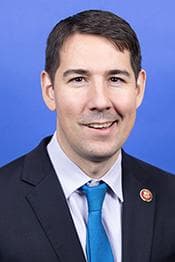
- Josh Harder
- Cosponsors
- - 3 - 2
- Introduced
- In Committee
What this bill would do
The Modernizing Wildfire Safety and Prevention Act of 2025 implements various recommendations from the Wildland Fire Mitigation and Management Commission Report. The bill focuses on workforce development, including training academies and grant programs for wildfire emergency management. It establishes support systems for wildland firefighters, such as retirement portability and a casualty assistance program. Additionally, it creates a national smoke monitoring and alert system to address public health risks. The legislation also enhances fire mitigation technology through dynamic risk mapping and the establishment of a Joint Office of the Fire Environment Center. Finally, it aims to improve the timing of payments for wildfire damage recovery programs.
Yes· 3 of 11
Does this improve help for people hit by a disaster?+7
The bill improves FEMA programs to include landslides/mudslides and accelerates payment timing.
Does this better protect air, water and wildlife?+6
The bill enhances wildfire mitigation technology, risk mapping, and smoke monitoring.
Does this better protect public land such as parks and forests?+5
The bill establishes the Joint Office of the Fire Environment Center to improve fire management.
The opposite
No question was scored the opposite.
Who it would affect, and how
Potential Positive Impacts for People
-
Enhanced Professional Training: The creation of a Middle Fire Leaders Academy provides rapid training and certification for Federal and non-Federal wildfire response employees (Sec. 101).
-
Educational Opportunities: A new wildfire workforce grant program allows eligible entities to provide degrees or credentials in fields like fire science, emergency management, and post-fire recovery (Sec. 102).
-
Improved Retirement Benefits: Firefighters can receive more portable retirement benefits, including the ability to accrue service credit for specific prior service periods (Sec. 201).
-
Support for Families: The Wildland Fire Management Casualty Assistance Program provides assistance to the next of kin for firefighters who are critically injured or killed in the line of duty (Sec. 202).
-
Public Health Protection: A national smoke monitoring and alert system will provide real-time information and forecasts on air quality impacts from wildfire smoke (Sec. 301).
-
Workplace Safety Research: A human health risk assessment will help estimate the nature and probability of adverse health effects for workers exposed to wildfire smoke (Sec. 302).
-
Livestock Assistance: Updates to existing programs ensure that livestock forage loss programs include coverage for prescribed and beneficial fires (Sec. 401).
-
Faster Disaster Relief: Improvements to FEMA programs aim to include landslides or mudslides stemming from wildfires in major disaster declarations and update criteria for mitigation projects (Sec. 402).
-
Improved Data Mapping: The development of dynamic risk and hazard maps will provide updated information on the natural environment and fuel moisture (Sec. 403).
-
Easier Access to Grants: Changes to community wildfire risk reduction and postfire recovery programs aim to reduce application complexity and administrative burdens (Sec. 404).
-
Streamlined Financial Recovery: The bill requires that approved payments for emergency wildfire restoration and mitigation be provided within 90 days (Sec. 407).
Potential Negative Impacts for People
-
Employment Restrictions: The definition of a firefighter includes requirements that the position be sufficiently rigorous so that employment opportunities are limited to young and physically vigorous individuals (Sec. 201).
-
Financial Burden for Retirement Credit: To receive credit for prior service, individuals must remit the additional amount of deductions that would have been made during that time, plus interest (Sec. 201).
Groups and Interests Ranking
Every group the model scored this bill for, from -10 to +10. Hover a score for the reason it gave.
- Environment Energy And Infrastructure
- Improves Disaster Relief And F E M A+7Improves Environmental Protections+6Improves Public Land Management+5Improves Rural Development+3
- Demographic And Interest Groups
- Good For Retirees+5Good For Rural Residents+5Good For Farmers+4Good For Students+3
- Healthcare
- Increases Research Funding+5
- Education And Technology
- Increases Scientific Research Funding+4
- Economy And Finance
- Increases Job Creation+3
- 9/2/2025
- 1 Cosponsor added.
- 3/28/2025
- Referred to the Subcommittee on Forestry and Horticulture.
- 3/25/2025
- 1 Cosponsor added.
- 3/7/2025
- Referred to the Subcommittee on Economic Development, Public Buildings, and Emergency Management.
- 3/6/2025
- Referred to the Committee on Natural Resources, and in addition to the Committees on Agriculture, Education and Workforce, Oversight and Government Reform, Armed Services, Energy and Commerce, Science, Space, and Technology, Transportation and Infrastructure, and Small Business, for a period to be subsequently determined by the Speaker, in each case for consideration of such provisions as fall within the jurisdiction of the committee concerned.
- 3 Cosponsors added.
- Introduced in House
3 bills Congress.gov lists as related to this one — companions in the other chamber, earlier versions, and bills this one absorbed or was folded into.
 Brian Fitzpatrick
Republican · Pennsylvania
 Scott Franklin
Republican · Florida
 Joe Neguse
Democrat · Colorado
 Greg Stanton
Democrat · Arizona
 Mike Thompson
Democrat · California