Bill · H.R. 1888· House(119-HR-1888)
Nuclear Weapons Abolition and Conversion Act of 2025
- Introduced
- 3/5/2025
- Last activity
- 3/5/2025 — Referred to the Committee on Foreign Affairs, and in addition to the Committee on Armed Services, for a period to be subsequently determined by the Speaker, in each case for consideration of such provisions as fall within the jurisdiction of the committee concerned.
- Sponsored by
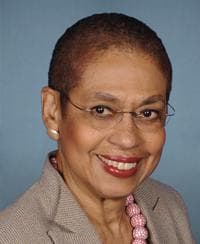
- Eleanor Norton
- Cosponsors
- - 10 - 0
- Introduced
- In Committee
What this bill would do
This bill, known as the ``Nuclear Weapons Abolition and Conversion Act of 2025'', directs the United States to sign the Treaty on the Prohibition of Nuclear Weapons. It outlines a vision for the United States to lead in the verifiable and irreversible elimination of all nuclear weapons globally. Once the President certifies that all nuclear-armed nations have begun this elimination process, specific funding shifts will occur. This funding, originally for nuclear weapons programs, will be redirected toward addressing the climate crisis and other human needs. The act also focuses on converting nuclear industry processes and retraining employees for new purposes.
Yes· 3 of 14
Does this put more money into wind, solar and other renewable power?+7
The bill converts nuclear weapons industry processes and programs into clean, renewable energy sources.
Does this reduce what is spent on the military?+7
The bill directs the transfer of funding originally appropriated for nuclear weapons programs to other purposes.
Does this cut the pollution that drives climate change?+6
The bill funds the development and deployment of clean, renewable energy sources to address the climate crisis.
The opposite
Does this reduce what the federal government spends?-3
The bill reallocates existing funding rather than cutting total government spending, though it shifts money from defense to other sectors.
Who it would affect, and how
Potential Positive Impacts for People
-
Addressing the Climate Crisis: The bill directs the transfer of nuclear weapons funding to develop and deploy clean, renewable energy sources by converting industry processes and plants (Section 3, paragraph 1).
-
Workforce Retraining: Nuclear industry employees would undergo retraining to transition into new roles related to the climate crisis (Section 3, paragraph 1).
-
Meeting Human and Infrastructure Needs: Funding would be redirected to support essential areas such as health care, housing, education, and agriculture (Section 3, paragraph 2).
-
Environmental Protection: The bill includes provisions for environmental restoration and long-term radioactive waste monitoring (Section 3, paragraph 2).
-
Global Security: The bill aims to create a more peaceful and secure world through the elimination of nuclear weapons and the promotion of these commitments globally (Section 2 and Section 3, paragraph 3).
Potential Negative Impacts for People
- No specific negative impacts or burdens are explicitly mentioned in the provided text.
Groups and Interests Ranking
Every group the model scored this bill for, from -10 to +10. Hover a score for the reason it gave.
- Environment Energy And Infrastructure
- Increases Renewable Energy Investment+7Reduces Carbon Emissions+6Improves Environmental Protections+5Improves Rural Development+3
- Demographic And Interest Groups
- Good For Union Workers+5Good For Low Income Households+4Good For Young Adults+4
- National Security And Foreign Policy
- Reduces Military Spending+7Improves International Alliances+5
- Social Issues And Justice
- Improves Affordable Housing+4Improves Poverty Reduction+3
- Healthcare
- Improves Healthcare Access+4
- Education And Technology
- Increases Public School Funding+3
- Economy And Finance
- Increases Job Creation+5Reduces Government Spending-3
- 12/10/2025
- 1 Cosponsor added.
- 7/10/2025
- 1 Cosponsor added.
- 3/5/2025
- Sponsor introductory remarks on measure. (CR E186)
- Referred to the Committee on Foreign Affairs, and in addition to the Committee on Armed Services, for a period to be subsequently determined by the Speaker, in each case for consideration of such provisions as fall within the jurisdiction of the committee concerned.
- 8 Cosponsors added.
- Introduced in House
 Greg Casar
Democrat · Texas
 Raúl Grijalva
Democrat · Arizona
 James McGovern
Democrat · Massachusetts
 Ilhan Omar
Democrat · Minnesota
 Chellie Pingree
Democrat · Maine
 Delia Ramirez
Democrat · Illinois
 Janice Schakowsky
Democrat · Illinois
 Paul Tonko
Democrat · New York
 Rashida Tlaib
Democrat · Michigan
 Shri Thanedar
Democrat · Michigan