Bill · H.R. 1808· House(119-HR-1808)
Keep America’s Waterfronts Working Act of 2025
- Introduced
- 3/3/2025
- Last activity
- 3/3/2025 — Referred to the House Committee on Natural Resources.
- Sponsored by
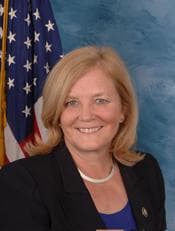
- Chellie Pingree
- Cosponsors
- - 16 - 4
- Introduced
- In Committee
What this bill would do
The Keep America's Waterfronts Act of 2025 seeks to amend the Coastal Zone Management Act of 1972. It establishes a working waterfronts Task Force to identify critical needs and threats facing coastal communities. The bill creates a Working Waterfronts Grant Program to fund the acquisition, improvement, and climate adaptation of working waterfronts. Additionally, it establishes a Working Waterfronts Preservation Loan Fund to provide financial assistance to covered entities. This includes provisions for coastal states to issue capitalization grants and manage revolving loan funds. The act aims to preserve and expand access to coastal waters for various water-dependent businesses.
Yes· 3 of 19
Would business owners be better off under this?+5
Directly supports water-dependent businesses through grants and loans.
Does this make it easier to run a small business?+5
The grant and loan programs provide direct financial assistance for water-dependent, coastal-related businesses.
Does this better protect air, water and wildlife?+4
The bill addresses threats like sea level rise, ocean acidification, and harmful algal blooms.
The opposite
No question was scored the opposite.
Who it would affect, and how
Potential Positive Impacts for People
-
Identification of Critical Needs: The creation of a Task Force will help identify and prioritize economic, cultural, and environmental threats—such as sea level rise and extreme weather—facing working waterfronts (Section 2, 306B(a)(3)(A)).
-
Financial Support for Waterfronts: The Working Waterfronts Grant Program provides funds for acquiring waterfront property, making improvements like repairing wharfs or boat ramps, and carrying out climate adaptation activities (Section 2, 306B(c)(2)(A)).
-
Support for Disadvantaged Communities: The Secretary may waive matching requirements for entities in disadvantaged communities or those with low income and small populations (Section 2, 306B(c)(5)(B)). Additionally, loan funds can be used for additional subsidization like principal forgiveness or grants for these communities (Section 2, 306C(d)(1)).
-
Expansion of Public Access: Grant-funded projects are required to provide for the expansion, improvement, or preservation of reasonable public access to coastal waters (Section 2, 306B(c)(7)).
-
Preservation of Local Economies: The bill focuses on preserving waterfronts used for commercial and recreational fishing, aquaculture, and boatbuilding (Section 2, 306B(b)(1)(A)(iii)).
Potential Negative Impacts for People
-
Strict Use of Grants: Recipients of grant money must enter into a working waterfront covenant, which requires managing the property in a specific manner and maintaining it in perpetuity (Section 2, 306B(c)(11)(A)).
-
Risk of Property Reversion: If a working waterfront covenant is violated, the covered entity has the right to take back all right, title, and interest in the property (Section 2, 306B(c)(11)(B)(ii)).
-
Financial Matching Requirements: Most grant projects require the entity to provide a non-federal share of at least 25 percent (Section 2, 306B(c)(10)(A)).
-
State Financial Obligations: To receive a capitalization grant, an eligible coastal state must deposit at least 20 percent of the total grant amount into its loan fund (Section 2, 306C(e)).
Groups and Interests Ranking
Every group the model scored this bill for, from -10 to +10. Hover a score for the reason it gave.
- Demographic And Interest Groups
- Good For Business Owners+5Good For Native Americans+3Good For Low Income Households+2Good For Rural Residents+2Good For Union Workers+2
- Economy And Finance
- Improves Small Business Support+5Improves Economic Growth+3Increases Job Creation+3Improves Union Protections+2
- Environment Energy And Infrastructure
- Improves Environmental Protections+4Improves Public Land Management+3Improves Disaster Relief And F E M A+2Improves Rural Development+2
- Governance And Ideology
- Increase States Rights+2Increases Federal Power+2Improves Due Process+1Improves Government Transparency+1
- Social Issues And Justice
- Improves Poverty Reduction+2
- National Security And Foreign Policy
- Improves International Trade+1
- 4/20/2026
- 1 Cosponsor added.
- 10/31/2025
- 1 Cosponsor added.
- 4/30/2025
- 1 Cosponsor added.
- 4/7/2025
- 1 Cosponsor added.
- 4/3/2025
- 1 Cosponsor added.
- 3/24/2025
- 1 Cosponsor added.
- 3/14/2025
- 1 Cosponsor added.
- 3/11/2025
- 2 Cosponsors added.
- 3/10/2025
- 1 Cosponsor added.
- 3/3/2025
- Referred to the House Committee on Natural Resources.
- 10 Cosponsors added.
- Introduced in House
 Gabe Amo
Democrat · Rhode Island
 Shontel Brown
Democrat · Ohio
 Salud Carbajal
Democrat · California
 Troy Carter
Democrat · Louisiana
 Brian Fitzpatrick
Republican · Pennsylvania
 Jared Golden
Democrat · Maine
 Jared Huffman
Democrat · California
 Val Hoyle
Democrat · Oregon
 Jennifer Kiggans
Republican · Virginia
 Ted Lieu
Democrat · California
 Betty McCollum
Democrat · Minnesota
 James Moylan
Republican · Guam
 Seth Magaziner
Democrat · Rhode Island
 Frank Pallone
Democrat · New Jersey
 Scott Peters
Democrat · California
 Jimmy Panetta
Democrat · California
 Lateefah Simon
Democrat · California
 Paul Tonko
Democrat · New York
 Jill Tokuda
Democrat · Hawaii
 Robert Wittman
Republican · Virginia