Bill · H.R. 1777· House(119-HR-1777)
SECURE Notarization Act of 2025
- Introduced
- 3/3/2025
- Last activity
- 3/3/2025 — Referred to the Committee on Energy and Commerce, and in addition to the Committee on the Judiciary, for a period to be subsequently determined by the Speaker, in each case for consideration of such provisions as fall within the jurisdiction of the committee concerned.
- Sponsored by
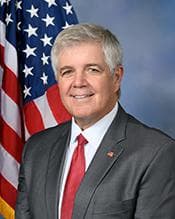
- Cliff Bentz
- Cosponsors
- - 3 - 5
- Introduced
- In Committee
What this bill would do
This bill, known as the "SECURE Notarization Act of 2025," establishes minimum standards for electronic and remote notarizations that affect interstate commerce. It authorizes notary publics to perform these types of notarizations using communication technology to interact with remotely located individuals. The Act requires Federal courts and all States to recognize notarizations performed by notarial officers from other States under specific conditions. It also sets specific requirements for identity verification and the creation of audio and visual recordings for remote sessions. Additionally, the legislation aims to ensure the legal validity of these digital acts across different jurisdictions.
Yes· 3 of 9
Does this make it easier to do business across state lines?+5
The bill specifically addresses and improves the ease of conducting commerce across state lines through recognized digital notarization.
Would business owners be better off under this?+4
The ability to perform remote notarizations provides significant operational efficiency for businesses.
Is this likely to grow the economy?+3
By standardizing remote notarization, the bill facilitates easier interstate commerce and transaction efficiency.
The opposite
Does this protect people from being watched or searched?-2
The requirement to create and retain audio-visual recordings of remote sessions could pose potential privacy concerns.
Who it would affect, and how
Potential Positive Impacts for People
-
Increased Interstate Recognition: The bill requires Federal courts and all States to recognize notarizations performed by a notarial officer from another State if it relates to a public act or affects interstate commerce (Section 5 and Section s 6). This provides more consistency for people moving or doing business across state lines.
-
Convenience of Remote Services: Notary publics are authorized to perform notarizations for remotely located individuals using communication technology (Section 3 and Section 4). This allows people to complete necessary legal tasks without needing to be in the physical presence of a notary.
-
Standardized Identity Verification: For remote notarizations, the bill provides specific ways to verify identity, such as using multiple distinct types of processes or a credible witness (Section 4). This establishes a structured method for ensuring the person is who they say they are.
-
Protection of Digital Records: The Act requires that electronic signatures and information be bound to the electronic record so that any subsequent changes are clearly evident (Section 3). This helps ensure the integrity of the documents people sign.
Potential Negative Impacts for People
-
Record Keeping Burdens: Notaries performing remote notarizations must create and retain audio and visual recordings for a period of at least 5 to 10 years, depending on State law (Section 4). This creates a significant storage and record-keeping requirement.
-
Strict Requirements for Remote Individuals: For a remote notarization to be valid, the individual must be part of a transaction that involves property in the U.S. or a matter before a U.S. entity, and the act must not be prohibited by the laws of the location where they are physically located (Section 4). This could limit the use of these services for people in certain locations.
-
Potential for Identity Verification Hurdles: Remote notarization requires specific identification methods, such as using at least two distinct types of processes or a credible witness (Section 4). This could create obstacles for individuals who cannot easily provide the required digital or third-party evidence.
Groups and Interests Ranking
Every group the model scored this bill for, from -10 to +10. Hover a score for the reason it gave.
- Economy And Finance
- Improves Economic Growth+3Improves Consumer Protection+2Improves Small Business Support+2
- Demographic And Interest Groups
- Good For Business Owners+4Good For Rural Residents+2
- Governance And Ideology
- Improves Interstate Commerce+5Increases Federal Power+2Improves Due Process+1Improves Privacy Rights-2
- Education And Technology
- Improves Data Privacy+1
- 7/21/2025
- 1 Cosponsor added.
- 6/11/2025
- 1 Cosponsor added.
- 5/20/2025
- 2 Cosponsors added.
- 5/7/2025
- 1 Cosponsor added.
- 3/4/2025
- 1 Cosponsor added.
- 3/3/2025
- Referred to the Committee on Energy and Commerce, and in addition to the Committee on the Judiciary, for a period to be subsequently determined by the Speaker, in each case for consideration of such provisions as fall within the jurisdiction of the committee concerned.
- 2 Cosponsors added.
- Introduced in House
One bill Congress.gov lists as related to this one — companions in the other chamber, earlier versions, and bills this one absorbed or was folded into.
 Suzan DelBene
Democrat · Washington
 Madeleine Dean
Democrat · Pennsylvania
 Julie Fedorchak
Republican · North Dakota
 H. Griffith
Republican · Virginia
 David Kustoff
Republican · Tennessee
 Sarah McBride
Democrat · Delaware
 Joe Neguse
Democrat · Colorado
 Nydia Velázquez
Democrat · New York