Bill · H.R. 1687· House(119-HR-1687)
CLEAN Act
- Introduced
- 2/27/2025
- Last activity
- 7/15/2026 — Committee on Energy and Natural Resources Subcommittee on Public Lands, Forests, and Mining. Hearings held.
- Sponsored by
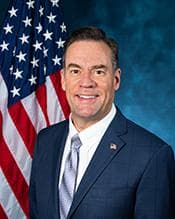
- Russ Fulcher
- Cosponsors
- - 3 - 1
- Introduced
- Passed House
- In Senate committee
What this bill would do
The "Committing Leases for Energy Access Now Act" or "CLEAN Act" aims to amend the Geothermal Steam Act of 1970. This bill increases the frequency of lease sales by changing the interval from every two years to every year. It also requires the Secretary of the Interior to conduct replacement sales if a sale is canceled or delayed. Additionally, the bill mandates that the Secretary offer a specific percentage of nominated parcels for lease. Finally, it establishes strict deadlines for the consideration of geothermal drilling permits.
Yes· 3 of 6
Does this put more money into wind, solar and other renewable power?+5
The bill expands the availability of geothermal land for lease and streamlines the permitting process for geothermal development.
Would business owners be better off under this?+4
The bill reduces regulatory uncertainty and administrative delays for energy industry businesses.
Is this likely to create jobs?+3
By accelerating geothermal lease sales and permit processing, the bill facilitates increased activity in the energy sector.
The opposite
No question was scored the opposite.
Who it would affect, and how
Potential Positive Impacts for People
-
Increased frequency of lease sales: By changing the requirement from every two years to every year, more sales occur more often (Section 2(a)(1)).
-
Mandatory replacement sales: If a lease sale is delayed or canceled, the Secretary must conduct a replacement sale within the same year, ensuring continuity (Section 2(a)(3)).
-
Guaranteed parcel offerings: The Secretary is required to offer 75 percent of nominated parcels, and up to 100 percent unless a written justification is provided, which ensures more land is available for lease (Section 2(a)(4)).
-
Faster permit processing: The bill creates a timeline where the Secretary must notify applicants if a permit application is complete within 30 days (Section 2(b)(1)).
-
Defined decision deadlines: Once an application is complete, the Secretary must issue the permit or provide a deferral notice within 30 days, which provides more certainty for applicants (Section 2(b)(2)(A)).
-
Timely resolution of deferred permits: If a decision is deferred, the Secretary must issue a decision within 10 days after the necessary steps and agency actions are completed (Section 2(b)(2)(B)).
Potential Negative Impacts for People
-
Administrative burden for justification: The Secretary must provide a written justification if they choose not to offer the remaining 25 percent of nominated parcels (Section 2(a)(4)(B)).
-
Strict agency timelines: The bill requires the agency to take specific actions and meet deadlines when a permit is deferred, which may place time constraints on agency compliance with applicable laws (Section 2(b)(2)(A)(ii)).
Groups and Interests Ranking
Every group the model scored this bill for, from -10 to +10. Hover a score for the reason it gave.
- Demographic And Interest Groups
- Good For Business Owners+4Good For Rural Residents+2
- Economy And Finance
- Increases Job Creation+3Improves Small Business Support+2
- Environment Energy And Infrastructure
- Increases Renewable Energy Investment+5
- Governance And Ideology
- Improves Government Transparency+2
- 7/15/2026
- Committee on Energy and Natural Resources Subcommittee on Public Lands, Forests, and Mining. Hearings held.
- 6/3/2026
- Received in the Senate and Read twice and referred to the Committee on Energy and Natural Resources.
- 6/2/2026
- Motion to reconsider laid on the table Agreed to without objection.
- Passed/agreed to in House: On motion to suspend the rules and pass the bill, as amended Agreed to by voice vote. (text: CR H3758-3759)
- On motion to suspend the rules and pass the bill, as amended Agreed to by voice vote. (text: CR H3758-3759)
- DEBATE - The House proceeded with forty minutes of debate on H.R. 1687.
- Considered under suspension of the rules. (consideration: CR H3758-3760)
- Mr. Westerman moved to suspend the rules and pass the bill, as amended.
- 5/20/2026
- Reported (Amended) by the Committee on Natural Resources. H. Rept. 119-657.
- Placed on the Union Calendar, Calendar No. 571.
- 4/21/2026
- Subcommittee on Energy and Mineral Resources Discharged
- Committee Consideration and Mark-up Session Held
- Ordered to be Reported in the Nature of a Substitute by Unanimous Consent.
- 12/16/2025
- Subcommittee Hearings Held
- 12/15/2025
- 1 Cosponsor added.
- 12/9/2025
- Referred to the Subcommittee on Energy and Mineral Resources.
- 3/27/2025
- 1 Cosponsor added.
- 2/27/2025
- Referred to the House Committee on Natural Resources.
- 2 Cosponsors added.
- Introduced in House
One bill Congress.gov lists as related to this one — companions in the other chamber, earlier versions, and bills this one absorbed or was folded into.
 Lauren Boebert
Republican · Colorado
 Nicholas Begich
Republican · Alaska
 Susie Lee
Democrat · Nevada
 Celeste Maloy
Republican · Utah