Bill · H.R. 1640· House(119-HR-1640)
HEIRS Act of 2025
- Introduced
- 2/26/2025
- Last activity
- 9/1/2026 — Placed on the Union Calendar, Calendar No. 693.
- Sponsored by
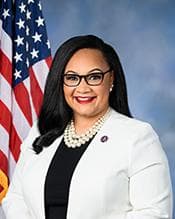
- Nikema Williams
- Cosponsors
- - 9 - 1
- Introduced
- On Calendar
What this bill would do
The HEIRS Act of 2025 establishes grant programs aimed at assisting with property ownership and succession issues. One program provides funds to states, local governments, territories, or Tribal governments that adopt the Uniform Partition of Heirs Property Act. These funds help residents with expenses related to documenting ownership or settling estates. A second program provides annual grants to counseling agencies, legal clinics, or qualifying nonprofits for title clearing and home retention efforts. Both grant programs are scheduled to terminate seven years after the act's enactment.
Yes· 3 of 17
Would households on low incomes be better off under this?+8
Specifically targets low- and moderate-income persons for grants to pay for legal fees and land surveys.
Would Black Americans be better off under this?+8
Heirs' property is a significant issue in African American communities, leading to disproportionate land loss.
Would people in rural areas be better off under this?+7
Directly addresses property ownership issues common in rural settings through grants and legal aid.
The opposite
No question was scored the opposite.
Who it would affect, and how
Potential Positive Impacts for People
-
Financial Assistance for Property Ownership: Eligible entities can use grant funds to assist residents with bona fide expenses such as title reports, land surveys, estate planning, and legal fees (Section 2(b)).
-
Support for Title Clearing and Home Retention: The Secretary may provide grants to help owners of heirs' property with counseling, legal assistance, and financial assistance related to title clearing (Section 3(a)).
-
Targeted Assistance for Underserved Communities: Grant awards may be directed toward entities with a track record of targeting services to underserved and low- or moderate-income persons (Section 3(b)(1)).
-
Consumer Education: Nonprofit organizations receiving funds are required to explain the risks of heirs' property and inform consumers of available estate planning and title clearing options (Section 4(A)).
Potential Negative Impacts for People
- Program Termination: Both grant programs established under the act are set to terminate seven years after the date of enactment (Section 2(f) and Section 3(d)).
Groups and Interests Ranking
Every group the model scored this bill for, from -10 to +10. Hover a score for the reason it gave.
- Demographic And Interest Groups
- Good For African Americans+8Good For Low Income Households+8Good For Rural Residents+7Good For Farmers+6Good For Native Americans+6Good For Hispanic Americans+5Good For Retirees+5Good For Seniors+5Good For Middle Class Households+4
- Social Issues And Justice
- Improves Racial Equity+7Improves Affordable Housing+6Improves Poverty Reduction+4Reduces Homelessness+3
- Governance And Ideology
- Improves Due Process+4Increases Federal Power+2
- Economy And Finance
- Improves Consumer Protection+5
- Environment Energy And Infrastructure
- Improves Rural Development+5
- 9/1/2026
- Reported (Amended) by the Committee on Financial Services. H. Rept. 119-793.
- Placed on the Union Calendar, Calendar No. 693.
- 6/30/2026
- Committee Consideration and Mark-up Session Held
- Ordered to be Reported (Amended) by the Yeas and Nays: 51 - 0.
- 1 Cosponsor added.
- 6/18/2026
- 1 Cosponsor added.
- 4/1/2025
- 1 Cosponsor added.
- 2/26/2025
- Referred to the House Committee on Financial Services.
- 7 Cosponsors added.
- Introduced in House
 Sanford Bishop
Democrat · Georgia
 Emanuel Cleaver
Democrat · Missouri
 Byron Donalds
Republican · Florida
 Lizzie Fletcher
Democrat · Texas
 Shomari Figures
Democrat · Alabama
 Sylvia Garcia
Democrat · Texas
 Kweisi Mfume
Democrat · Maryland
 Jennifer McClellan
Democrat · Virginia
 Eleanor Norton
Democrat · District of Columbia
 Rashida Tlaib
Democrat · Michigan