
A Republican bill with 6 Republican cosponsors · See all 6 cosponsors
Last activity — Referred to the House Committee on Financial Services.
In committee
Introduced and handed to a committee in the chamber it started in.
The committee holds it, and most bills are never heard from again. A hearing or a committee vote would be news; silence is the usual outcome, and it kills the bill without anyone voting against it.
Its path through Congress
- Introduced
- In Committee
What this bill would do
This bill, titled the ``Repeal CFPB Act'', aims to eliminate the Bureau of Consumer Financial Protection. It specifically targets the Consumer Financial Protection Act of 2010 for repeal. By doing so, the bill seeks to restore or revive previous provisions of law that were amended or repealed by that Act. The legislation was introduced by Mr. Donalds and several others in the 119th Congress.
Yes
- Scored +5
Would business owners be better off under this?
Eliminating the bureau reduces regulatory oversight and potential compliance costs for financial service providers.
- Scored +4
Would high-income households be better off under this?
The repeal of the CFPB reduces the regulatory burden and compliance costs often faced by financial institutions.
The opposite· 3 of 5
- Scored -7
Does this give people more protection from unfair business practices?
The bill eliminates the Consumer Financial Protection Bureau, which reduces oversight and protections against unfair financial practices.
- Scored -5
Would households on low incomes be better off under this?
The reduction in financial oversight may disproportionately affect low-income communities targeted by predatory lending.
- Scored -3
Does this give the federal government more power?
The bill reduces federal regulatory authority by eliminating a major oversight agency.
Who it would affect, and how
Potential Positive Impacts for People
- Restoration of Prior Laws: The bill would restore or revive laws that were previously amended or repealed by the Consumer Financial Protection Act of 2010 (SEC. 2). This could be seen as positive for those who believe the previous legal framework was more effective or appropriate.
Potential Negative Impacts for People
- Elimination of the Bureau: This bill would eliminate the Bureau of Consumer Financial Protection (SEC. 2). This removal of the agency and the repeal of the Consumer Financial Protection Act of 2010 could impact those who rely on the agency's functions.
Groups and Interests Ranking
Every group the model scored this bill for, from -10 to +10. Tap or hover a score for the reason it gave.
- Economy And Finance
- Does this give people more protection from unfair business practices? — The bill eliminates the Consumer Financial Protection Bureau, which reduces oversight and protections against unfair financial practices.
- Governance And Ideology
- Does this give the federal government more power? — The bill reduces federal regulatory authority by eliminating a major oversight agency.
- Demographic And Interest Groups
- Would business owners be better off under this? — Eliminating the bureau reduces regulatory oversight and potential compliance costs for financial service providers. Would high-income households be better off under this? — The repeal of the CFPB reduces the regulatory burden and compliance costs often faced by financial institutions. Would households on low incomes be better off under this? — The reduction in financial oversight may disproportionately affect low-income communities targeted by predatory lending. Would middle-income households be better off under this? — The repeal reduces consumer protections that middle-income families rely on for financial services and transparency. Would people in cities be better off under this? — The reduction in consumer financial protections may negatively impact urban populations who frequently utilize high-volume financial services.
- 10/14/2025
- 1 Cosponsor added.
- 3/18/2025
- 1 Cosponsor added.
- 3/4/2025
- 1 Cosponsor added.
- 2/26/2025
- Referred to the House Committee on Financial Services.
- 3 Cosponsors added.
- Introduced in House
One bill Congress.gov lists as related to this one — companions in the other chamber, earlier versions, and bills this one absorbed or was folded into.
 Neal Dunn
Republican · Florida
 Brandon Gill
Republican · Texas
 Richard McCormick
Republican · Georgia
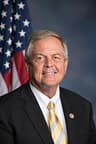 Ralph Norman
Republican · South Carolina
 Andrew Ogles
Republican · Tennessee
 Pete Sessions
Republican · Texas