Bill · H.R. 1601· House(119-HR-1601)
Defending Ukraine’s Territorial Integrity Act
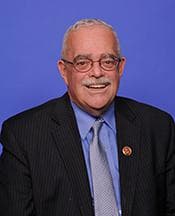
- Introduced
- 2/26/2025
- Last activity
- 1/8/2026 — ASSUMING FIRST SPONSORSHIP - Mr. Walkinshaw asked unanimous consent that he may hereafter be considered as the first sponsor of H.R. 1601, a bill originally introduced by Representative Connolly, for the purpose of adding cosponsors and requesting reprintings pursuant to clause 7 of rule XII. Agreed to without objection.
- Sponsored by
- Gerald Connolly
- Cosponsors
- - 8 - 2
- Introduced
What this bill would do
This bill, titled the "Defending Ukraine's Territorial Integrity Act," aims to counter Russian influence and aggression in Ukraine. It establishes a policy where the United States does not recognize Russian claims over occupied Ukrainian territories, including Crimea and several other oblasts. The Act prohibits federal funds from being used to assist central governments that recognize the independence of or establish relations with these occupied regions. It also targets governments that take steps to support Russian annexations. The Secretary of State is required to publish a list of these central governments on the Department of State website.
Yes
Does this strengthen ties with allied countries?+4
The bill strengthens the U.S. stance on territorial integrity which aligns with supporting Ukrainian sovereignty.
The opposite
Does this send more money or help to other countries?-5
The bill restricts foreign aid to any central governments that recognize Russian-occupied Ukrainian territories.
Who it would affect, and how
Potential Positive Impacts for People
-
Protection of Territorial Integrity: The policy establishes that the United States will not recognize Russian sovereignty over occupied parts of Ukraine, such as Crimea, Donetsk, Kherson, Luhansk, and Zaporizhzhia oblasts (Section 2(a)).
-
Financial Pressure on Pro-Russian Governments: By prohibiting federal assistance to central governments that recognize occupied territories or support Russian annexations, the bill creates a mechanism to discourage such recognition (Section 2(b)(1)).
Potential Negative Impacts for People
-
Loss of Federal Assistance: Central governments that establish diplomatic relations with occupied regions or support Russian annexations could lose access to authorized federal funds (Section 2(b)(1)).
-
Potential for Arbitrary Assistance Denial: While there is a waiver process, the Secretary of State has the power to decide which governments continue to receive assistance based on what is deemed in the national interest of the United States (Section 2(b)(3)).
Groups and Interests Ranking
Every group the model scored this bill for, from -10 to +10. Hover a score for the reason it gave.
- National Security And Foreign Policy
- Improves International Alliances+4Increases Foreign Aid-5
- 1/8/2026
- ASSUMING FIRST SPONSORSHIP - Mr. Walkinshaw asked unanimous consent that he may hereafter be considered as the first sponsor of H.R. 1601, a bill originally introduced by Representative Connolly, for the purpose of adding cosponsors and requesting reprintings pursuant to clause 7 of rule XII. Agreed to without objection.
- 4/9/2025
- 1 Cosponsor added.
- 4/1/2025
- 1 Cosponsor added.
- 3/27/2025
- 1 Cosponsor added.
- 3/3/2025
- 2 Cosponsors added.
- 2/26/2025
- Referred to the House Committee on Foreign Affairs.
- 5 Cosponsors added.
- Introduced in House
 Don Bacon
Republican · Nebraska
 Madeleine Dean
Democrat · Pennsylvania
 Daniel Goldman
Democrat · New York
 Steny Hoyer
Democrat · Maryland
 Marcy Kaptur
Democrat · Ohio
 Greg Landsman
Democrat · Ohio
 Gregory Meeks
Democrat · New York
 Eleanor Norton
Democrat · District of Columbia
 Scott Peters
Democrat · California
 Joe Wilson
Republican · South Carolina