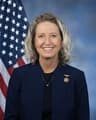
A Republican bill with 12 Democratic cosponsors · See all 12 cosponsors
Last activity — Referred to the House Committee on Education and Workforce.
In committee
Introduced and handed to a committee in the chamber it started in.
The committee holds it, and most bills are never heard from again. A hearing or a committee vote would be news; silence is the usual outcome, and it kills the bill without anyone voting against it.
Its path through Congress
- Introduced
- In Committee
What this bill would do
The World Language Education Assistance Program Act directs the Secretary of Education to award competitive grants to local educational agencies. These grants are intended to establish or improve world language or dual language programs. The bill aims to support dual language and world language programs to provide students with language skills for a global world. It addresses findings regarding a lack of innovative programs and shortages of educators. The program includes provisions for professional development and teacher certification pathways. The act authorizes $15,000,000 for fiscal year 2026 and each subsequent year.
Yes· 3 of 10
- Scored +5
Would children be better off under this?
The bill provides resources for elementary and secondary students to develop multilingualism.
- Scored +5
Would students be better off under this?
The bill directly funds language skill development and teacher pathways for students.
- Scored +5
Does this put more money into public schools?
The bill authorizes $15,000,000 annually in competitive grants for local educational agencies to improve language programs.
The opposite
No question was scored the opposite.
Who it would affect, and how
Potential Positive Impacts for People
-
Student Preparedness: The bill seeks to provide students with the language skills necessary for an interconnected and global world (Section 2).
-
Support for Specialized Student Groups: Priority is given to programs that provide immersion for English learners and heritage learners (Section 5(c)(2)(C)).
-
Teacher Professional Development: Grants can be used to provide professional development for certified and licensed world language or dual language teachers (Section 5(d)(1)(B)).
-
Creation of Career Pathways: The bill directs that at least 20 percent of grant funds be reserved to create accessible pathways for paraprofessionals to gain certification and licensure as teachers (Section 5(d)(1)(A)).
-
Teacher Recruitment: Priority is given to programs that conduct outreach to recruit secondary and post-secondary students, including former English learners and heritage learners, into teacher preparation programs (Section 5(c)(2)(F)).
-
Community Engagement: The bill encourages partnerships between programs and community-based heritage language schools and communities (Section 5(c)(2)(B)).
Potential Negative Impacts for People
-
Administrative Burden: Local educational agencies must submit applications and follow specific reporting requirements, including providing data on student enrollment and educator numbers (Section 5(b) and Section 5(e)(1)).
-
Fund Limitations: Agencies are restricted from using more than 5 percent of grant funds to evaluate the efficacy of their programs (Section 5(d)(2)).
Groups and Interests Ranking
Every group the model scored this bill for, from -10 to +10. Tap or hover a score for the reason it gave.
- Demographic And Interest Groups
- Would children be better off under this? — The bill provides resources for elementary and secondary students to develop multilingualism. Would students be better off under this? — The bill directly funds language skill development and teacher pathways for students. Would Hispanic Americans be better off under this? — The bill supports heritage language learners and community-based heritage language schools. Would people in their twenties and thirties be better off under this? — The bill creates pathways for secondary and post-secondary students to enter teacher certification programs. Would households on low incomes be better off under this? — The bill prioritizes immersion for English learners and heritage learners, populations often found in lower-income communities.
- Education And Technology
- Does this put more money into public schools? — The bill authorizes $15,000,000 annually in competitive grants for local educational agencies to improve language programs.
- Economy And Finance
- Is this likely to grow the economy? — The bill aims to better prepare students to compete in a global economy through language proficiency.
- National Security And Foreign Policy
- Does this favour talking over confrontation abroad? — Improving language capacity is noted as beneficial for diplomatic and intelligence services.
- Governance And Ideology
- Does this make what the government does easier for the public to see? — The bill requires reporting on student enrollment and educator numbers to the Secretary.
- Social Issues And Justice
- Is this likely to lift people out of poverty? — Language skills are intended to improve economic competitiveness for students.
- 6/24/2026
- 1 Cosponsor added.
- 6/2/2026
- 1 Cosponsor added.
- 4/15/2026
- 1 Cosponsor added.
- 3/12/2026
- 1 Cosponsor added.
- 8/26/2025
- 1 Cosponsor added.
- 7/10/2025
- 1 Cosponsor added.
- 7/2/2025
- 1 Cosponsor added.
- 3/25/2025
- 1 Cosponsor added.
- 3/5/2025
- 2 Cosponsors added.
- 3/3/2025
- 1 Cosponsor added.
- 2/25/2025
- Referred to the House Committee on Education and Workforce.
- 1 Cosponsor added.
- Introduced in House
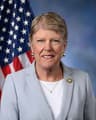 Julia Brownley
Democrat · California
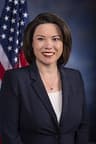 Angie Craig
Democrat · Minnesota
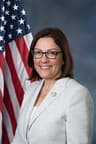 Suzan DelBene
Democrat · Washington
 Sharice Davids
Democrat · Kansas
 Maggie Goodlander
Democrat · New Hampshire
 Josh Harder
Democrat · California
 Seth Magaziner
Democrat · Rhode Island
 Sarah McBride
Democrat · Delaware
 Jimmy Panetta
Democrat · California
 Terri Sewell
Democrat · Alabama
 Gabe Vasquez
Democrat · New Mexico
 Eugene Vindman
Democrat · Virginia