
A Democratic bill with 4 Democratic cosponsors · See all 4 cosponsors
Last activity — Referred to the House Committee on Education and Workforce.
In committee
Introduced and handed to a committee in the chamber it started in.
The committee holds it, and most bills are never heard from again. A hearing or a committee vote would be news; silence is the usual outcome, and it kills the bill without anyone voting against it.
Its path through Congress
- Introduced
- In Committee
What this bill would do
The "Stop Sexual Harassment in K-12 Act" aims to implement Title IX requirements within elementary and secondary schools. It mandates that local educational agencies increase their number of full-time Title IX Coordinators based on student population. The bill establishes duties for these coordinators, including monitoring complaints, conducting outreach, and overseeing annual prevention training. It also authorizes grants for school staff training and implements a standardized, anonymous sex-based harassment survey for students and staff. Additionally, the Act provides a waiver process for agencies facing insurmountable financial burdens.
Yes· 3 of 14
- Scored +7
Would children be better off under this?
The bill implements mandatory oversight and training to prevent sexual harassment in K-12 schools.
- Scored +7
Would women be better off under this?
The bill strengthens Title IX enforcement to combat sex-based harassment and assault.
- Scored +7
Would students be better off under this?
The bill provides students with better tools for reporting and receiving support for sex-based harassment.
The opposite
- Scored -1
Does this make the government pay for what it commits to?
The bill authorizes significant new federal spending for grants and survey administration.
Who it would affect, and how
Potential Positive Impacts for People
-
Increased Oversight and Support: Local educational agencies must increase the number of full-time Title IX Coordinators based on student population (Section 2(a)(1)). This ensures more dedicated staff are available to manage compliance and support students.
-
Enhanced Transparency and Awareness: Schools are required to make students, parents, and staff aware of the Title IX Coordinator's role and availability (Section 2(a)(2)). This includes distributing information via school websites and handbooks (Section 2(b)(2)).
-
Standardized Data Collection: The Secretary of Education will develop an empirically validated, anonymous survey to assess sex-based harassment (Section 4(a)(1)). This allows schools to identify and address specific issues through data-driven insights.
-
Specialized Training: The bill authorizes grants to train teachers and staff on how to prevent, recognize, and respond to signs of sex-based harassment and assault (Section 3(a)).
-
Community Partnerships: Prevention training is intended to be conducted in partnership with local rape crisis centers, sexual assault coalitions, or domestic violence coalitions (Section 2(b)(8)).
Potential Negative Impacts for People
-
Financial Burdens on Schools: Local educational agencies must increase full-time staff and implement various monitoring and training duties (Section 2). While grants are authorized to help, the bill acknowledges that these requirements could pose "insurmountable financial burdens" (Section 2(c)(1)).
-
Administrative Restrictions: Title IX Coordinators are prohibited from having other school-related responsibilities that create a conflict of interest, such as serving in school administrative leadership roles (Section 2(a)(3)).
-
Risk of Withheld Funding: If a school uses a waiver to provide an alternative plan and that plan is deemed insufficient to prevent or respond to harassment, the Secretary may withhold Federal financial assistance (Section 2(c)(3)).
Groups and Interests Ranking
Every group the model scored this bill for, from -10 to +10. Tap or hover a score for the reason it gave.
- Demographic And Interest Groups
- Would children be better off under this? — The bill implements mandatory oversight and training to prevent sexual harassment in K-12 schools. Would students be better off under this? — The bill provides students with better tools for reporting and receiving support for sex-based harassment. Would women be better off under this? — The bill strengthens Title IX enforcement to combat sex-based harassment and assault. Would LGBTQ people be better off under this? — The bill explicitly includes sexual orientation and gender identity in its anti-discrimination protections. Would people with disabilities be better off under this? — The bill mandates that sex-based harassment surveys be accessible to individuals with disabilities. Would people in their twenties and thirties be better off under this? — The bill enhances protections for older students in middle and high school environments. Would Black Americans be better off under this? — The bill includes provisions to monitor the effectiveness of prevention for students of color. Would households on low incomes be better off under this? — The bill provides grants to help underserved and low-income school districts implement requirements.
- Social Issues And Justice
- Does this expand the rights of LGBTQ people? — The bill explicitly protects against discrimination based on sexual orientation and gender identity in schools. Does this narrow racial gaps in how people are treated? — The bill requires climate surveys to assess the effectiveness of prevention programs for students of color. Is this likely to lift people out of poverty? — The bill focuses on school safety and equity rather than direct poverty alleviation.
- Education And Technology
- Does this put more money into public schools? — The bill authorizes new grants for school staff training and the administration of sex-based harassment surveys. Does this put more money into scientific research? — The bill funds the development of an empirically validated sex-based harassment survey.
- Governance And Ideology
- Does this make what the government does easier for the public to see? — The bill mandates public availability of sex-based harassment statistics on the Department of Education website.
- Economy And Finance
- Does this make the government pay for what it commits to? — The bill authorizes significant new federal spending for grants and survey administration.
- 4/20/2026
- 1 Cosponsor added.
- 2/25/2025
- Referred to the House Committee on Education and Workforce.
- 3 Cosponsors added.
- Introduced in House
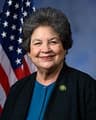 Lois Frankel
Democrat · Florida
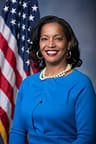 Jahana Hayes
Democrat · Connecticut
 Dina Titus
Democrat · Nevada
 Shri Thanedar
Democrat · Michigan