Bill · H.R. 1449· House(119-HR-1449)
Energy Resilient Communities Act
- Introduced
- 2/21/2025
- Last activity
- 2/21/2025 — Referred to the Committee on Energy and Commerce, and in addition to the Committee on Science, Space, and Technology, for a period to be subsequently determined by the Speaker, in each case for consideration of such provisions as fall within the jurisdiction of the committee concerned.
- Sponsored by
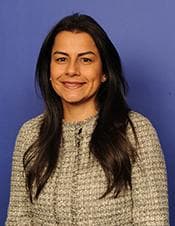
- Nanette Barragán
- Cosponsors
- - 31 - 0
- Introduced
- In Committee
What this bill would do
This bill, the "Energy Resilient Communities Act," directs the Secretary of Energy to establish a grant program to improve energy resilience, energy democracy, and security in communities. It prioritizes environmental justice communities in the distribution of these grants. The grants will fund technical assistance, community outreach, and the development of clean energy microgrids.
Potential Positive Impacts for People:
-
The bill prioritizes grants for projects benefiting environmental justice communities (Sec. 2(c)(1)), potentially improving their access to clean energy and reducing environmental burdens.
-
The bill supports the development of clean energy microgrids (Sec. 2(b)(3)), which can improve energy resilience and reduce reliance on traditional power grids, especially in areas vulnerable to climate change hazards.
-
The bill includes provisions to utilize or involve small businesses and nonprofits within environmental justice communities, particularly those owned and operated by women or minorities (Sec. 2(c)(3)(E)), potentially creating economic opportunities and supporting local businesses.
-
The bill promotes the use of registered apprentices (Sec. 2(c)(3)(G)) and prioritizes hiring certain disadvantaged populations (Sec. 2(i)), including displaced energy workers, veterans, and those with disabilities, which could lead to job creation and workforce development.
-
The bill provides funding for educational outreach programs to inform eligible entities about the grant program (Sec. 2(d)), potentially increasing awareness and participation, especially in underserved communities.
-
The bill defines "critical community infrastructure" (Sec. 2(l)(5)) and prioritizes microgrids supporting this infrastructure, which could improve the reliability of essential services like schools, hospitals, and emergency facilities.
Potential Negative Impacts for People:
-
The "Use of American Iron, Steel, and Manufactured Goods" requirement (Sec. 2(g)(1)) could potentially increase project costs if domestic materials are more expensive, potentially reducing the number of projects that can be funded.
-
The cost share requirement (Sec. 2(e)(1)) may present a barrier for some eligible entities, particularly those with limited resources, despite the higher federal share for environmental justice communities (Sec. 2(e)(2)).
Yes· 3 of 43
Does this put more money into wind, solar and other renewable power?+10
Authorizes billions for the development and construction of clean energy microgrids.
Would households on low incomes be better off under this?+9
Prioritizes low-income communities and reduces energy cost burdens.
Does this cut the pollution that drives climate change?+9
Directly funds clean energy microgrids and prioritizes projects that maximize greenhouse gas reduction.
The opposite
Does this reduce what the federal government spends?-5
Increases government spending through the establishment of a large-scale grant program.
Does this reduce what the federal government owes?-2
Authorizes significant new spending of over $1.5 billion annually for grant programs.
Does this make trade with other countries easier?-2
Imposes 'Buy American' requirements on iron and steel, which may limit international trade for those materials.
Groups and Interests Ranking
Every group the model scored this bill for, from -10 to +10. Hover a score for the reason it gave.
- Demographic And Interest Groups
- Good For Low Income Households+9Good For African Americans+8Good For Asian Americans+8Good For Hispanic Americans+8Good For Native Americans+8Good For Business Owners+6Good For People With Disabilities+6Good For Union Workers+6Good For Women+6Good For Rural Residents+5Good For Seniors+5Good For Urban Residents+5Good For Veterans+5Good For Farmers+4Good For Retirees+4Good For Students+4Good For Young Adults+4Good For Children+3Good For Men+3Good For Middle Aged+3Good For Middle Class Households+3Good For White Americans+2
- Environment Energy And Infrastructure
- Increases Renewable Energy Investment+10Reduces Carbon Emissions+9Improves Environmental Protections+8Improves Disaster Relief And F E M A+6Improves Rural Development+5Reduces Fossil Fuel Production+4
- Social Issues And Justice
- Improves Racial Equity+8Improves Poverty Reduction+6Improves Gender Equality+5Improves Affordable Housing+4Improves Disability Rights+4Reduces Homelessness+3
- Economy And Finance
- Increases Job Creation+7Improves Small Business Support+6Improves Union Protections+5Improves Economic Growth+4Reduces Government Spending-5Reduces National Debt-2
- Governance And Ideology
- Increases Federal Power+3Improves Government Transparency+2
- Healthcare
- Improves Healthcare Access+4
- Education And Technology
- Increases Public School Funding+3
- National Security And Foreign Policy
- Improves Veterans Benefits+3Improves International Trade-2
- 7/29/2025
- 1 Cosponsor added.
- 2/21/2025
- Referred to the Committee on Energy and Commerce, and in addition to the Committee on Science, Space, and Technology, for a period to be subsequently determined by the Speaker, in each case for consideration of such provisions as fall within the jurisdiction of the committee concerned.
- 30 Cosponsors added.
- Introduced in House
 Yassamin Ansari
Democrat · Arizona
 Suzanne Bonamici
Democrat · Oregon
 Ed Case
Democrat · Hawaii
 Emanuel Cleaver
Democrat · Missouri
 Kathy Castor
Democrat · Florida
 Yvette Clarke
Democrat · New York
 Steve Cohen
Democrat · Tennessee
 André Carson
Democrat · Indiana
 Troy Carter
Democrat · Louisiana
 Raúl Grijalva
Democrat · Arizona
 Jared Huffman
Democrat · California
 Henry Johnson
Democrat · Georgia
 Pramila Jayapal
Democrat · Washington
 Ro Khanna
Democrat · California
 Doris Matsui
Democrat · California
 Jared Moskowitz
Democrat · Florida
 Kevin Mullin
Democrat · California
 Jerrold Nadler
Democrat · New York
 Eleanor Norton
Democrat · District of Columbia
 Alexandria Ocasio-Cortez
Democrat · New York
 Johnny Olszewski
Democrat · Maryland
 Chellie Pingree
Democrat · Maine
 Mike Quigley
Democrat · Illinois
 Mary Gay Scanlon
Democrat · Pennsylvania
 Melanie Stansbury
Democrat · New Mexico
 Emilia Sykes
Democrat · Ohio
 Andrea Salinas
Democrat · Oregon
 Paul Tonko
Democrat · New York
 Rashida Tlaib
Democrat · Michigan
 Jill Tokuda
Democrat · Hawaii
 Shri Thanedar
Democrat · Michigan