Bill · H.R. 1420· House(119-HR-1420)
Pacific Flyway Habitat Enhancement Act
- Introduced
- 2/18/2025
- Last activity
- 7/16/2026 — ASSUMING FIRST SPONSORSHIP - Mr. Gallagher asked unanimous consent that he may hereafter be considered as the first sponsor of H.R. 1420, a bill originally introduced by Representative LaMalfa, for the purpose of adding cosponsors and requesting reprintings pursuant to clause 7 of rule XII. Agreed to without objection.
- Sponsored by
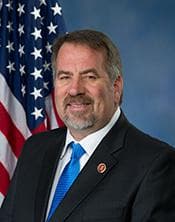
- Doug LaMalfa
- Cosponsors
- - 1 - 4
- Introduced
What this bill would do
This bill, known as the Pacific Flyway Habitat Enhancement Act, aims to amend the Food Security Act of 1985. It seeks to allow more agricultural lands to be included in the conservation reserve enhancement program. Specifically, it focuses on creating seasonal flooded working lands habitat conservation agreements. The bill allows for the enrollment of land that is not currently considered eligible if it helps address specific resource concerns. It also addresses how rental payments are calculated and allows for the waiver of certain matching requirements.
Yes· 3 of 7
Does this better protect air, water and wildlife?+6
The bill facilitates the creation of habitats to address the diminished quantity and quality of wetland wildlife habitats.
Would farmers be better off under this?+4
The bill provides new ways for farmers to participate in conservation programs using working cropland and revised payment structures.
Would business owners be better off under this?+3
The bill allows for more flexible enrollment and payment calculations for agricultural land owners.
The opposite
No question was scored the opposite.
Who it would affect, and how
Potential Positive Impacts for People
-
Increased Land Enrollment: The Secretary may enroll agricultural land that is not currently eligible if it is critical to the agreement's purposes, which addresses diminished quantity and quality of wetland wildlife habitats (Section 2, subsection (f)(1)(A)).
-
Support for Working Cropland: For agreements involving wetland-dependent species, the bill allows for seasonally flooded agricultural uses on working cropland if best management practices are used (Section 2, subsection (f)(1)(B)).
-
Consistent Rental Payments: The bill directs that annual rental payments be calculated to be comparable with the costs of maintaining other seasonally-flooded wetland habitats in the region and ensures regional consistency (Section 2, subsection (f)(1)(C)).
-
Reduced Financial Barriers: The Secretary has the authority to waive the matching requirement for these specific types of agreements (Section 2, subsection (f)(2)).
Potential Negative Impacts for People
- No specific negative impacts or burdens are explicitly mentioned in the provided text.
Groups and Interests Ranking
Every group the model scored this bill for, from -10 to +10. Hover a score for the reason it gave.
- Demographic And Interest Groups
- Good For Farmers+4Good For Business Owners+3Good For Rural Residents+2
- Environment Energy And Infrastructure
- Improves Environmental Protections+6Improves Rural Development+3
- Economy And Finance
- Improves Economic Growth+2Improves Small Business Support+2
- 7/16/2026
- ASSUMING FIRST SPONSORSHIP - Mr. Gallagher asked unanimous consent that he may hereafter be considered as the first sponsor of H.R. 1420, a bill originally introduced by Representative LaMalfa, for the purpose of adding cosponsors and requesting reprintings pursuant to clause 7 of rule XII. Agreed to without objection.
- 3/28/2025
- Referred to the Subcommittee on Conservation, Research, and Biotechnology.
- 2/18/2025
- Referred to the House Committee on Agriculture.
- 5 Cosponsors added.
- Introduced in House
 Jim Costa
Democrat · California
 Doris Matsui
Democrat · California
 Jimmy Panetta
Democrat · California
 Mike Thompson
Democrat · California
 David Valadao
Republican · California