Bill · H.R. 1354· House(119-HR-1354)
Justice for All Act of 2025
- Introduced
- 2/13/2025
- Last activity
- 2/13/2025 — Referred to the Committee on the Judiciary, and in addition to the Committee on Education and Workforce, for a period to be subsequently determined by the Speaker, in each case for consideration of such provisions as fall within the jurisdiction of the committee concerned.
- Sponsored by
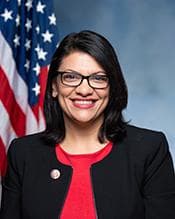
- Rashida Tlaib
- Cosponsors
- - 17 - 0
- Introduced
- In Committee
What this bill would do
The "Justice for All Act of 2025" seeks to amend the Civil Rights Act of 1964 and several other civil rights statutes. Its primary goal is to clarify that disparate impact on certain populations provides a sufficient basis for legal action. The bill aims to reinstate the private right of action to challenge such discrimination under Title VI of the Civil Rights Act, Title IX, the Age Discrimination Act, and Section 504 of the Rehabilitation Act. Additionally, it addresses profiling by law enforcement and expands definitions of protected characteristics. The act also seeks to prohibit certain predispute arbitration agreements and modify employer liability standards.
Yes· 3 of 15
Would LGBTQ people be better off under this?+9
The bill explicitly protects sexual orientation and gender identity from discrimination.
Does this expand the rights of LGBTQ people?+8
The bill explicitly includes sexual orientation and gender identity as protected characteristics under the Civil Rights Act.
Would Black Americans be better off under this?+8
The bill provides specific protections against hair discrimination and expands the ability to sue for disparate impact.
The opposite
Does this make it easier to use public money at a school other than the local one?-2
The bill's focus on disparate impact in education may increase litigation against educational institutions.
Who it would affect, and how
Potential Positive Impacts for People
-
Restoring Rights to Sue for Disparate Impact: The bill aims to allow individuals to bring legal actions when a policy or practice has a discriminatory effect, even if there is no proof of intentional discrimination. This is intended to provide a remedy for those denied equal access to services like education, housing, health, and transportation (Section s 2 and 3).
-
Expanded Protections for Hair and Race: The bill clarifies that discrimination against natural hair textures and protective hairstyles, such as braids or afros, is a form of racial discrimination (Section 2 and 3).
-
Strengthened Gender and Identity Protections: The act expands the definition of "sex" to explicitly include sexual orientation, gender identity, and sex stereotypes (Section 3 and 6). It also mandates that individuals cannot be denied access to shared facilities, like restrooms or locker rooms, that are inconsistent with their gender identity (Section 6).
-
Fair Housing Protections: The bill expands the Fair Housing Act to include "source of income" as a protected category, which includes various types of assistance and benefits (Section 3).
-
Prohibiting Law Enforcement Profiling: The legislation prohibits law enforcement agents from engaging in profiling based on characteristics such as race, religion, sex, or sexual orientation during investigatory activities (Section 5).
-
Limiting Forced Arbitration: The bill prohibits predispute arbitration agreements that force individuals to resolve employment, consumer, or civil rights disputes outside of the court system (Section 8).
-
Increased Accessibility to Justice: By including provisions for attorney's fees in various circumstances, the bill seeks to make civil rights lawsuits more viable for the average person (Section 2 and 4).
Potential Negative Impacts for People
-
Increased Liability for Employers: The bill implements strict vicarious liability, meaning employers can be held liable for any act of discrimination, including harassment or retaliation, committed by any of their employees (Section 7).
-
Removal of Affirmative Defenses: For employers facing sex-based discrimination claims, the bill removes the ability to use certain affirmative defenses, such as demonstrating that the employer exercised reasonable care to prevent or correct the behavior (Section 7).
-
Legal Uncertainty for Entities: While the bill states it does not expose entities to "unfair" findings, it aims to change how disparate impact is demonstrated and defended, which shifts the legal landscape for covered entities (Section 2 and 3).
Groups and Interests Ranking
Every group the model scored this bill for, from -10 to +10. Hover a score for the reason it gave.
- Social Issues And Justice
- Improves L G B T Q Rights+8Improves Disability Rights+7Improves Gender Equality+7Improves Policing Reform+7Improves Racial Equity+7Improves Affordable Housing+6
- Demographic And Interest Groups
- Good For L G B T Q Community+9Good For African Americans+8Good For Women+7Good For Low Income Households+6Good For Seniors+5Good For Union Workers+4
- Economy And Finance
- Improves Consumer Protection+6
- Governance And Ideology
- Improves Due Process+5
- Healthcare
- Improves Healthcare Access+5
- Education And Technology
- Improves School Choice-2
- 2/25/2025
- 2 Cosponsors added.
- 2/18/2025
- 2 Cosponsors added.
- 2/13/2025
- Referred to the Committee on the Judiciary, and in addition to the Committee on Education and Workforce, for a period to be subsequently determined by the Speaker, in each case for consideration of such provisions as fall within the jurisdiction of the committee concerned.
- 13 Cosponsors added.
- Introduced in House
One bill Congress.gov lists as related to this one — companions in the other chamber, earlier versions, and bills this one absorbed or was folded into.
 Alma Adams
Democrat · North Carolina
 Emanuel Cleaver
Democrat · Missouri
 Cleo Fields
Democrat · Louisiana
 Maxwell Frost
Democrat · Florida
 Valerie Foushee
Democrat · North Carolina
 Al Green
Democrat · Texas
 Jesús García
Democrat · Illinois
 Henry Johnson
Democrat · Georgia
 Jonathan Jackson
Democrat · Illinois
 Sydney Kamlager-Dove
Democrat · California
 Summer Lee
Democrat · Pennsylvania
 Kweisi Mfume
Democrat · Maryland
 Gregory Meeks
Democrat · New York
 LaMonica McIver
Democrat · New Jersey
 Eleanor Norton
Democrat · District of Columbia
 Ayanna Pressley
Democrat · Massachusetts
 Delia Ramirez
Democrat · Illinois