
A Democratic bill with 1 Republican cosponsor · See the cosponsor
Last activity — Referred to the House Committee on Ways and Means.
In committee
Introduced and handed to a committee in the chamber it started in.
The committee holds it, and most bills are never heard from again. A hearing or a committee vote would be news; silence is the usual outcome, and it kills the bill without anyone voting against it.
Its path through Congress
- Introduced
- In Committee
What this bill would do
The Veterans Jobs Opportunity Act aims to amend the Internal Revenue Code of 1986. It proposes to establish a new tax credit called the veteran small business start-up credit. This credit is intended for veterans or their spouses who are starting small businesses in underserved communities. The credit covers 15 percent of qualified start-up expenditures, up to a maximum of $50,000. The bill defines specific criteria for what qualifies as an applicable veteran-owned small business and an underserved community.
Yes· 3 of 11
- Scored +7
Would business owners be better off under this?
The bill provides a significant tax credit to help cover the initial costs of starting a new business.
- Scored +7
Would veterans be better off under this, taking everything together?
The bill specifically creates a tax credit to support the business ventures of veterans and their spouses.
- Scored +7
Does this make it easier to run a small business?
The bill provides direct financial relief to veterans and their spouses through a specific start-up tax credit.
The opposite
No question was scored the opposite.
Who it would affect, and how
Potential Positive Impacts for People
-
Financial Assistance for Veteran Entrepreneurs: Veterans or spouses of veterans can receive a tax credit equal to 15 percent of qualified start-up expenditures, up to $50,000, to help with the costs of starting a business (Section 2(a)).
-
Support for Underserved Communities: The bill provides incentives for businesses to establish their principal place of business in specific areas, including HUBZones, empowerment zones, enterprise communities, areas of low or moderate income, or counties with persistent poverty (Section 2(b)(5)).
-
Broad Definition of Business Support: The credit applies to various types of business structures, including sole proprietorships, corporations where the veteran/spouse owns more than 50 percent, or partnerships where they own more than 50 percent of profits or capital interests (Section 2(b)(2)).
-
Inclusion of Property Costs: The credit can be used for the purchase or lease of real property, or the purchase of personal property, as long as it is used in the active conduct of a trade or business (Section 2(b)(3)).
Potential Negative Impacts for People
-
Limitations on Credit Duration: The tax credit can only be elected for the first two taxable years that the business is incurring ordinary and necessary expenses (Section 2(c)(2)).
-
Requirement for Active Involvement: To qualify, the business cannot be a passive activity, meaning the owner must be actively involved in the conduct of the trade or business (Section 2(b)(2)).
-
Reduction in Property Basis: If a taxpayer takes the credit for specific property, they must reduce the basis of that property by the amount of the credit received (Section 2(c)(4)).
-
Election Requirement: The credit is not automatic; a taxpayer must specifically elect to have the section apply to their expenditures to receive it (Section 2(c)(1)).
Groups and Interests Ranking
Every group the model scored this bill for, from -10 to +10. Tap or hover a score for the reason it gave.
- Demographic And Interest Groups
- Would business owners be better off under this? — The bill provides a significant tax credit to help cover the initial costs of starting a new business. Would veterans be better off under this, taking everything together? — The bill specifically creates a tax credit to support the business ventures of veterans and their spouses. Would households on low incomes be better off under this? — The bill directs business activity into underserved and low-income communities. Would people in rural areas be better off under this? — The credit applies to businesses located in counties with persistent poverty, which often include rural areas. Would Hispanic Americans be better off under this? — The bill may benefit any resident in an underserved community regardless of race, including Hispanic Americans.
- Economy And Finance
- Does this make it easier to run a small business? — The bill provides direct financial relief to veterans and their spouses through a specific start-up tax credit. Does this cut taxes for small businesses? — The bill establishes a new tax credit of 15 percent for qualified start-up expenditures up to $50,000 for specific small businesses. Is this likely to create jobs? — By providing financial incentives for veteran-owned small business start-ups, the bill is likely to encourage new business activity and job growth. Is this likely to grow the economy? — The credit incentivizes investment and entrepreneurship in underserved communities, which can stimulate local economies.
- National Security And Foreign Policy
- Does this increase the pay, pensions or support veterans receive? — The bill provides a new financial benefit specifically for veterans and their spouses starting small businesses.
- Social Issues And Justice
- Is this likely to lift people out of poverty? — The bill targets underserved communities and areas of persistent poverty to stimulate economic activity.
- 2/13/2025
- Referred to the House Committee on Ways and Means.
- 1 Cosponsor added.
- Introduced in House
One bill Congress.gov lists as related to this one — companions in the other chamber, earlier versions, and bills this one absorbed or was folded into.
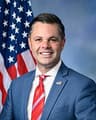 Zachary Nunn
Republican · Iowa