
A Republican bill with 3 Democratic cosponsors · See all 7 cosponsors
Last activity — Referred to the House Committee on Energy and Commerce.
In committee
Introduced and handed to a committee in the chamber it started in.
The committee holds it, and most bills are never heard from again. A hearing or a committee vote would be news; silence is the usual outcome, and it kills the bill without anyone voting against it.
Its path through Congress
- Introduced
- In Committee
What this bill would do
The Medicaid Primary Care Improvement Act aims to facilitate direct primary care arrangements under the Medicaid program. It clarifies that states are not prohibited from providing medical assistance for primary care services through these arrangements, including as part of value-based care. The bill defines a direct primary care arrangement as one where an individual receives only primary care services for a fixed periodic fee. Additionally, the Secretary of Health and Human Services is tasked with seeking stakeholder input and issuing implementation guidance to states. Finally, the Secretary must submit a report to Congress analyzing state contracting and the quality and cost of care provided through these arrangements.
Yes
- Scored +3
Does this make health care easier to get in general?
The bill allows states to implement direct primary care arrangements, which may increase access to primary care services for Medicaid recipients.
- Scored +3
Would households on low incomes be better off under this?
The bill expands the ways Medicaid can deliver primary care services to low-income individuals through direct primary care models.
- Scored +2
Does this put more money into Medicaid, the health coverage for people on low incomes?
The bill facilitates more efficient ways for states to provide primary care through direct primary care arrangements within the Medicaid program.
The opposite
No question was scored the opposite.
Who it would affect, and how
Potential Positive Impacts for People
-
Facilitation of Direct Primary Care Arrangements: The bill ensures that states can provide medical assistance for primary care services through direct primary care arrangements, where the compensation is a fixed periodic fee (Section 2(a)). This could allow individuals to access primary care through a specific type of arrangement established by the State or through a managed care organization.
-
Stakeholder Input and Guidance: The Secretary of Health and Human Services is required to hold virtual open door meetings to seek input from stakeholders, such as primary care providers, state Medicaid agencies, and managed care organizations (Section 2(b)). This ensures that those practicing under the model have a voice in how implementation guidance is issued to states.
Potential Negative Impacts for People
- No specific negative impacts or burdens are explicitly stated in the provided text.
Groups and Interests Ranking
Every group the model scored this bill for, from -10 to +10. Tap or hover a score for the reason it gave.
- Healthcare
- Does this make health care easier to get in general? — The bill allows states to implement direct primary care arrangements, which may increase access to primary care services for Medicaid recipients. Does this put more money into Medicaid, the health coverage for people on low incomes? — The bill facilitates more efficient ways for states to provide primary care through direct primary care arrangements within the Medicaid program.
- Demographic And Interest Groups
- Would households on low incomes be better off under this? — The bill expands the ways Medicaid can deliver primary care services to low-income individuals through direct primary care models.
- 1/20/2026
- 1 Cosponsor added.
- 12/16/2025
- 1 Cosponsor added.
- 5/5/2025
- 1 Cosponsor added.
- 3/14/2025
- 1 Cosponsor added.
- 2/10/2025
- Referred to the House Committee on Energy and Commerce.
- 3 Cosponsors added.
- Introduced in House
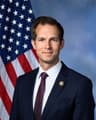 Jake Auchincloss
Democrat · Massachusetts
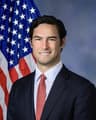 Brandon Gill
Republican · Texas
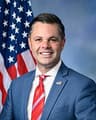 Zachary Nunn
Republican · Iowa
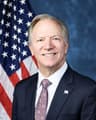 Robert Onder
Republican · Missouri
 Brittany Pettersen
Democrat · Colorado
 Lloyd Smucker
Republican · Pennsylvania
 Kim Schrier
Democrat · Washington