Bill · H.R. 1153· House(119-HR-1153)
Rural Physician Workforce Production Act of 2025
- Introduced
- 2/10/2025
- Last activity
- 2/10/2025 — Referred to the Committee on Ways and Means, and in addition to the Committee on Energy and Commerce, for a period to be subsequently determined by the Speaker, in each case for consideration of such provisions as fall within the jurisdiction of the committee concerned.
- Sponsored by
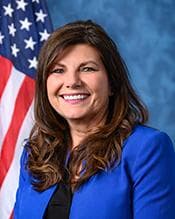
- Diana Harshbarger
- Cosponsors
- - 4 - 7
- Introduced
- In Committee
What this bill would do
The Rural Physician Workforce Production Act of 2025 aims to amend the Social Security Act to support equitable rural residency training funding. It introduces an elective rural sustainability per resident payment for applicable hospitals. This payment is designed for residents participating in approved medical residency training programs within rural training locations. The bill establishes specific rules for how these payments are calculated and updated based on the consumer price index. It also addresses how critical access hospitals and sole community hospitals are treated regarding resident counting. Ultimately, the act seeks to bolster the rural medical workforce through targeted financial support.
Yes· 3 of 5
Would people in rural areas be better off under this?+7
The bill specifically targets the expansion and sustainability of medical residency programs in rural locations to support those communities.
Does this make health care easier to get in general?+6
The act incentivizes medical residency programs in rural areas to bolster the physician workforce and improve healthcare access for rural communities.
Does this put more money into Medicare, the health coverage for people over 65?+5
The bill amends the Social Security Act to provide new elective rural sustainability payments for medical residency training via Medicare funds.
The opposite
Does this reduce what the federal government spends?-1
The bill's budget neutrality requirement ensures that total aggregate payments for medical education costs do not exceed levels prior to the act's implementation.
Does this make housing cost less?-1
The bill focuses on medical workforce sustainability rather than housing affordability.
Who it would affect, and how
Potential Positive Impacts for People
-
Increased Funding for Rural Training: Applicable hospitals can elect to receive an elective rural sustainability per resident payment amount for residents training in rural locations (Section 2, paragraph (2)). This could provide necessary financial support for medical training in rural areas.
-
Protection of Residency Capacity: The bill ensures that the new elective payments will not result in a limitation on the number of residents in allopathic or osteopathic medicine for hospitals (Section 2, paragraph (3)(A)(i)). This helps maintain the capacity for training future doctors.
-
Support for Extensive Rural Tracks: Hospitals providing more than 50 percent of total residency training time in rural locations are eligible for specific payment treatments (Section 2, paragraph (5)(B)). This encourages longer-term training commitments in rural settings.
-
Protection Against Resident Caps: Residents in programs that provide more than 50 percent of training in rural locations will not be counted toward the limitations established in existing medical education cost provisions (Section 3, paragraph (a)(1)(A)(ii) and (b)(1)). This allows hospitals to expand their training programs without hitting existing limits.
Potential Negative Impacts for People
-
Budget Neutrality Constraints: The Secretary must ensure that aggregate payments for medical education costs do not exceed the amounts that would have been made without this Act (Section 2, paragraph (7)(B)). This requirement could limit the total amount of new funding available for these programs.
-
Potential Payment Adjustments: To maintain budget neutrality, the Secretary is permitted to make adjustments to the amount of payments for direct and indirect graduate medical education costs (Section 2, paragraph (7)(B)). This could lead to fluctuations in the funding levels received by hospitals.
Groups and Interests Ranking
Every group the model scored this bill for, from -10 to +10. Hover a score for the reason it gave.
- Demographic And Interest Groups
- Good For Rural Residents+7Good For Seniors+4Good For Low Income Households+3
- Healthcare
- Improves Healthcare Access+6Increases Medicare Funding+5
- Economy And Finance
- Reduces Government Spending-1
- Social Issues And Justice
- Improves Affordable Housing-1
- 10/1/2026
- 1 Cosponsor added.
- 10/21/2025
- 1 Cosponsor added.
- 9/30/2025
- 1 Cosponsor added.
- 7/21/2025
- 1 Cosponsor added.
- 6/20/2025
- 1 Cosponsor added.
- 5/5/2025
- 1 Cosponsor added.
- 3/21/2025
- 1 Cosponsor added.
- 3/18/2025
- 1 Cosponsor added.
- 2/13/2025
- 1 Cosponsor added.
- 2/10/2025
- Referred to the Committee on Ways and Means, and in addition to the Committee on Energy and Commerce, for a period to be subsequently determined by the Speaker, in each case for consideration of such provisions as fall within the jurisdiction of the committee concerned.
- 2 Cosponsors added.
- Introduced in House
 Don Bacon
Republican · Nebraska
 Janelle Bynum
Democrat · Oregon
 Robert Bresnahan
Republican · Pennsylvania
 Henry Cuellar
Democrat · Texas
 Jennifer Kiggans
Republican · Virginia
 Teresa Leger Fernandez
Democrat · New Mexico
 James Moylan
Republican · Guam
 Kim Schrier
Democrat · Washington
 Jill Tokuda
Democrat · Hawaii
 Gabe Vasquez
Democrat · New Mexico
 Eugene Vindman
Democrat · Virginia