Bill · H.R. 1138· House(119-HR-1138)
Payment Choice Act of 2025
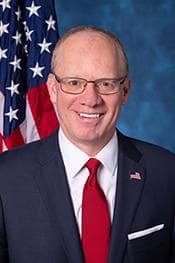
- Introduced
- 2/7/2025
- Last activity
- 2/7/2025 — Referred to the House Committee on Financial Services.
- Sponsored by
- John Rose
- Cosponsors
- - 13 - 12
- Introduced
- In Committee
What this bill would do
The Payment Choice Act of 2025 aims to ensure that United States currency is accepted as legal tender for goods and services at physical retail locations. It mandates that any person engaged in retail business that accepts in-person payments must accept cash for transactions up to $500. Additionally, these businesses are prohibited from charging cash-paying customers higher prices than those paying by other methods. The bill includes specific exceptions for system failures or insufficient cash on hand. It also allows businesses to provide devices that convert cash into prepaid cards under certain conditions. Finally, the act establishes enforcement mechanisms through civil actions and penalties.
Yes· 3 of 5
Does this give people more protection from unfair business practices?+7
The bill prohibits retailers from refusing cash payments for transactions up to $500 and prevents them from charging higher prices to cash users.
Would households on low incomes be better off under this?+5
The requirement to accept cash ensures those who rely on physical currency can still make retail purchases.
Is this likely to lift people out of poverty?+3
By mandating cash acceptance, the bill helps ensure individuals without bank accounts or electronic payment methods can participate in the retail economy.
The opposite
Would business owners be better off under this?-4
Retailers face new operational requirements and potential civil penalties of up to $1,500 for violations.
Who it would affect, and how
Potential Positive Impacts for People
-
Guaranteed Cash Acceptance: Retailers must accept cash for transactions up to $500, ensuring consumers can use physical currency for purchases at physical locations (Section 3(a)(1)).
-
Price Fairness: Businesses are prohibited from charging higher prices to customers who pay with cash compared to those using other payment methods (Section 3(a)(2)).
-
Consumer Rights to Redress: Aggrieved customers have the right to deliver notice of a violation to a business and can file civil actions for relief, including seeking injunctions or damages (Section 3(e)(1)).
-
Financial Recovery: Customers may be entitled to actual damages or liquidated damages of $250 if they are harmed by a violation (Section 3(e)(2)).
-
Access to Legal Assistance: Courts have the authority to appoint a court-paid attorney for individuals to help them commence a civil action (Section 3(e)(5)).
Potential Negative Impacts for People
-
Restrictions on Large Bills: For the first five years after enactment, businesses are not required to accept cash payments in $50 bills or any larger denominations (Section 3(d)(1)).
-
Prepaid Card Fees: If a business uses a device to convert cash to a prepaid card, they may charge an inactivity fee if there has been no activity for 12 months (Section 3(c)).
-
Business Operational Burdens: Businesses may face civil penalties of up to $500 for a first offense or up to $1,500 for subsequent offenses if they violate the cash acceptance rules (Section 3(e)(2)).
-
Legal Costs: Prevailing parties in civil actions may be required to pay reasonable attorney's fees up to $3,000 (Section 3(e)(6)).
Groups and Interests Ranking
Every group the model scored this bill for, from -10 to +10. Hover a score for the reason it gave.
- Economy And Finance
- Improves Consumer Protection+7
- Demographic And Interest Groups
- Good For Low Income Households+5Good For Middle Class Households+2Good For Business Owners-4
- Social Issues And Justice
- Improves Poverty Reduction+3
- Governance And Ideology
- Improves Privacy Rights+2
- 7/9/2026
- 1 Cosponsor added.
- 6/23/2026
- 1 Cosponsor added.
- 5/11/2026
- 1 Cosponsor added.
- 4/29/2026
- 1 Cosponsor added.
- 4/20/2026
- 2 Cosponsors added.
- 3/24/2026
- 1 Cosponsor added.
- 2/9/2026
- 1 Cosponsor added.
- 11/17/2025
- 2 Cosponsors added.
- 9/3/2025
- 2 Cosponsors added.
- 8/1/2025
- 1 Cosponsor added.
- 7/29/2025
- 1 Cosponsor added.
- 7/25/2025
- 1 Cosponsor added.
- 7/23/2025
- 1 Cosponsor added.
- 7/15/2025
- 1 Cosponsor added.
- 2/7/2025
- Referred to the House Committee on Financial Services.
- 8 Cosponsors added.
- Introduced in House
 Joyce Beatty
Democrat · Ohio
 Andy Barr
Republican · Kentucky
 Ed Case
Democrat · Hawaii
 Emanuel Cleaver
Democrat · Missouri
 Warren Davidson
Republican · Ohio
 Cleo Fields
Democrat · Louisiana
 Josh Gottheimer
Democrat · New Jersey
 Sylvia Garcia
Democrat · Texas
 Bill Huizenga
Republican · Michigan
 Chrissy Houlahan
Democrat · Pennsylvania
 Glenn Ivey
Democrat · Maryland
 David Kustoff
Republican · Tennessee
 Thomas Kean
Republican · New Jersey
 Gregory Meeks
Democrat · New York
 Tim Moore
Republican · North Carolina
 Donald Norcross
Democrat · New Jersey
 John Rutherford
Republican · Florida
 Maria Salazar
Republican · Florida
 Pete Sessions
Republican · Texas
 Brad Sherman
Democrat · California
 Christopher Smith
Republican · New Jersey
 Marlin Stutzman
Republican · Indiana
 David Taylor
Republican · Ohio
 Jefferson Van Drew
Republican · New Jersey
 Nikema Williams
Democrat · Georgia